First day of in-person voting sets primary record as SC Senate rejects redraw
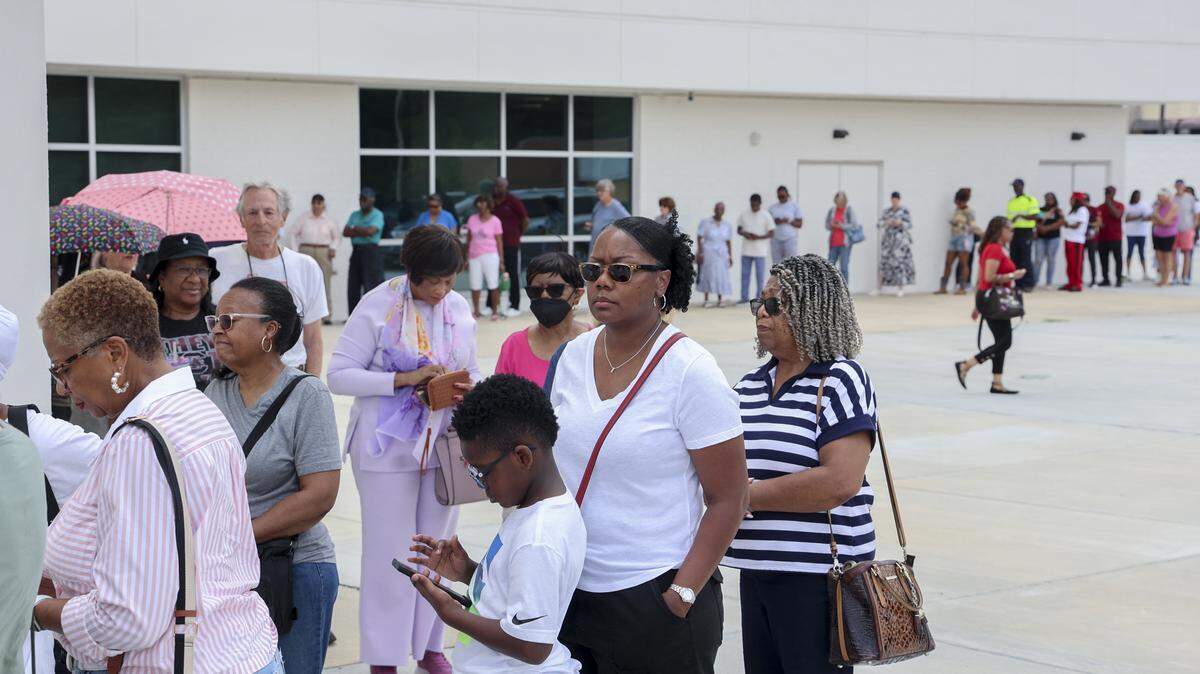
A record number of South Carolina residents turned out to the first day of early primary voting Tuesday as the state Senate rejected new congressional maps intended to oust U.S. House Rep. Jim Clyburn, the only Democrat in the delegation.
About 26,000 people voted early by noon Tuesday, and 55,500 ballots were cast by 5 p.m., according to the state Election Commission.
The image of thousands of votes being in the ballot boxes was a redline for some state senators who initially wanted to redraw the lines after pressure from the White House. The Senate voted 26-18 to carry the bill over before adjourning until June 10, the day after the 2026 primary.
The final number of how many people voted on the first day of early in-person voting will not be posted until Wednesday. The previous record for early voting in one day was 23,000, on the final day of early voting of the June 2024 primary.
Pamela and Dyrek Dawson cast their ballots at the Orangeburg County voter registration office Monday morning. Pamela said she would have waited until election day to go to the polls, but it was important for her to make sure her vote counted amid the redistricting debate.
She said their 20 and 21-year-old children were also voting today.
“The more we look at it, the more and more our voices and our rights are being taken away, and we need to make sure that our votes count,” Pamela Dawson said after voting Tuesday morning.
Both Pamela and Dyrek said they would vote again in August, if the new congressional maps passed.
“No matter how many times we have to vote, I will be out to vote,” Pamela said.
As the Senate began debate Tuesday, at least one senator who had supported redistricting, said on the floor that his vote would change.
“The deadline has passed. Voting has begun, it is time to conclude the matter,” said state Sen. Richard Cash, R-Anderson.
For Democratic lawmakers and candidates, ramping up voter turnout was part of the plan. They pushed for people to vote early as a way of trying to convince the state Senate to abandon middecade redistricting.
State Democratic Party Executive Director Jay Parmley estimates outreach was made to about 200,000 people to get them to vote Tuesday.
“We believe this just strengthens our hand when with the senators to say, ‘hey, this is ridiculous, you’re redrawing lines before you know, while we’re early voting,’ ” Parmley said outside the early voting location on the University of South Carolina campus before he went to vote. “And then secondly, we know ... we’re going to go to court, that’s just no question in both federal and state court, and it gives us every opportunity to stop these lines just because it’s so late in the process.”
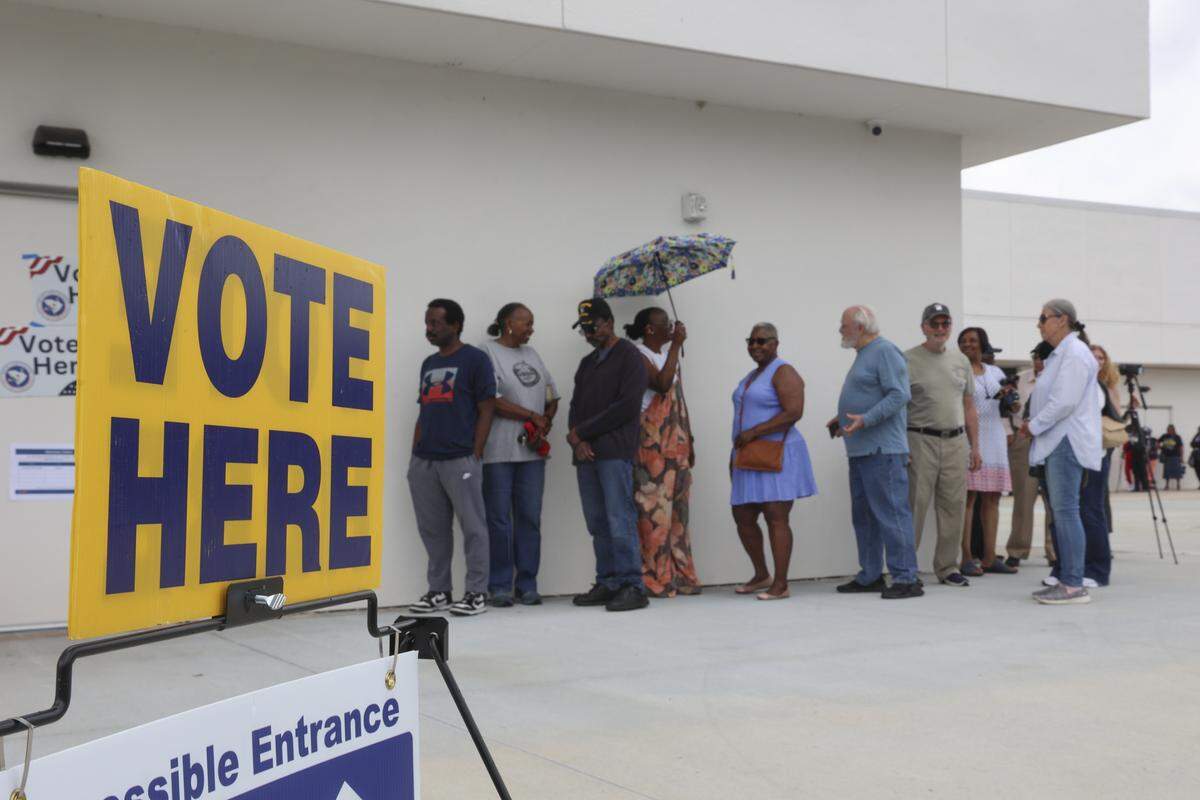
Several state senators also sported “I Voted” stickers Tuesday including state Sens. Overture Walker, Michael Johson and Russell Ott.
Libby Campbell-Turner, 70, of Columbia was among those in line as the doors opened for early voting and planned to choose a Democratic ballot. She said she came because of the redistricting efforts that have dominated headlines. She voted early in 2022 and 2024, but not on the first day polls were open.
“If we’re going to redistrict, we need to wait until the next cycle,” Campbell-Turner said.
But she wanted to vote on the first day this election.
“I think an early, really, really, really good turnout, regardless of how you’re going to vote, is really important,” Campbell-Turner said. “Voting matters. How we vote matters, and when there’s a, I’m going to call it a threat to how we vote, we need to do whatever we can to meet that threat head on.”
Even if the redistricting plan is approved, competitive primary congressional races will still appear on voters’ June 9 ballots. Under the redistricting bill, congressional elections would be pushed back to Aug. 18.
Opponents of the middecade redistricting have said rescheduling congressional primaries for August this late in the primary cycle will just lead to voter confusion.
Luther Bells, a 21-year-old Clemson student from Blythewood, was at the early voting location on the University of South Carolina campus. He voted early because he will be out of town June 9.
“I don’t really care for any gerrymandering in any aspect. I think it should be as fair as possible,” Bells said.
He said there’s been confusion in his fraternity about what district they would be in amid the redistricting debate, as the redistricting process usually takes place after the census.
He will be back at school in August and expects he would have to request a mail-in ballot.
Senators agreed Saturday to come back Tuesday at 11 a.m., rather than debate Sunday and Memorial Day. Meeting in perfunctory session over the long weekend allowed lawmakers to vote to invoke cloture Tuesday, a legislative procedure that limits debates and forces a vote early.
Three-fifths of senators needed to agree to limit debate, a hurdle the upper chamber cleared Saturday. Lawmakers on both sides of the redistricting debate said Saturday support for a new congressional map could wane once early polls opened Tuesday. The vote to close debate failed 24-20 Tuesday.
Senators voted Saturday 27-17 to give the proposed congressional map intended to create seven reliably Republican districts a second reading.
Gov. Henry McMaster called the General Assembly back to take up redistricting less than an hour after both chambers adjourned for the year May 14. McMaster previously said he would leave redistricting up to the legislature and did not anticipate a special session.
Ginny Williams, an attorney living in Orangeburg, said she was voting early because she expected to have a trial the week of the election, but she opposed the last minute attempt to change the congressional maps.
“The process for redistricting is a very long, in-depth analysis,” Williams said after voting. “And, so I think that my vote today is a little bit in protest of how they’re trying to push it through.”
This story was originally published May 26, 2026 at 1:19 PM.