
Simpson secures SC agriculture nomination over son of former Clemson coach: NYT
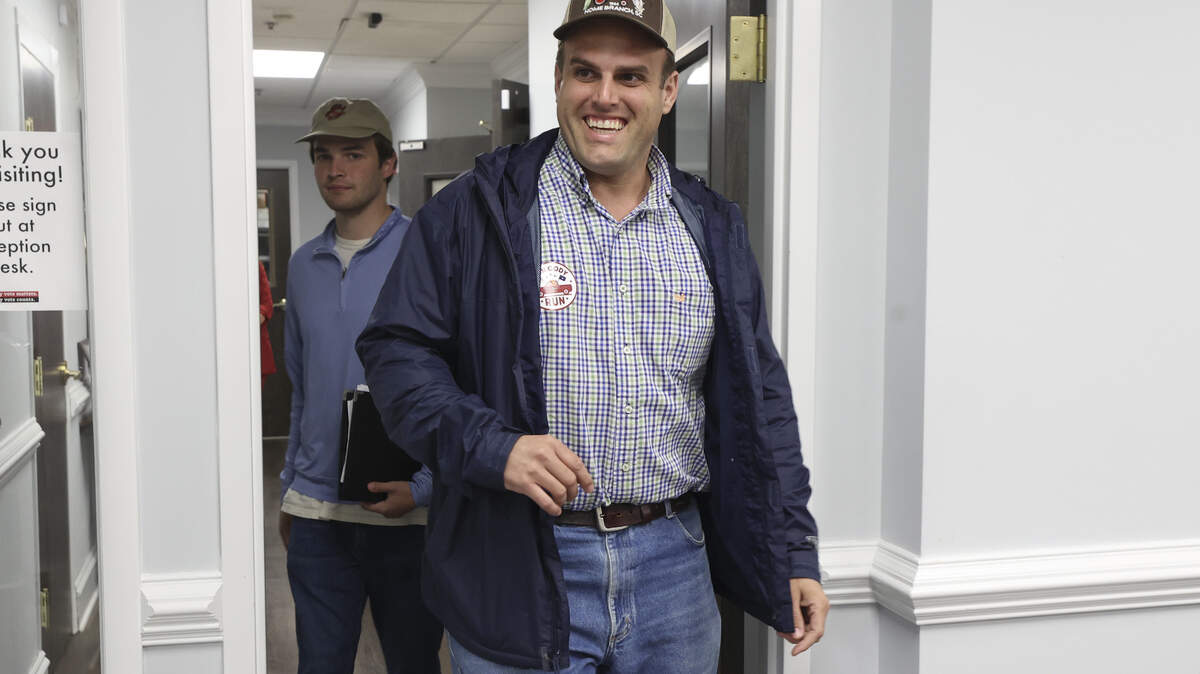
Cody Simpson, a farmer and Trump administration appointee, is one step closer to leading the South Carolina Department of Agriculture after winning the Republican runoff Tuesday, according to projections by the New York Times.
After beating Danny Lee Ford II, Simpson will compete against Democratic nominee DeShawn Blanding in November for the agriculture commissioner job. It will be the first time South Carolina has a new agriculture leader in more than two decades after longtime commissioner Hugh Weathers announced his retirement last year.
Simpson captured about 62% of the vote with an estimated 74% counted by about 9:15 p.m. Tuesday evening, according to New York Times reports.
All results are unofficial until certified.
President Donald Trump endorsed Simpson before he announced his candidacy, posting “RUN, CODY, RUN!” on TruthSocial in February. Gov. Henry McMaster and state House Speaker Murrell Smith also backed Simpson, according to the campaign.
Simpson also far outraised and spent Ford in his bid to oversee South Carolina’s largest industry sector. Simpson spent $404,000 to Ford’s $30,000, a more than 13:1 difference, according to preprimary campaign finance reports filed in late May.
While Simpson had a commanding fundraising edge, he only came first in the June 9 primary by about 4,000 votes, or less than one percentage point..
Ford, a cattle and hemp farmer from the Upstate, is the son of a former Clemson University football coach that led his team to its first national championship in 1981. Ford, who described his campaign as “grassroots,” said his famous father with the same name helped boost his bid.
Four Republicans competed for the nomination, but Ford and Simpson easily advanced to the runoff. Jeremy Cannon and Fred West came in third and fourth respectively in the primary.
Simpson said he wants to make the agriculture industry in South Carolina better for future generations. For Simpson, that includes cutting regulation he sees as unnecessary, finding new revenue streams for small farmers and preventing land from being sold to China.
“Our food supply is getting even more consolidated,” Simpson said in an interview earlier this month. “Our small producers are being really left out of that equation in many facets, in many cases.”
The commissioner leads the state Department of Agriculture, which oversees the nearly $52 billion agribusiness industry. The department aids farmers in navigating and following regulations, including food safety requirements, and promotes local producers.
Simpson, 34, grew up on his family century farm in Clarendon County and attended Francis Marion University for his bachelor’s and master’s degrees.
“I think my mantra has always been, when I left my family farm to go to college, what I had to reason with myself is how can I bring the resources back to the family farm, and every decision I’ve ever made in my life ... I always thought about that,” Simpson said in an interview.
He later worked in McMaster’s office and was appointed as the state executive director of the U.S. Department of Agriculture in 2025. Simpson said his connections in the State House and federal government would help him lobby for policies that helped farmers.