SC Republican Party sues in federal court in move to allow for closed primaries

An effort to close the state’s primaries is now headed to a federal court.
The South Carolina Republican Party filed a federal lawsuit late Tuesday against the South Carolina Election Commission for not registering people by party. The party is asking it be allowed to limit who can vote in its primaries.
The election commission said it is aware of the lawsuit, but declined to comment.
Efforts to allow people to register by party only received one hearing in the state House this year, but never moved out of committee.
The lawsuit was preceded by a change of a state GOP party rule last week at its convention, where attendees wore stickers that said “Close Our Primary.”
Currently, any registered voter can choose which party’s ballot they want in a primary election even if they don’t support the party in a general election. But they can only vote in one party’s primary.
“The open-primary system also burdens Republican Party-member voters by diluting their associational vote in the party’s internal nomination process,” the lawsuit says. “A non-Republican crossover voter may be motivated by different objectives, including weakening the Republican ticket, selecting a candidate less faithful to Republican principles, or influencing the Republican Party’s ideological direction without joining the party.”
The party added in the lawsuit that non-Republican voters participating in an open primary may try to push candidates who maybe weaker in the general election.
The party rule passed during the convention mirrors legislation pushed by the state party earlier this year that would have allowed people to register as a member of a party when they register to vote or be registered as part of the party by voting in their primary.
Under the rule, people would have to be registered with the party to vote in their primaries or be enrolled with the party when they pull a party’s primary election ballot.
The other part of the rule deals with who could run in the Republican primary. A person has to be registered as a Republican for 90 days and have voted in two of the last three statewide primaries. However, a person could still run in the GOP primary if they’re granted a waiver by the state or county committee depending on what level of office the person is running for.
Exemptions are included for people who recently turned 18 years old, just moved to the state or were in active military service and unable to vote.
Passing the rules is an effort for the party to create standing for a lawsuit, SC GOP Chairman Drew McKissick said.
“We need to have something in our rules which state law doesn’t facilitate,” McKissick said. “Since we don’t have partisan registration, (it’s) kind of hard to know who a registered Republican is, because state won’t let us do it.”
In the June 9 primary, nearly 473,000 people voted in the Republican primary, while nearly 372,000 pulled a Democratic ballot.
In the 2024 Republican presidential primary, nearly 757,000 people voted.
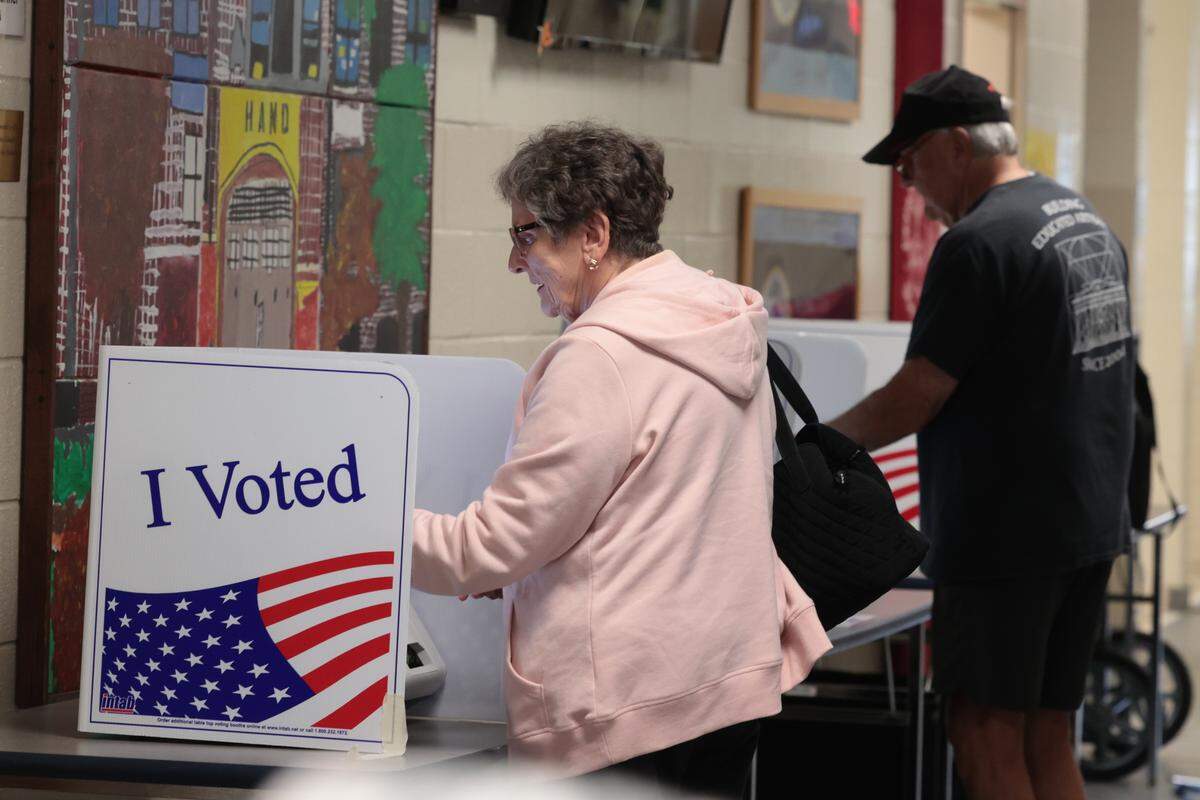
Allowing partisan registration is a step toward closing the state primaries. Under the state’s open primary system, anyone may choose either of the two major party ballots. Republicans have been fearful that people who would vote Democratic in the fall cross over into their primaries. In 2020, some Republicans pushed for GOP voters to vote in the Democratic presidential primary. There also was an effort in 2024 to have non-Republican voters participate in the GOP presidential primary to vote for former Gov. Nikki Haley over President Donald Trump.
Many times county and state party have passed resolutions calling for party registration, McKissick said.
Even though there have been calls to close primaries before, the legislature has not moved in that direction. There are fears it could shut out non-GOP voters from having a say in who wins in elections in areas that are heavily Republican.
Eight states have truly closed primaries: Delaware, Florida, Kentucky, New Jersey, New York, Pennsylvania, Tennessee and Wyoming. Nine states have partially closed primaries that allow unaffiliated voters or voters registered with another party to participate in their primaries.
South Carolina is one of 15 states in the country have open primaries, according to the National Conference of State Legislatures.
In six primary elections, McKissick has put an advisory question on the GOP primary ballot asking voters if they want to be allowed register by party, and each time it has overwhelming support.
“The legislature has, they’ve used up all their chances,” McKissick said.
“State law currently says that state conventions of either party have the right to add to the terms of membership and also the terms of participation in a primary, but then it goes on not to give us registration,” McKissick said.
The lawsuit also will be on constitutional grounds on freedom of association.
The party also is arguing that state law is working the way it is intended.
“We want to go to a judge and say all we need to do is get them to give us partisan registration, we(‘ll) take care of the rest. Our rule would then govern from there on forward,” McKissick said. “We don’t need them to design any primary process or qualifications. We got that covered.”
“State law says we have the right to define terms of participating in our primary, but then it doesn’t let us do it,” McKissick said.
State law says parties may have rules over who qualifies to be a member of a party and who can vote in the primary elections if the qualifications do not conflict with state law, federal law or the Constitution.
The bill pushed by the state GOP would have allowed people to register with a party or be registered with the party by pulling the party’s primary ballot. It also allowed people to switch their registration, no less than 45 days before a primary election. He also said the bill would make sure people would not be left out of the system when they vote for the first time under a new system if they had not registered with a party.
“Essentially, the system would function as what we call an enrollment system for those who are not yet registered for the party,” McKissick said. “For those who are, again, they would have to go proactively change if they’re trying to pick a different party at least 45 days in advance.”
McKissick said he hopes party registration would be ready for the 2028 presidential primary.