
Update: US Supreme Court rejects SC congressmen’s legal push to undo Biden’s win
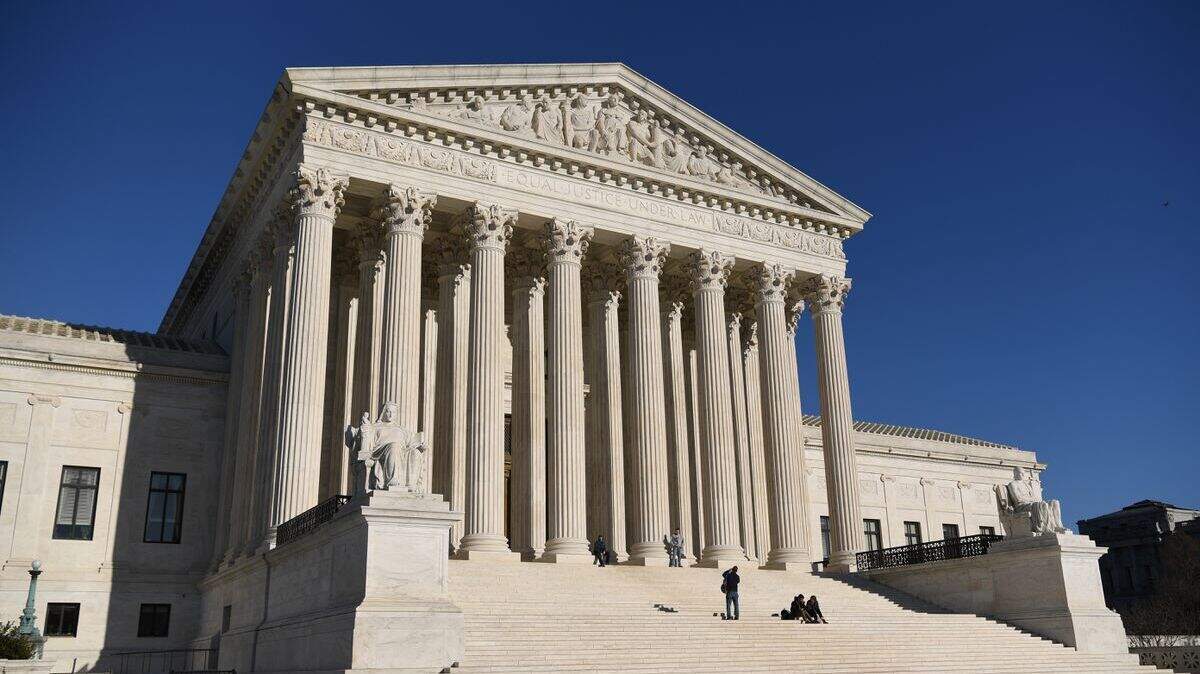
Note: Shortly after 6:30 pm on Friday, the U.S. Supreme Court dealt Trump allies, including five South Carolina Republican members of Congress, a decisive defeat in their effort with Republican colleagues to overthrow President-elect Joe Biden’s Nov. 3 victory at the polls.
The high court’s decision apparently puts an end to an unprecedented effort by the losing political party in a presidential election to overturn the results of the election by filing dozens of lawsuits in state and federal courts. Virtually all the lawsuits — more than 50 by some counts — had been dismissed for lack of evidence.
The justices said, in an unsigned two-paragraph ruling, that they were refusing to take up a legal bid by the State of Texas to seek a hearing in the Supreme Court. Texas had alleged, without providing specific evidence, that there was likely fraud in four battleground states — Michigan, Wisconsin, Pennsylvania and Georgia — that Biden won by decisive margins.
Texas had also argued that the legislatures in those states had been left out of crucial decisions about absentee and mail-in ballots.
But on Thursday, the four battleground states filed aggressive defenses in the Supreme Court, saying that their elections had been conducted legally, that Texas was making false allegations and that if the Supreme Court allowed Texas to interfere in their state elections, that would set off a never-ending chain reaction of lawsuits by losing states against the winners in every future presidential election.
The Supreme Court’s ruling was unsigned but two justices, Samuel Alito and Clarence Thomas, who noted that they would have heard Texas’s petition but they would not have acted on it.
Because it was unsigned, there was no way to tell where Trump’s appointees came down on the matter. They are Associate Justices Neil Gorsuch, Brett Kavanaugh and Amy Coney Barrett.
Here is the ruling:
“The State of Texas’s motion for leave to file a bill of complaint is denied for lack of standing under Article III of the Constitution. Texas has not demonstrated a judicially cognizable interest in the manner in which another State conducts its elections. All other pending motions are dismissed as moot.
Statement of Justice Alito, with whom Justice Thomas joins: In my view, we do not have discretion to deny the filing of a bill of complaint in a case that falls within our original jurisdiction.... I would therefore grant the motion to file the bill of complaint but would not grant other relief, and I express no view on any other issue.”
In a legal friend of the court effort filed earlier this week by the five Palmetto State members of Congress, the congressmen sought to disenfranchise voters in four battleground states of Georgia, Pennsylvania, Wisconsin and Michigan by in effect nullifying their Biden votes and then allowing the Republican-dominated legislatures in those four states to choose electors in the Electoral College.
Those Republican-chosen electors would then have presumably voted for President Trump in the Electoral College, allowing him to get the 62 combined electoral votes of Georgia, Pennsylvania, Michigan and Wisconsin and become president — even though Trump lost to Biden by more than seven million votes nationwide, and by many thousands of votes in each of the four states.
The South Carolina members of Congress who sought to cancel millions of Biden votes and give the election to Trump are Rep. Joe Wilson, R-Lexington; Rep. Jeff Duncan, R-Laurens; Rep. William Timmons, R-Greenville; Rep. Ralph Norman, R-Rock Hill; and Rep. Tom Rice, R-Myrtle Beach.
They, and their more than 100 Republican colleagues, claimed that “the election of 2020 has been riddled with an unprecedented number of serious allegations of fraud and irregularities.”
However, according to numerous news media and legal accounts, virtually all of those claims of election fraud have been proven to be without merit. Dozens of lawsuits filed in state and federal courts in those states have been dismissed for lack of evidence.
The Republican actions provoked a strong reaction from Rep. Jim Clyburn, D-S.C., of Columbia, who this week on CNN compared Republican actions to a “coup.”
On Friday Clyburn told The State, “It is only in autocratic countries where those votes that are cast against the party in power are determined to be fraudulent. With each passing day I am getting a better understanding of how Hitler took power in Germany.”
Earlier this week in South Carolina, Attorney General Alan Wilson, a Republican and Trump ally, joined with 17 other Republican attorneys general to side with Texas in an amicus brief filed in the U.S. Supreme Court. The Texas suit that Wilson agrees with raises questions about possible fraud in mail-in ballots and asserts that the Legislatures in the four battleground states should have made final decisions about voting in those states.
Wilson’s action was applauded by Drew McKissick, executive director of the S.C. Republican Party, who said on the party’s Facebook page, “Attorney General Alan Wilson ... understands just how critical election integrity is to our state and our country, and we’re proud he’s continuing to defend secure elections and protect the rule of law by filing the amicus brief.”
But Wilson, the son of Rep. Wilson, has faced criticism for his decision to try to overturn the election.
On Friday, The (Charleston) Post and Courier’s editorial page accused Wilson of “undermining the foundations of our Republic. ... We wonder how Mr. Wilson would like it if attorneys general in Democratic-majority states asked the U.S. Supreme Court to throw out South Carolina’s election results.”
Meanwhile, in legal filings in the U.S. Supreme Court, Michigan, Pennsylvania, Wisconsin and Georgia are fighting back, asserting that the numerous claims of elecdtion fraud have tossed out by various courts for lack of evidence.
Here are some excerpts from the four winning state’s filings:
▪ Pennsylvania’s Attorney General Josh Shapiro, a Democrat, called the Texas filing “bogus” and a “seditious (conduct bordering on treason) abuse of the judicial process.” The Supreme Court should write a ruling that will “send a clear and unmistakable signal that such abuse must never be replicated,” he wrote.
Texas’s effort to get the Supreme Court to “anoint Texas’s preferred candidate for President is legally indefensible and is an affront to principles of constitutional democracy,” Shapiro wrote.
Texas’s claims also constitute a “surreal alternate reality,” Shapiro wrote, adding if upheld, the Supreme Court would disenfranchise “all Pennsylvanians who voted and one-tenth of the voters in the entire Nation.”
▪ Georgia’s Attorney General Christopher Carr, a Republican, said the Texas filing is an “attack on Georgia’s sovereignty... (that) would trample the ‘historic tradition that all the States enjoy equal sovereignty’.” Historically, the Supreme Court only has intervened in disputes between states that involve matters such as boundary fights, water rights or pollution discharged into a neighboring state, Carr wrote.
Georgia has completed three total recounts of the vote for its presidential electors and has settled all election disputes in state courts of law in “multiple lawsuits ... all resolved in Georgia’s favor,” Carr wrote. “Texas nevertheless asks this Court to transfer Georgia’s electoral powers to the federal judiciary.”
▪ Wisconsin’s Attorney General Joshua Kaul, a Democrat, called Texas’s bid to scuttle the election an action “devoid of a legal foundation or a factual basis, ” and in any event, he wrote, the Constitution leaves to each state the right to settle its own election disputes.
Kaul added, “Nearly 3.3 million Wisconsin voters cast ballots for the office of President of the United States. ... Those votes have been counted, audited, and many have even been recounted. There has been no indication of any fraud, or anything else that would call into question the reliability of the election results.”
If the Supreme Court agreed with Texas, Kaul wrote, every national election from now on would be subject to challenge and “any state attorney general dissatisfied with another state’s results could sue in this Court, diminishing the legitimacy of this Court and this democracy in the process. “
▪ Michigan Attorney General Dana Nessel, a Democrat, wrote, “The base of Texas’s claims rests on an assertion that Michigan has violated its own election laws. Not true. That claim has been rejected in the federal and state courts in Michigan... Texas does not have a cognizable interest in how Michigan runs its elections.”
Nessel added that Texas’ challenge is an “unprecedented one, without factual foundation or a valid legal basis.”
In the Nov. 3 election, Biden beat Trump by seven million votes nationwide and won 302 electoral votes. If Trump were to gain the electoral votes of Wisconsin (10 electoral votes), Michigan (16), Pennsylvania (20) and Georgia (16), that would mean Biden would have only 244 electoral votes and hand the election to Trump.
On Nov. 3, Trump won states with 230 electoral votes, but if he could get Biden’s 62 electoral votes from Michigan, Wisconsin, Pennsylvania and Georgia, that would give Trump the election because 270 votes are needed to win.
The Electoral College votes will be officially tabulated Monday.
The independent U.S. Supreme Court internet news site, scotusblog.com, has authoritative coverage on the Republicans’ challenge to the Biden election.
This story was originally published December 11, 2020 at 5:21 PM.