
EXCLUSIVE: S.C. GOP flexible on some social issues
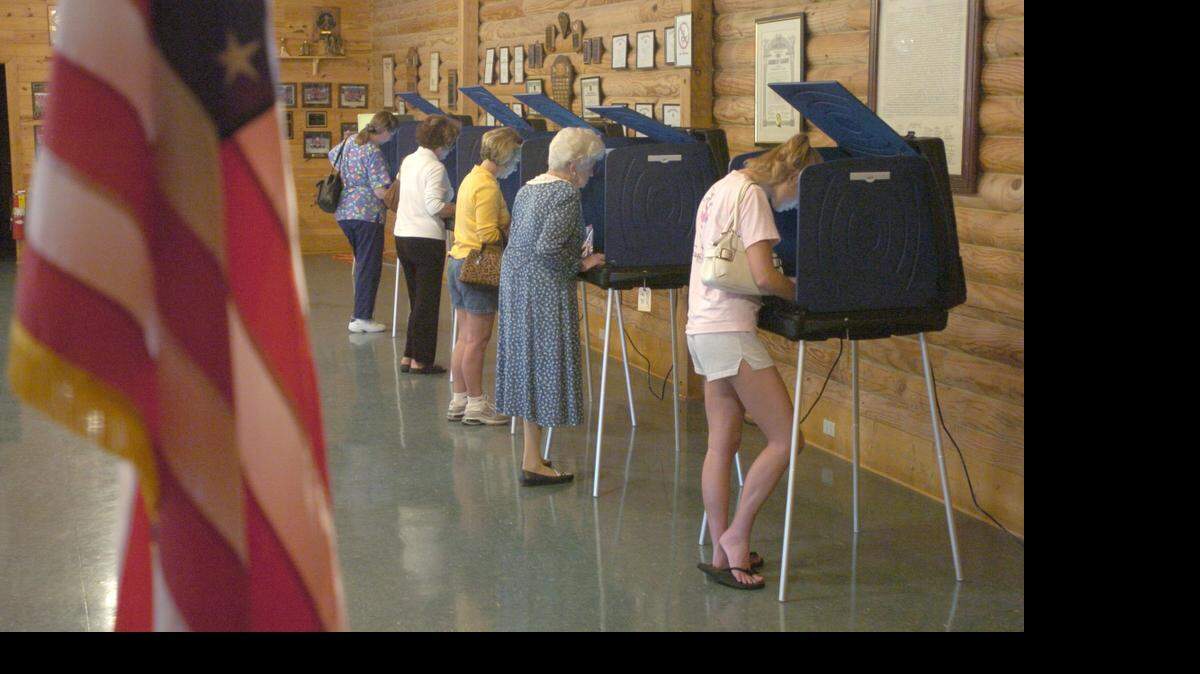
S.C. Republicans might not be the super-strict conservatives that they are perceived to be nationally, a new poll suggests.
But those voters also show signs of going rogue again in 2016, saying they are willing to vote for a candidate who they also say stands less of a chance of winning the presidency.
Those findings are important as another presidential campaign starts speeding toward South Carolina, a Republican-dominated state where the presidential primary, historically, has played a key role in nominating the GOP’s establishment candidate for president.
A Winthrop Poll of likely 2016 Republican presidential primary voters this month found more moderation among Palmetto State Republicans than some might suspect. Those voters favored:
▪ Permitting abortions in cases when the mother’s life or physical health is endangered or pregnancies were caused by rape or incest. The GOP’s 2012 national platform took a more hard-line stance, not mentioning any exceptions in its opposition to abortion.
▪ Allowing doctors to prescribe marijuana for medical purposes.
▪ Preventing businesses from refusing service to gay and lesbian customers.
▪ Requiring health-insurance providers to cover birth-control pills and procedures.
“We’re not all pitchforks and torches,” Greenville Republican political consultant Chip Felkel said of the poll results. “You don’t have to be completely on the far right of (the) spectrum to win in South Carolina.”
But that doesn’t mean candidates will have to temper their conservative views in South Carolina.
Most S.C. Republicans hold firm on some issues, the Winthrop Poll found.
By wide margins, those Republicans oppose same-sex marriage, which started in South Carolina last year, and legalizing marijuana for personal use.
More S.C. GOP voters also oppose abortion in cases where the baby might be physically or mentally impaired, or if the mother or family cannot afford to raise the child.
“While we’re not really as hardcore to the right as pundits would have us,” Felkel said, “we’re still pretty conservative.”
So election watchers shouldn’t be surprised if a more conservative candidate does well in the S.C. Republican presidential primary, set for February 2016.
S.C. Republicans — who rebelled in 2012 against their history of favoring the GOP’s establishment candidate, rejecting their party’s eventual nominee in favor of a more conservative candidate — could be readying to go rogue again.
The Winthrop Poll found more GOP voters plan to cast ballots for the candidate who shares their views as opposed to the candidate who could win the general election.
At the same time, however, most of those voters seem to acknowledge their choice for the GOP nominee, who could be more conservative, is less electable.
Asked who has the better chance of being elected in November 2016, S.C. Republican voters said a moderate candidate, not a more conservative politician.
“This is a conflict of the head and heart,” said Winthrop political scientist Scott Huffmon, director of the Winthrop Poll. “The heart wins in the primary.”
Juggling the issues
After spending time in the other early-primary states — Iowa, where Republican caucus-goers tend to be more socially conservative, and New Hampshire, where GOP primary voters can be eccentric — the Republican presidential candidates will find a more diverse group of voters in South Carolina, Palmetto political experts said.
“It’s more of a national snapshot,” Felkel said.
In South Carolina, GOP presidential candidates will need to be able to speak with the pro-business, social conservative and libertarian wings of the Republican Party, said York County Republican party chairman Wes Climer.
Juggling all those factions is an art, but the candidates need to remember one thing when speaking to S.C. GOP voters, Climer added.
They need to stick to their positions.
“It’s more important to be authentic about your values than try to tailor your message to please everybody,” he said.
State Rep. Joshua Putnam, R-Anderson, said S.C. Republican voters value their positions on social issues. But, he added, they may have bigger concerns in 2016 – the economy and national security.
“When people are home with their families, that’s what they tend to worry about,” Putnam said. “The things that directly affect their daily lives are more important, the things that hit the bottom line.”
Climer has a different view.
The economy might play a smaller role in the 2016 election after two consecutive presidential cycles where the recession and weak economic recovery dominated voters’ concerns, he said.
“Gas prices are down. Unemployment has improved. South Carolina is getting a lot of jobs,” Climer said. “That leaves space in people’s minds to consider more issues that they think are important.”
That could include social issues, such as abortion, he said.
Potential minefields
If the GOP race for president turns to social issues, the Republican presidential candidates will have to navigate some treacherous turf, Huffmon said.
Take abortion, for instance.
Republicans generally are pro-life, Huffmon said.
In 2012, the national party’s platform said: “(W)e assert the sanctity of human life and affirm that the unborn child has a fundamental individual right to life which cannot be infringed.”
That platform did not include any wording to allow for exceptions to the party’s opposition to abortion if, for instance, a woman’s life is threatened or in cases of rape and incest.
But a majority of likely S.C. GOP primary voters reject that hard-line stance.
One of five likely 2016 S.C. GOP presidential primary voters would make abortion illegal in all circumstances. About the same percentage would allow abortions under any or most circumstances.
But the majority of S.C. Republicans surveyed come down in the middle. The Winthrop poll found 54 percent said they would allow abortions in a few circumstances.
While that suggests some wiggle room for candidates who favor abortion in limited cases, problems start when the sound bites start, Winthrop’s Huffmon said.
That is because words can be twisted.
“If you wade into the abortion debate, you’re going to have to explain your position,” Huffmon said. “And if you’re explaining, you’re losing.
“You might want to avoid (the issue) unless you are completely against abortion. It’s just too dangerous a minefield to weigh in.”
Marijuana use could present the same sort of troublesome issue for the GOP candidates.
Talk about allowing medical use leads to questions about recreational use of the drug and that only generates more explanations, Huffmon said.
“They’re afraid of the slippery slope,” the pollster said of Republicans.
The issue of serving gay customers is more straightforward, with most S.C. Republicans opposing bias, Huffmon said.
“There’s a sense of discrimination and fairness,” the pollster said of Republican attitudes. “It’s their right as citizens to shop and participate in the economy.”
But the line of tolerance is drawn at same-sex marriage, where nearly seven in 10 likely S.C. Republican voters oppose gay marriage.
“That’s religious institution, and ‘They should not be able to do it,’ ” Huffmon said of the poll findings. Those results, the pollster added, mean “it’s easy for (Republican) candidates to be against it.”
As a result, the Republican candidates can dance past any potential issues about serving gay customers while, at the same time, opposing same-sex weddings. “They could go, ‘I think they should be able to get service anywhere, but I don’t think they should get married,’ ” Huffmon said.
‘Strategic voting’
Despite the poll’s findings that many S.C. Republicans are more moderate on abortion and gays than many would think, the GOP presidential candidates still can run on a more conservative platform in the state.
“Look, you don’t need 50 percent of the vote to win,” Huffmon said. Instead, a plurality can win.
In 2008, U.S. Sen. John McCain of Arizona, the eventual Republican presidential nominee, won the S.C. primary with only 33 percent of the vote. Four years later, former House Speaker Newt Gingrich won the S.C. primary with 40 percent.
As a result, the Republican candidates will spend time wooing small groups of voters as they try to chalk up a S.C. win, including those who might represent just 5 percent of tally at the polls, Huffmon said.
“You’re working to win over the one (faction) that will help you win the primary,” he said.
And there is some overlap.
“If you’re (a candidate who is) super-anti-same-sex marriage, you’re likely (also) super-anti-abortion,” Huffmon said.
That could set the stage for another surprise in the S.C. primary, which, traditionally, had awarded victory to the Republican establishment candidate.
That changed in 2012, however, with the S.C. primary going to a candidate — former U.S. House Speaker Newt Gingrich — who failed to win the GOP nomination.
And Palmetto State Republicans could go rogue again, Huffmon said.
Seven out of 10 GOP voters said in the Winthrop Poll that they would cast their primary ballots for the candidate who closely matches their beliefs and values.
Only a little more than two in 10 S.C. Republicans said they would vote for the candidate more likely to win the general election.
But when it comes to their opinion as to who stands the better chance of winning the general election, the opinion of S.C. Republicans shifts.
Roughly 60 percent of Republicans said a moderate candidate had a better chance of winning in November 2016. A little more than 35 percent said a strong conservative would win.
“That’s strategic voting,” Huffmon said. “They go, ‘My candidate might not win ... but I’ll vote that way so that the people who (get the nomination) will know the message and views of my candidate need to be represented.’ ”
S.C. GOP poll
Findings from the Winthrop Poll released last week that surveyed 956 S.C. likely Republican presidential primary voters between April 4 and 12. The poll’s margin of error was plus or minus 3.2 percent:
Allow abortions
Legal anytime: 12%
Legal most cases: 10.2%
Legal few cases: 53.6%
Illegal anytime: 20.9%
Recognize same-sex marriages
Yes: 25.9%
No: 68.8%
Refuse gay customers
Yes: 44.4%
No: 49.9%
Allow medical marijuana
Yes: 74.2%
No: 21.5%
Legalize marijuana
Yes: 20.5%
No: 76.3%
Require insurers to cover birth-control pills
Yes: 55.5%
No: 40.6%
Most important in a primary candidate
Matches your beliefs and values: 70.5%
More likely to win to general election: 23.8%
GOP candidate with best chance to win the general election
Moderate: 60.2%
Strong conservative: 36.8%
SOURCE: Winthrop Poll