
2015 legislative session: Sliding toward an ‘F’?
The S.C. Legislature gets – at best – an “incomplete” on its report card for its actions on key issues thus far this year.
When the session ends in early June, its final report card could be even worse – a well-earned F.
Some issues declared pivotal at the start of the session – including ethics reform – are dead.
Other priorities – reforming the way the state pays for its K-12 schools after a court ruling declaring that system unconstitutional – have been pushed off into the future.
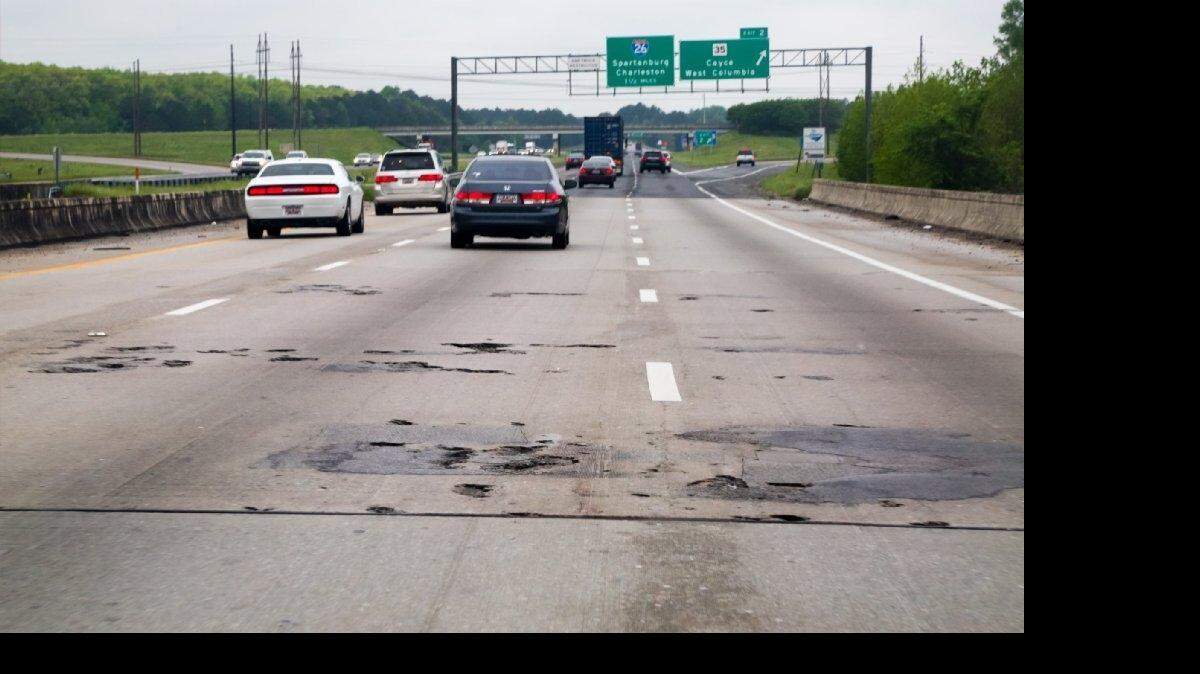
The fate of still other issues – including paying to repair the state’s crumbling roads, and paying for maintenance and buildings at colleges and tech schools – could turn on the willingness of the GOP-controlled Legislature to defy a Republican governor re-elected to a second term in a landslide last year.
For the first time in more than a decade, both the House and Senate entered the first year of their two-year session with new leaders.
In the House, Speaker Pro Tempore Jay Lucas, R-Darlington, succeeded Speaker Bobby Harrell, R-Charleston, who last year pleaded guilty to misusing campaign money for personal expenses and resigned.
In the Senate, Finance Committee chairman Hugh Leatherman, R-Florence, last year succeeded President Pro Tempore John Courson, R-Richland, who stepped down to avoid becoming lieutenant governor.
New Speaker Lucas attempted to jump-start the session, appointing committees to tackle top issues – including ethics, roads and domestic violence – before legislators even returned in January.
But some of those issues foundered anyway. Ethics reform, for example, appears to be dead.
Senate opponents, unconvinced of either the need for reform or the public’s interest in the subject, are stalling a House-passed bill that would make the first major changes to the state’s ethics laws that govern elected officials in more than two decades.
Other issues have more hope – a deal could be reached on fixing the state’s crumbling roads, for example. Another deal – possible, if not probable – could salvage a proposal to repair falling-apart college buildings and armories.
A glance at where the top issues stand with just more than a month to go in the 2015 session:
Likely to get done
▪ Roads: Under pressure from voters and business leaders, the GOP-dominated S.C. House passed, 87-20, a road-repair proposal. That bill, sponsored by Rep. Gary Simrill, R-York, would increase the state gas tax by the equivalent of 10 cents a gallon to 26.75 cents. The proposal also would increase the cap on the state’s sales tax on vehicles to $500 from $300. However, Gov. Nikki Haley has said she would veto a roads proposal that does not include a massive tax cut. In an attempt to appease Haley, the House bill includes a $48-a-taxpayer income tax cut. But Haley, who has proposed cutting state revenues by three times the amount the higher gas tax would raise, says that is not enough. The Senate Finance Committee will take up the House roads proposal Tuesday.
▪ S.C. State University: Lawmakers are ready to replace the leadership at S.C. State University after the financially troubled school’s deficit grew despite receiving $7.5 million in state loans and cash infusions. The House and Senate have approved bills to oust trustees from the state’s only historically black public college. But the House and Senate must negotiate a compromise after failing to agree on how to appoint interim trustees.
▪ Social Services: Lawmakers likely will OK additional child-welfare caseworkers for the S.C. Department of Social Services after reports surfaced last year that heavy caseloads and high turnover rates were putting children in harm's way and contributing to deaths. Social Services' previous director, Lillian Koller, resigned last year. Lawmakers tasked the agency's new director, Susan Alford, with enacting reforms across the agency. Alford has requested more than 250 full-time employees, and the Senate Finance Committee approved that request. Now, the full Senate and House must sign off too.
Up in the air
▪ Maintenance on colleges, armories: Gov. Haley helped kill a S.C. House proposal to borrow roughly $500 million for deferred maintenance at state-owned buildings and armories, and building projects at technical schools and colleges. In the GOP-majority Senate, however, finance leader Leatherman introduced a proposal to borrow $237 million solely for repair and building projects at technical schools, colleges and armories. Haley has threatened to veto that bond proposal, too. To pass the Senate, the proposal will require two-thirds support. Then, it would go to the House, and, after a promised Haley veto, would go back to the House and Senate, where two-thirds of members would have to vote to override the just-re-elected governor. But Haley so overplayed her hand on the road-repair issue that legislators could delight in declaring their independence and overriding her veto.
▪ Domestic violence: Advocates held a State House rally last week to urge lawmakers to pass a law that they say could make South Carolina safer for women. However, a Senate bill, which would classify offenses into degrees and prohibit those convicted from owning guns for up to 10 years, has been sitting in the House Judiciary Committee since early March. A House proposal also would classify offenses into degrees. “There are a lot of good things in both bills,” said victims’ advocate Laura Hudson. But, she added, advocates prefer the Senate bill with pieces of the House proposal added, including establishing an education component in schools and “a cleanup” of bond issues for accused abusers.
▪ Abortion: A bill that would ban abortions after 19 weeks passed the House earlier this year. A Senate committee also has OK'd the proposal, sending it to the full Senate. The Senate voted Thursday to give the bill one of three priority spots on its calendar, likely forcing a debate as the clock winds down on the legislative session.
Next year, maybe?
▪ Addressing rural schools: After the S.C. Supreme Court declared the state's K-12 school system unconstitutional last October, House and Senate leaders formed panels to propose education reforms. However, the fruits of those labors – including how to improve rural and poor schools – will not ripen this legislative session. The House panel, formed by Lucas, will submit a report on its findings early next year. A Senate panel, formed by Leatherman, met for the first time last week.
▪ Medical marijuana: State Sen. Tom Davis, R-Beaufort, and state Rep. Jenny Horne, R-Dorchester, were on part of a medical marijuana study committee before the session started. Subsequently, Davis introduced three bills, including one to expand the legal uses of marijuana to treat medical conditions, including glaucoma and cancer. That bill likely will be taken up next year, the second year of the current session. “You want to make sure you get this right the first time,” Davis said.
Not likely – ever
▪ Ethics: Ethics reform, one of Gov. Haley’s top issues for the session, passed the House but is tied up again in the Senate. Senators do not want to stop having lawmakers investigate themselves, saying the Senate Ethics Committee works just fine, thank you. Senators also say the public doesn’t care about the issue – even after half-dozen scandals involving governors, lieutenant governors, and House and Senate members. Senate Judiciary Committee chairman Larry Martin, R-Pickens, tried to get the House bill debated in the Senate and failed. Martin now says he does not see opponents of ethics wavering.
Racing toward the end of the session
Where key issues stand with a little more than a month to go in the 2015 legislative session:
Likely to pass
▪ Road repair funding, though there will be a fight with Gov. Nikki Haley
▪ Sacking S.C. State’s trustees and naming interim leaders
▪ Adding caseworkers to the embattled Department of Social Services
Up in the air
▪ Borrowing to repair buildings at state colleges, tech schools and armories, and construct new buildings
▪ Toughening domestic-violence laws
▪ Banning abortions, with some exceptions, 20 weeks from conception
Next year, maybe?
▪ Reforming K-12 schools, particularly rural and poor schools, after an S.C. Supreme Court order
▪ Legalizing marijuana for medical uses
Not likely – ever
▪ Toughening ethics laws that govern elected officials
Key dates
Friday: The deadline for bills to cross over from one chamber to the other. After that deadline, proposals have little chance of becoming law this year, requiring a two-thirds vote even to be considered by the other chamber. That's a high hurdle for contested measures. However, bills that don't pass this year don't completely die. Debate can resume in January, when the Legislature returns for the second year of its two-year session.
June 4: Last day of the session
This story was originally published April 26, 2015 at 7:09 PM.