
SC Democratic Primary: Winners & Losers
WINNERS
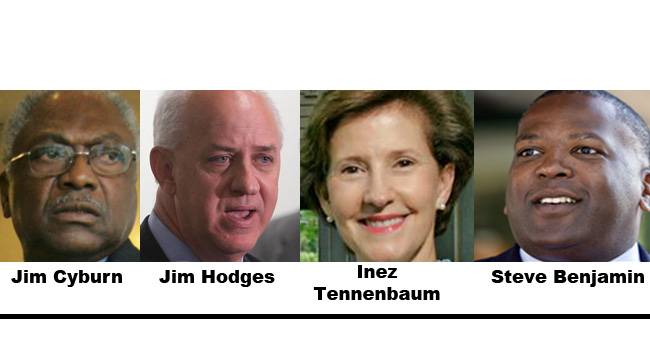
1. Jim Clyburn/Hillary Clinton’s S.C. supporters
Clinton’s win came with homegrown help.Charleston native Clay Middleton directed Clinton’s state effort, adding a win to his political resume. The military veteran is a former aide to U.S. Rep. Jim Clyburn, D-Columbia, and was the state political director for Obama for America.
Clyburn also can claim a win after he decided to break his pledge to remain neutral, endorsing Clinton the day before Nevada Democrats caucused. He shares that win with others who endorsed Clinton — former S.C. Democratic Govs. Dick Riley and Jim Hodges; former Obama Administration official and state schools chief Inez Tenenbaum; more than 30 state legislators; and 80 local elected officials across the state, including Columbia Mayor Steve Benjamin and former Charleston Mayor Joe Riley.
2. Team Sanders
Despite losing the primary, Sanders drew massive crowds of enthusiastic supporters to his events. His populist appeal to activists and progressives also injected excitement into a campaign that, otherwise, was shaping up to be a Clinton coronation. Feeling “the Bern” the most were young voters, a group Sanders aggressively courted.
Sanders won 63 percent of voters under the age of 30, according to MSNBC exit polls. But those voters cast only 15 percent of the ballots. Clinton won 80 percent of voters 65 and older, compared with Sanders’ 19 percent.
Sanders also made young black S.C. voters a top priority. He and his surrogates made several visits to the state’s historically black colleges, sometimes drawing large crowds.
3. S.C. Democratic voters
Given Clinton’s sizable lead at the campaign’s start, Clinton probably could have spent less time in South Carolina and still won.
Meanwhile, the time Sanders spent here only helped him narrow Clinton’s margin of victory, suggesting that he, too, could have used that time elsewhere. In early-voting Nevada, for instance, Sanders overtook Clinton in some polls just before that state’s caucus, but she rebounded, narrowly winning.
Instead of campaigning elsewhere, however, the candidates kept a steady focus on South Carolina.
The winners? S.C. Democrats who got to see both candidates regularly. They appeared roughly two dozen times each in the state, meeting the voters face-to-face.
Clinton’s win also means S.C. Democratic voters likely can claim they picked their party’s eventual nominee.
LOSERS
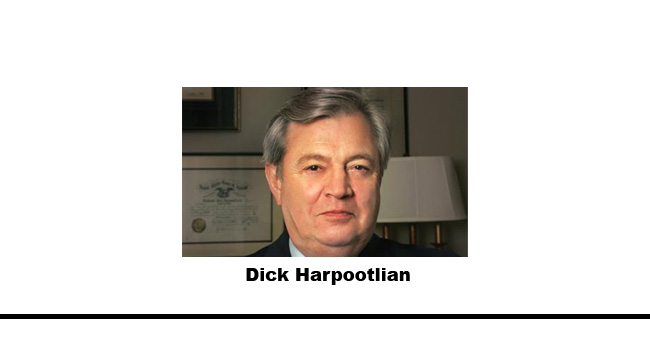
1. Dick Harpootlian/Bernie Sanders’ S.C. endorsers
Sanders’ list of endorsements from S.C. Democrats was sparse in comparison to Clinton’s. But he did snag one high-profile backer: Columbia attorney Dick Harpootlian.
The former S.C. Democratic Party chairman, who door-knocked for Bill Clinton’s White House run, aggressively lobbied for Vice President Joe Biden to seek the Democratic nomination.
During his search for an alternative to Hillary Clinton, Harpootlian often caustically criticized Clinton, saying, for example, she would “die by 1,000 cuts” for using a private email service for State Department business. After Biden said he would not run, Harpootlian planned to stay out of the race. Then, he talked to Sanders and decided to back the septuagenarian with a millennial following.
If Clinton wins the presidency, Harpootlian shouldn’t count on receiving any invitations to the White House.
2. Sanders and the African-American vote
The Sanders’ campaign knew the senator faced a tough uphill climb heading into the S.C. primary, but said a strong showing among African-American voters could count as a win for the senator.
Those voters turned out Saturday — but not for Sanders. Clinton won 84 percent of black voters, compared with Sanders’ 16 percent, according to exit polls.
African-American voters were a decisive factor in the race, casting 62 percent of the ballots in Saturday’s primary, according to MSNBC exit polls, an increase from 2008, when 55 percent of the votes were from blacks.
White voters cast 34 percent of the ballots. According to exit polls, Sanders won 58 percent of white voters compared with Clinton’s 42 percent support.
3. Democratic turnout
S.C. Democratic Party officials expected turnout to fall short of their 2008 primary numbers, when Barack Obama was on the ballot and more than 500,000 S.C. Democrats voted, exceeding turnout in the GOP primary that year.
With 95 percent of the vote counted Saturday, 348,928 ballots had been cast.
Party chairman Jaime Harrison predicted last week that between 350,000 and 400,000 ballots would be cast, meaning roughly one out of every eight registered voters would go to the polls.
S.C. Republicans drew far more voters last weekend, when more than 740,000 ballots were cast in the state’s GOP primary. That was one in every four registered voters.
This story was originally published February 27, 2016 at 7:20 PM.