Penguins frozen for centuries emerge from melting ice. NC scientist took a closer look
Penguins’ remains were frozen for at least 800 years — until a warming world melted the snow and ice that had kept them intact.
North Carolina researcher Steve Emslie said he was part of a team that made the discovery in Cape Irizar, a part of Antarctica where penguins weren’t thought to live. Emslie was puzzled to find fresh-looking remains there and took a closer look at samples, he told McClatchy News on Thursday.
It turns out, nature had preserved the penguin remains for centuries until melting snow allowed them to emerge, according to an article published this month in the journal Geology.
Though ancient remains had been found as a result of disappearing glaciers in North America and Europe, the group saw the first known instance of it happening in Antarctica, according to the University of North Carolina Wilmington.
The changing conditions brought bones, feathers and guano to the surface, photos show. Among the remains was a mummified penguin chick, believed to date back 800 years.
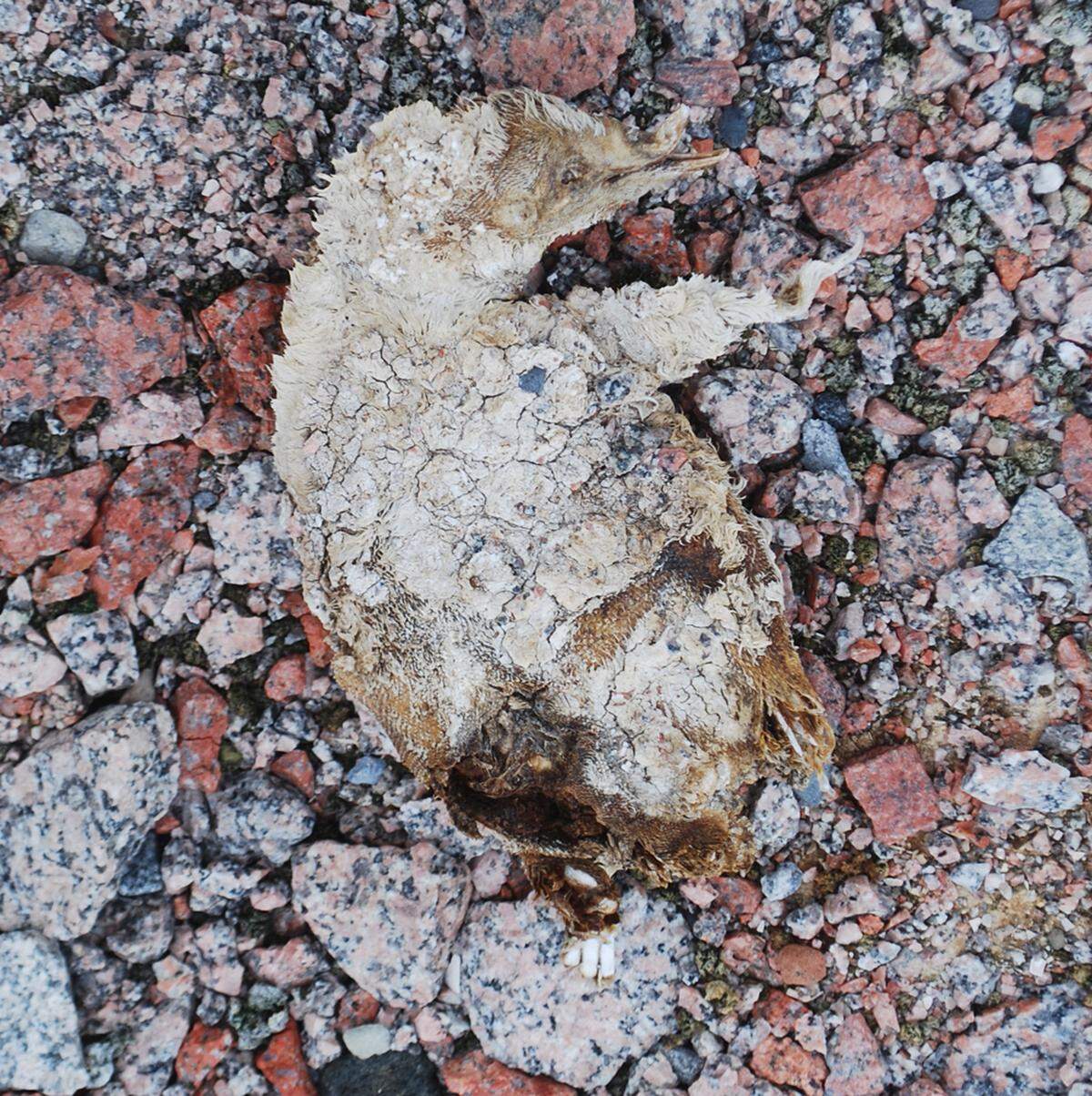
Emslie said he hopes the recent exposure of animals that lived at the now-abandoned site can offer clues to help keep today’s penguins from going extinct.
“It tells us more about their responses to climate change in the past,” said Emslie, a biology and marine biology professor at UNCW. “And that’s useful because what happened in the past provides us a window to the future. The way climate change is going today is definitely impacting penguins and their behavior and survival.”
The initial discovery was in 2016, at a time when satellite images showed snow melting around Cape Irizar, according to the research.
“Going into that area for the past decade, I have noticed some changes there now that are starting to appear from the warming trend: melting glaciers, streams of water through penguin colonies and now this site being exposed by snow melt,” Emslie said.
The remains are part of the Adélie penguin species, which is still around today and listed as “near threatened.” The animals weigh up to 12 pounds and spend their time in water and on land, according to National Geographic.
Retreating ice can pose risks to the penguins, while too much ice can make it hard for the animals to access food, the World Wildlife Fund said on its website.
Emslie, who has been to Antarctica more than a dozen times, said having his findings about the penguins published in a journal is “very satisfying,” according to UNCW.
“That strengthens and validates the paper and its results among the scientific community,” he told the school. “It will be viewed by a broad audience and hopefully generate more research in this region of Antarctica.”
This story was originally published September 25, 2020 at 8:53 AM with the headline "Penguins frozen for centuries emerge from melting ice. NC scientist took a closer look."