
Trees are the heart of this South Carolina city. What’s happening to them?
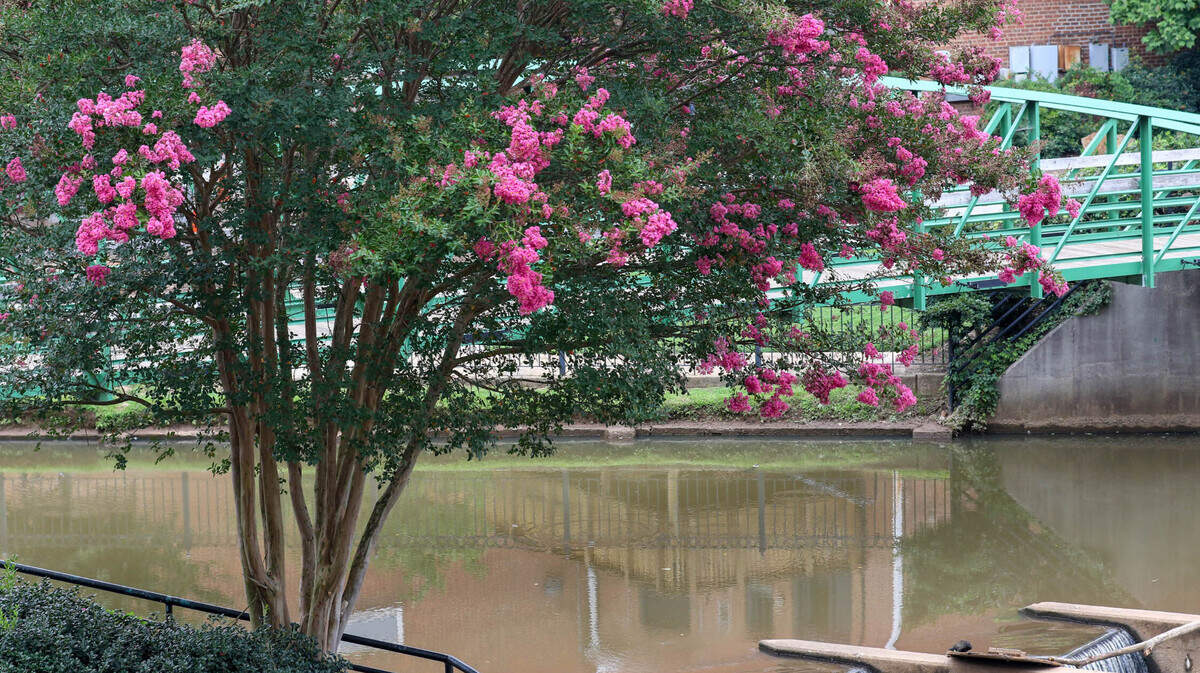
The 40-plus-year-old willow oaks that arc cathedral-like over Greenville’s Main Street disguise what’s happening in the city around them.
Greenville is steadily losing trees, thousands over the past decade, resulting in just over a third of the land having tree canopy. That is the same percentage as roadways, sidewalks, parking lots and any covered surface.
To be sure, grand developments contributed. Clemson’s International Center for Automotive Research covers 250 acres that, although still heavily wooded, has slowly been built on and paved over for the school and some large businesses. Hundreds of apartments and condominiums and their associated parking structures ring the edges of the city center.
But like the frog dropped into tepid water who doesn’t realize how hot the water became, Greenville’s tree canopy has decreased one by one, largely in residential neighborhoods as homeowners cut down a heritage tree here, a diseased tree there or replaced small homes with larger ones.
“It’s in every sector of our community,” said Edward Kinney, the city of Greenville’s landscape architect.
City officials are working to update a tree ordinance passed just 11 years ago to make it more costly for people to cut down trees and perhaps to offer some sort of incentive to developers and others to keep as many trees as possible.
“It’s the carrot and the stick approach,” Kinney said.
As proposed, the ordinance would require a person or business cutting trees to pay more, perhaps as much as 10 times, the amount they pay now. The money would go into the city’s tree fund, which is used to plant trees in public parks and along rights of way.
To avoid the payment, people would have to replace the trees with more trees than they cut down and select a variety of species of native trees.
The benefits are deeper than beauty. Adequate numbers of trees clean the air, stabilize the soil, provide habitat for animals and clean rivers and streams, said Megan Chase, clean water specialist for Upstate Forever.
The biggest question, Kinney said, is whether the ordinance should apply to lots with single family homes, where most of the decrease has occurred.
There is a natural resistance to a government telling a private homeowner what they can do with their property, he said. The biggest change for private homeowners would be that trees on the interior of their property would fall under the ordinance. Now the ordinance applies only to trees in rights of right or in buffer areas.
A recent survey showed 57 percent of respondents thought not only single-family homes should be regulated by a tree ordinance but affordable housing projects should as well.
Kinney said the city has watched its tree canopy for years using satellite images but it was a flyover by the U.S. Forest Service that made them aware of how dire the situation is.
“We want to discourage thoughtless development. We need better development,” Kinney said.
Chase and Katie Callahan, chair of Friends of the Reedy River and director of the Clemson University Center for Watershed Excellence, said the new ordinance to be effective must apply to single family lots.
Chase said trees on the site of affordable housing projects should be regulated as well. For too long, historically low income neighborhoods have endured the negative environmental effects of limited or no tree canopy.
“But we want to be sure the cost is not incurred on the resident,” she said.
Chase, who is also a member of the Friends of the Reedy River, and Callahan advocate for the city to use some of the money from fees to help homeowners pay for trees or at the very least to have access to an arborist to help maintain the trees they have.
Other cities have done that, Callahan said.
Callahan wants the ordinance to be expanded to include smaller trees in floodplains. Such vegetation acts like concrete to protect the riverbank. It holds the soil in place during flooding.
Chase said those smaller trees slow down the flow of water, helping to clean the river.
The challenge is that much of the Reedy River watershed is owned by individuals, Callahan said.
Kinney said buffer zones along rivers are protected, but smaller trees within them are not.
“A robust set of stream bank revitalization projects has been recently undertaken by the city and has resulted in the re-naturalization of several of our waterways. Affording additional protections to trees in riparian areas would contribute to the overall health of our ecosystems and is an idea that we are investigating,” he said.
The new Greenville ordinance is based on one Atlanta passed 20 years ago that set an aggressive payment and replacement program. But Atlanta has not been able to get to its 50 percent tree canopy goal.
They have been embroiled in a contentious fight to update the law for more than a year.
“They are still losing trees despite a vigorous ordinance, Kinney said. “That additional cost isn’t enough to dissuade developers from cutting down trees. It’s a cautionary tale.”
And one that points toward incentives, not just payments or replacement.
The only incentive they have now is goodwill, educating people about the importance of trees.
Kinney said Greenville has not proposed any incentives so far but other municipalities have. Some offer an expedited permit process, stormwater credits and density bonuses.
Charlotte uses its tree fund to buy more land.
“What happens if you run out of land?” Kinney said.
In Greenville, 17,000 more trees would fit on available public land, bringing the tree canopy to 43 percent of the city’s land mass. That would mean no open space.
“There is value in open space,” Kinney said.
The tree fund, which has about $5,000 in it, is used to plant trees in rights of way and parks. The city plants about 200 trees a year, Kinney said.
The Greenville Planning Commission will consider the updated ordinance before it goes to the City Council for consideration.