
Endangered whale spotted off South Carolina coast, with calf by her side
A North Atlantic right whale and her calf were spotted Nov. 15 off the South Carolina coast.
It’s the first sighting of the season, according to the National Oceanic and Atmospheric Administration.
“This sighting is a great reminder we all need to slow down,” NOAA Fisheries in the Southeast warned boaters.
That’s because right whales need space equivalent to that of five football fields, the agency said. Calves can reach up to 14 feet at birth while adults can be a whopping 52 feet and weigh up to 140,000 pounds.
The endangered species has seen an “unusual mortality event” since 2017, with about 10% of the population dying, the agency said. Most deaths are the result of ship strikes and fishing gear entanglements.
Right whales are one of the rarest mammals on Earth — with fewer than 400 left, NOAA said. Some migrate more than 1,000 miles every fall from “their feeding areas” off the New England and Canadian coasts to North Carolina, South Carolina, Georgia, and northeastern Florida.
Whales regularly give birth in the Southeast
The southeastern U.S. is also the only region where females “regularly give birth and nurse their young,” NOAA said.
Researchers documented 19 calf births this year — and only 22 births occurred “during the previous four calving seasons combined,” the agency said.
But Clay George, senior wildlife biologist with the Georgia Department of Natural Resources, hopes that number will continue to rise, Georgia Public Broadcasting reported.
“I’m trying to stay optimistic in the sense that we’ve been hearing from colleagues in Canada that the last couple summers the whales have looked pretty good especially in the Gulf of St. Lawrence and that they seem to be finding food,” George told the station. “We keep waiting for this period where we have a good chunk of the females that show up and are pregnant. So every year that goes by with very few calving females means that there’s that many more that are available to calf. They can only calf every three or four years at the most frequent.”
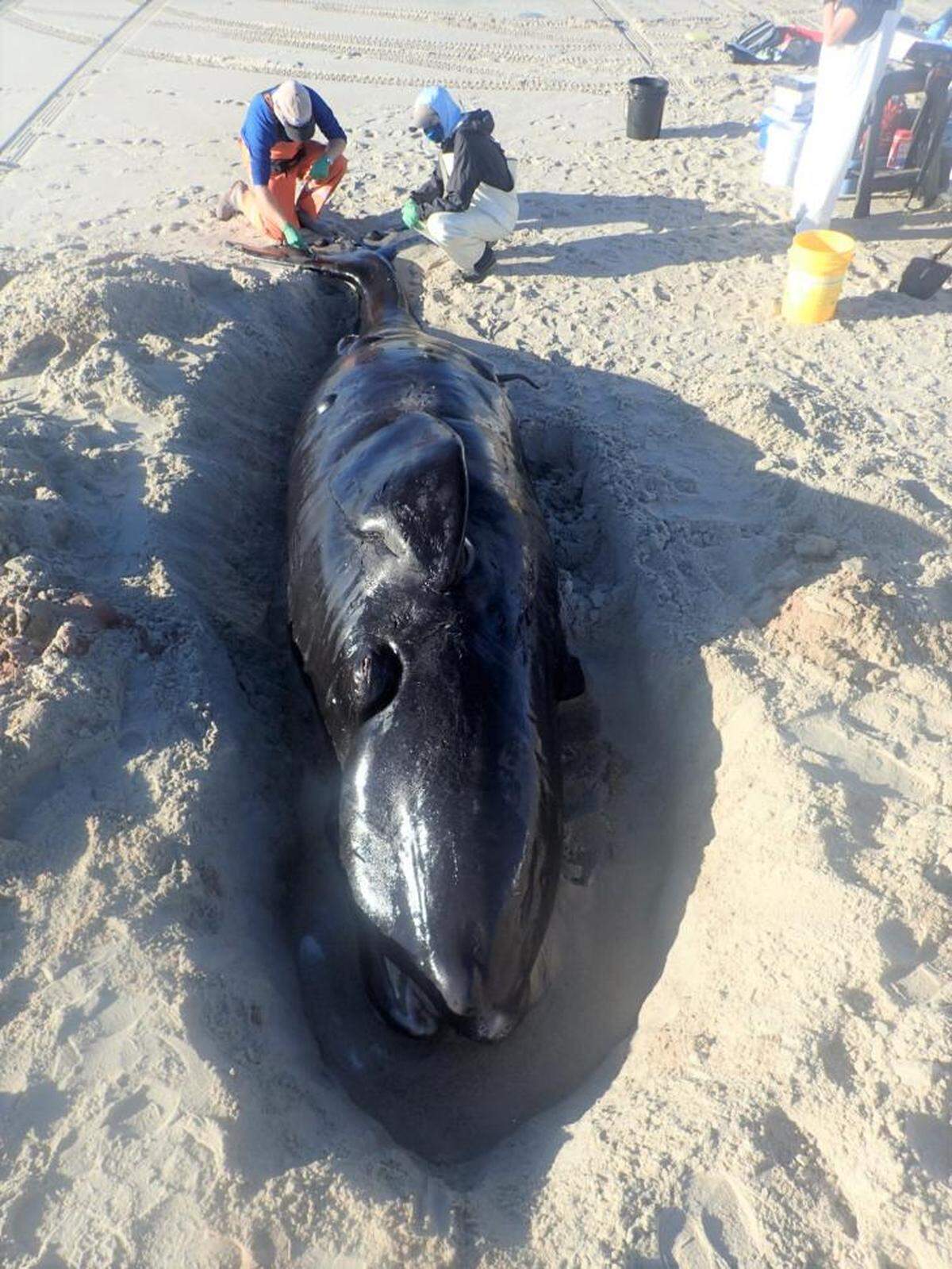
The first documented newborn calf of the 2020 season was found washed ashore on a barrier island off North Carolina, according to NOAA. An autopsy report suggests the calf may have died during birth.
Right whales are one of the slowest whales in the water, reaching up to 10 miles per hour and diving to depths of 1,000 feet, according to Ocean Conservancy.
.png)