Is Buc-ee’s the new Boeing in SC? Why a gas station commands economic power in this state
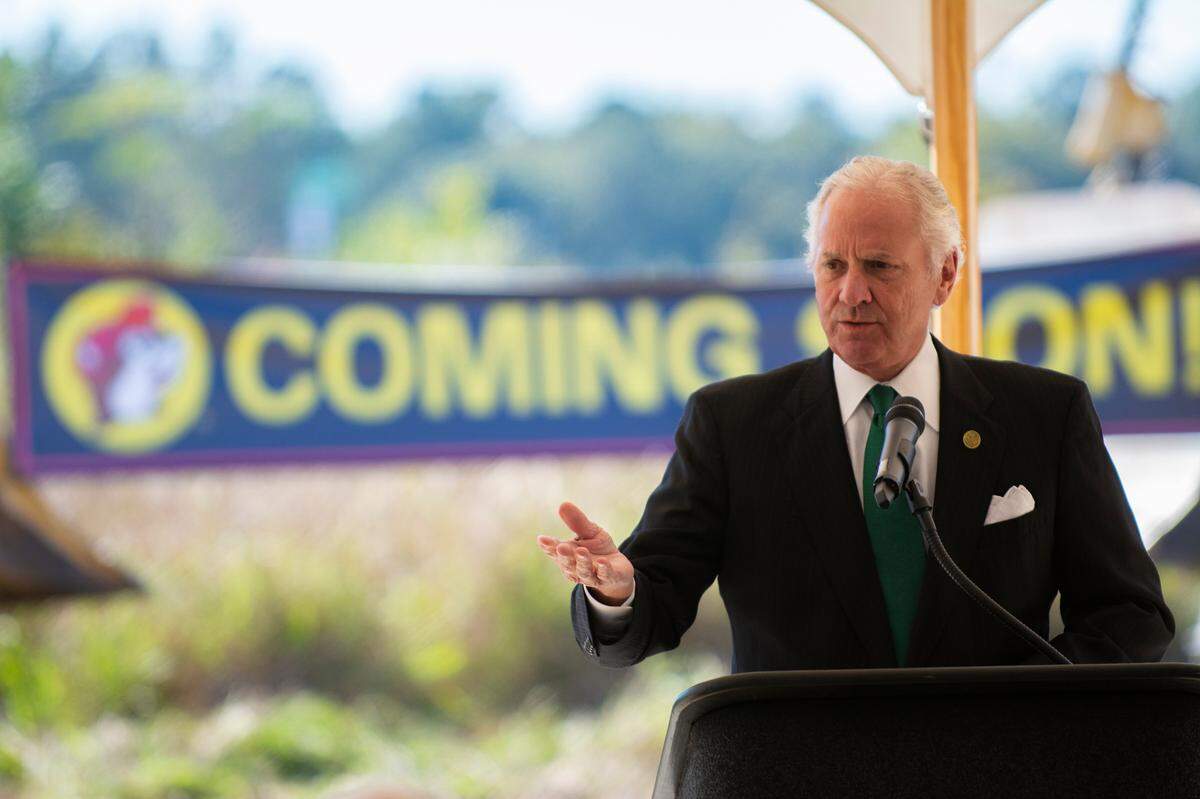
One of the only people willing to even hint that it’s a little weird for South Carolina’s governor, House speaker and at least four other politicians to show up for the opening of a Buc-ee’s — a gas station — is the governor himself.
“I’ve been to a groundbreaking for a lot of things, for Mercedes, for BMW, for Volvo, for Walmart, everything in between, but never been to a groundbreaking or a ribbon cutting for a gas station,” Gov. Henry McMaster said at the Buc-ee’s ribbon cutting May 16. “But here we are today.”
Everyone else, including the governor in every other conversation about Buc-ee’s, will say again and again — they might even cut you off if you disagree — that Buc-ee’s is “not just a gas station.”
“You haven’t had the Buc-ee’s Kool-Aid yet, or you wouldn’t even be saying such things,” said Rusty Burns, administrator of Anderson County, the next place in South Carolina that will get a Buc-ee’s.
To those politicians and much of the public, Buc-ee’s is an economic driver, a creator of jobs, a store that contains “basically like half a Costco” and an attraction that is like “Disney meeting Walmart.”
Ultimately, Buc-ee’s existence does boil down to being, well, a larger-than-average gas station.
That “gas station,” however, has come to represent a big economic deal for not just Florence but for the state, with the promise of millions in tax revenue, hundreds of jobs and raised standards for the pay and benefits retail in the state could offer.
This gas station is in fact a bold business statement in a state that prides itself in being “open for business.” The governor himself put this gas station in the same class as major economic players like Mercedes, Volvo, Walmart — companies worth hundreds of billions of dollars to Buc-ee’s $500 million.
At times, all of the fanfare surrounding Buc-ee’s makes it look like the convenience store company is being treated with the same kind of stature as Boeing, a major economic whale that South Carolina fought hard to recruit and has brought more than 5,000 jobs to the state. Now, Buc-ee’s is making a big splash of its own.
Yet, unlike aerospace giant Boeing, which got hundreds of millions of dollars in tax breaks from the state to come to Charleston, Buc-ee’s, for the most part, is paying its own way to be in South Carolina.

Help from lawmakers
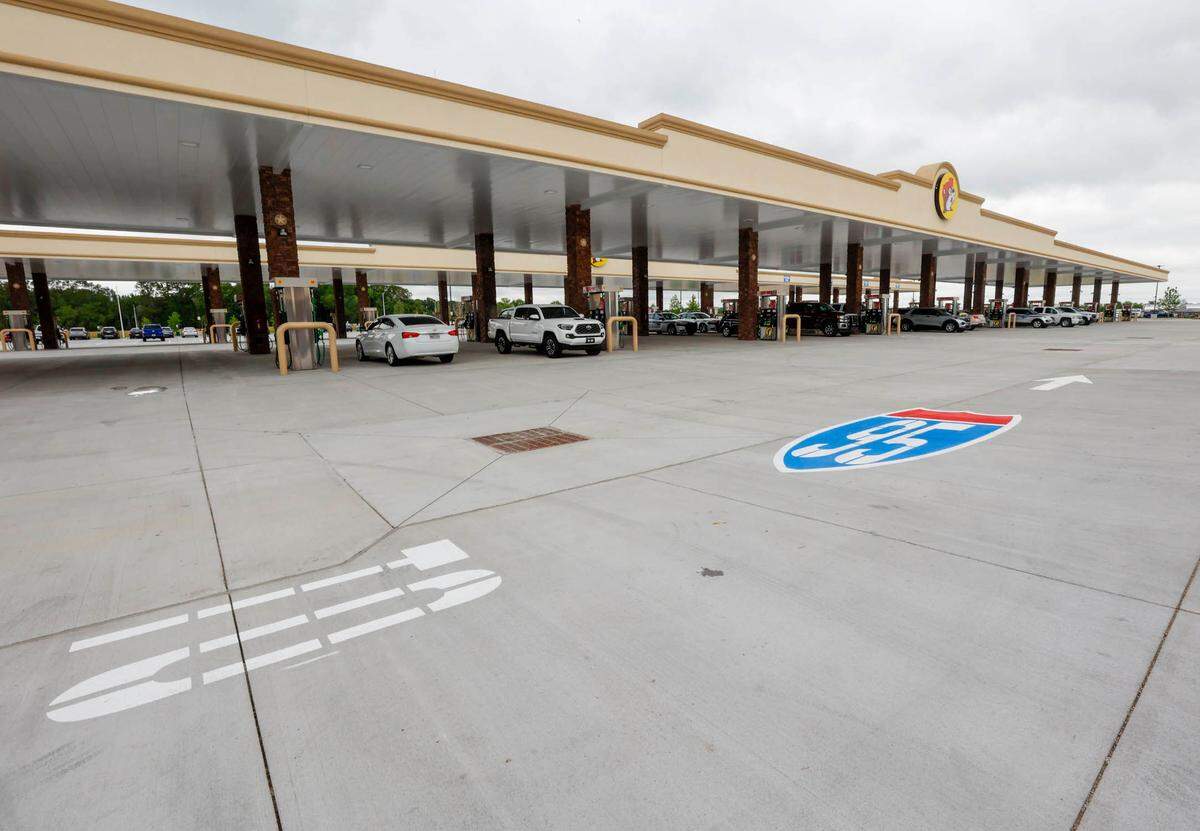
No small enterprise could command the overhaul of a major highway interchange in order to accommodate traffic to its business. Buc-ee’s wanted that in South Carolina, and Buc-ee’s got it — with the help of some of the state’s power players. And, Buc-ee’s paid for it, to boot.
At a meeting in Florence several years ago, the company gave a presentation about the potential impact on traffic of opening up the store. The company said it needed the ability to direct traffic straight from the highway into the store’s parking lot to ensure cars wouldn’t back up on Interstate 95.
In Alabama, one of the first state’s Buc-ee’s expanded to, the opening of the store in Robertsdale had created a traffic nightmare. The company wanted to avoid a repeat. The problem? They were having trouble getting through to the South Carolina Department of Transportation to get the help they needed.
Buc-ee’s owner Beaver Applin was at that meeting. So was Murrell Smith, a state representative and Florence native who’s since become the S.C. House speaker.
Smith set up a meeting between state transportation officials and the company.
Buc-ee’s gave the same traffic presentation and had the state officials convinced. All the company wanted was raised concrete barriers that would direct cars taking Exit 170 going south that wanted to go to Buc-ee’s directly into their parking lot. The state approved it.
State transportation spokesman Pete Poore said the company paid for “all of the design and actual construction of the road and signal improvements necessary,” and the state provided a “technical review and guidance” along the way.
Smith said the issue was simple. He was helping Buc-ee’s like he would any other business that wants to come to the state.
“Any business that’s going to come to South Carolina, it’s important to me that South Carolina is perceived as a business-friendly state,” he said. “Anyone that needs assistance — my philosophy is I need to help people navigate state government, so they can open and successfully operate a business.”
And, yes, Smith is a Buc-ee’s fan. His first trip to Buc-ee’s was in Florida. His children, ages 8 and 13, were obsessed.
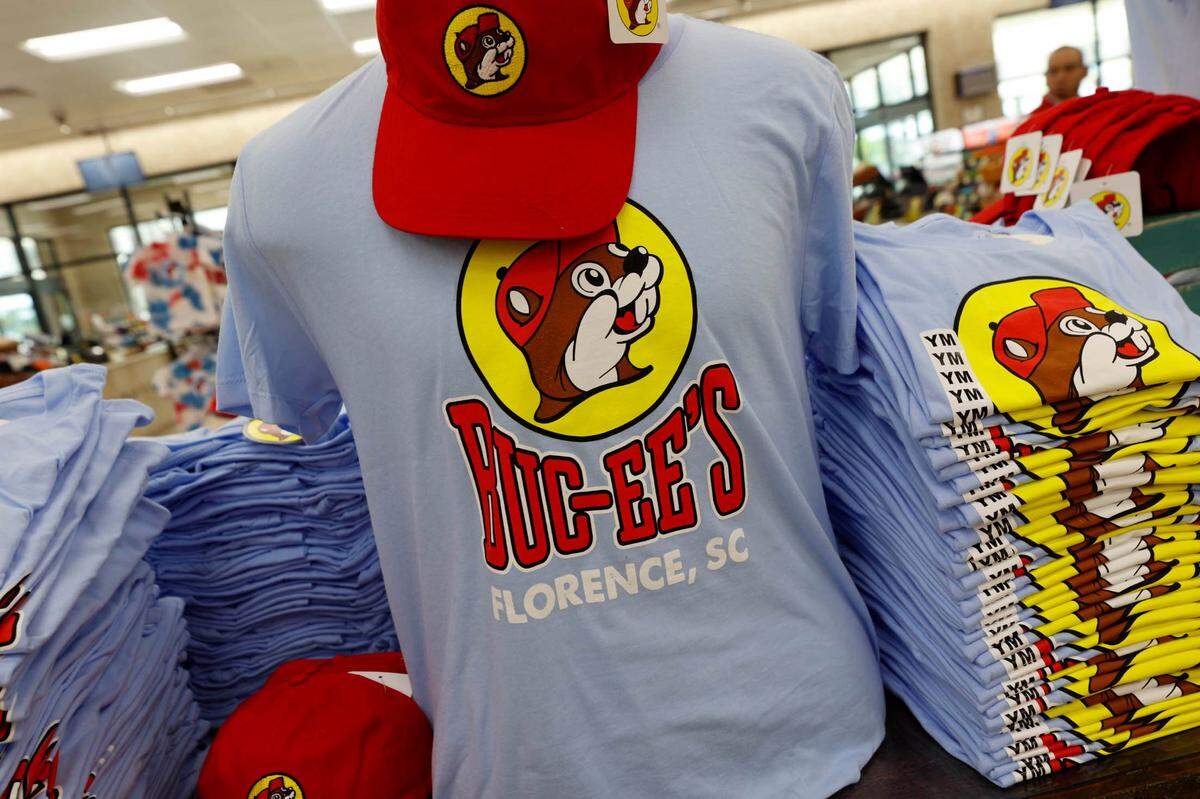
“I went in there and spent hundreds of dollars. I’ve got hats, t-shirts. I got a beaver stuffed animal. We took home nuggets. We ate breakfast. We ate lunch,” he said. “We have done the whole experience at Buc-ee’s.”
But Smith, like others interviewed, said his primary reason for supporting the company was because of how it would help Florence and South Carolina as a whole. He talked about how the single Buc-ee’s location alone created more than 300 jobs, all of them paying $18 per hour or more, and the gas tax revenue it will generate.
“One of the reasons that we raised the gas tax a few years ago was because 30% of the revenue comes from people who are not from South Carolina but are only passing through here,” he said, noting that Buc-ee’s will give people another reason to stop in the state, rather than just driving through.
Florence Mayor Teresa Myers Ervin echoed Smith’s sentiments. Though she is proud of her city, regardless of whether it has a Buc-ee’s, Ervin said the business gives travelers another reason to stop in Florence, see the sights and support her community.
The opening of Buc-ee’s “showcases all the work that has been done,” Ervin said, noting the way both state and local leaders worked to bring this business to Florence. “Buc-ee’s has a national reputation. To have it here in South Carolina is something that’s truly significant.”
Coastal Carolina University hospitality professor Taylor Damonte said the high pay for these jobs will likely raise the standard for wages across the Pee Dee. Already, wages have been going up across the state, especially in hospitality and retail, as the nation faces one of the most intense worker shortages in modern history. Now, businesses will have to further reassess what it takes to attract workers.
Buc-ee’s really has it all, Damonte said, with high wages and full benefits, including health care, retirement plans and three weeks of paid time off. Damonte said Buc-ee’s isn’t just bringing 300 new jobs to the state. It’s bringing 300 “good jobs” — the kind that politicians all the way up to President Joe Biden have been pushing for years.
“It puts more pressure on wages in the Myrtle Beach market,” said Damonte, the director of CCU’s Clay Brittain Jr. Center for Resort Tourism.
The next Buc-ee’s
Buc-ee’s will head to the Upstate for its second location in South Carolina. But making that happen in Anderson County will require a whole lot more work than adding a 4-inch raised concrete divider to a single exit. An entire intersection will need to be redone to accommodate the business, including major renovations to an ailing bridge, said Burns, the county administrator.
The price tag?
$50 million.
The cost doesn’t scare Burns, though, and he’s quick to add two major qualifiers:
- Much of the infrastructure work that will be done needed to be done anyway.
- Taxpayers, he hopes, shouldn’t have to foot the bill directly.
Burns said Anderson will benefit from having Buc-ee’s, as the county is midway between Charlotte and Atlanta. The company also will help out with the needs of the region’s growing tourism industry, which is tied to Clemson and the many lakes in the area that host national fishing tournaments every year.
Burns said one woman he knows in the Upstate can’t want to have a Buc-ee’s come to Anderson. Every time she visits family in Texas, the first thing she does is take her grandchildren to Buc-ee’s, he said.
Visitors “have plenty of reasons to stop here, and they are. But, we want to give them more reasons to stop here,” Burns said. For South Carolina, having Buc-ee’s “is an extreme novelty that people can’t get enough of.”
But how will taxpayers avoid paying for the $50 million worth of improvements needed to get the intersection of Exit 21 of Liberty Highway ready? Burns said the county will be doing everything it can to get state and federal grant funding for infrastructure improvements, such as from the $1 trillion bipartisan infrastructure bill passed last year.
Buc-ee’s, too, will be paying for millions of dollars worth of the improvements, Burns said. So far, the company has already given the county $1 million for preliminary engineering work.
“It’s very refreshing to have somebody wanting to come to you and help pay their way to improve the roads,” Burns said.
Buc-ee’s in Texas
Florence and Anderson are not the first places to go the extra mile to help accommodate Buc-ee’s.
Back in Texas, Buc-ee’s home state, a city 60 miles south of Dallas is currently working on convincing the company to come to town. The city, Hillsboro, has stiff competition from its neighbor Waxahachie, where Buc-ee’s already owns land.
Both towns sit alongside Interstate 35, but Hillsboro gets a lot more traffic than its northern neighbor because it is south of where 35 splits in half to go to Fort Worth and Dallas. Arthur Mann, Hillsboro’s director of community and economic development, said he hopes Buc-ee’s will see the benefits of his town over Waxahachie.
Like Florence and Anderson, Hillsboro will have to make significant changes to the exit and local infrastructure where Buc-ee’s would set up shop. And like in South Carolina, Buc-ee’s would pay for much, if not all, of the improvements in Hillsboro, Mann said.
Asked why getting Buc-ee’s is so important, Mann talked about the jobs and tax revenue that come with Buc-ee’s, but also the “prestige” of nabbing one.
“I don’t know if you call it ‘prestige,’ but, in Texas, Buc-ee’s is a big game,” Mann said.
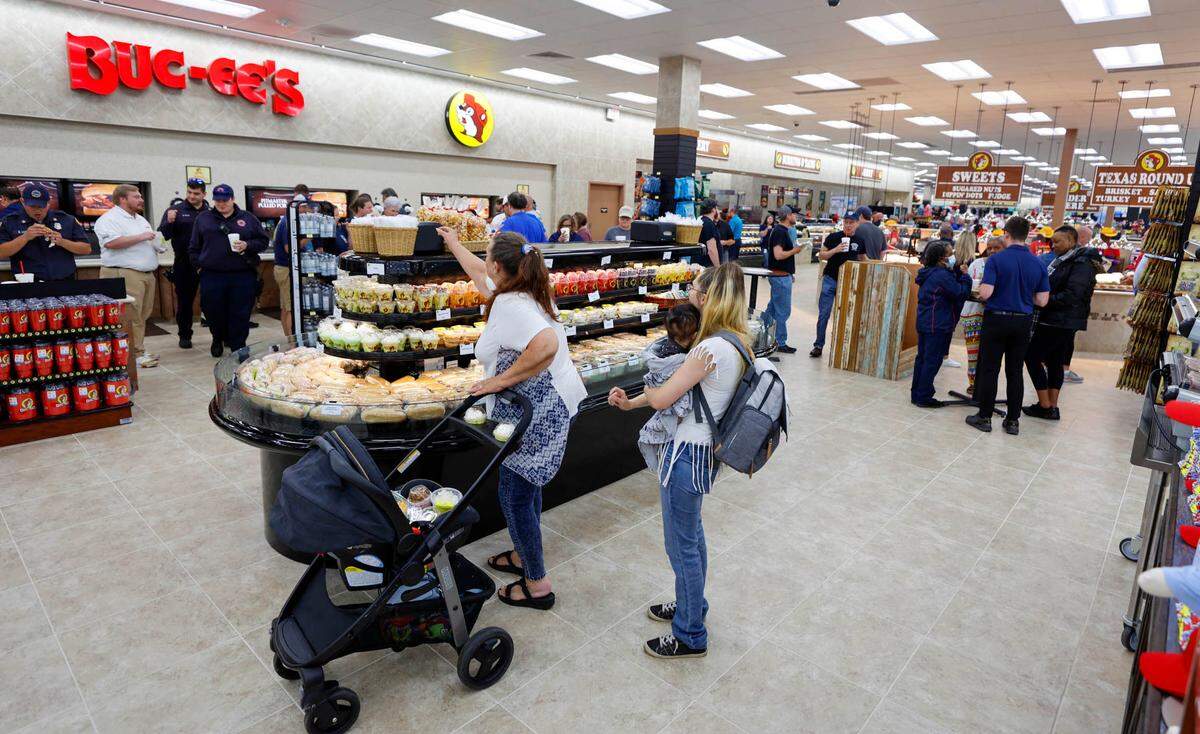
The arrival of Buc-ee’s in South Carolina also raises the possibility that the state could attract other gas stations of similar stature, namely Wawa and Sheetz. Buc-ee’s has proved the state has a strong customer base for higher-tier gas stations and that government officials are likely to help move any major roadblocks out of the way.
Damonte, however, said South Carolina’s capturing of Buc-ee’s already puts the state far past those other gas stations with powerful cult followings.
“Wawa and Sheetz don’t really compare because they don’t have the large food production area right in the middle of the restaurant and the selection and quality of the food,” he said.
In trying to explain what, exactly, about Buc-ee’s could have so many South Carolinians and travelers in such a tizzy, Damonte said what so many others have reiterated: Buc-ee’s is more than “just a gas station.”
He went so far as to define it as a new category altogether. Buc-ee’s is an “attraction,” he said, a major part of a vacation that people will reroute their road trips for.
“It’s a cultural phenomenon,” Damonte said. “People remember it because travel is a new experience that excites.”
This story was originally published May 23, 2022 at 5:00 AM with the headline "Is Buc-ee’s the new Boeing in SC? Why a gas station commands economic power in this state."