
USC, others in SC have Native American human remains 33 years after federal law said return them
For generations, South Carolina institutions have held onto remains of Native Americans despite a federal law passed 33 years ago requiring they be returned to their rightful tribes.
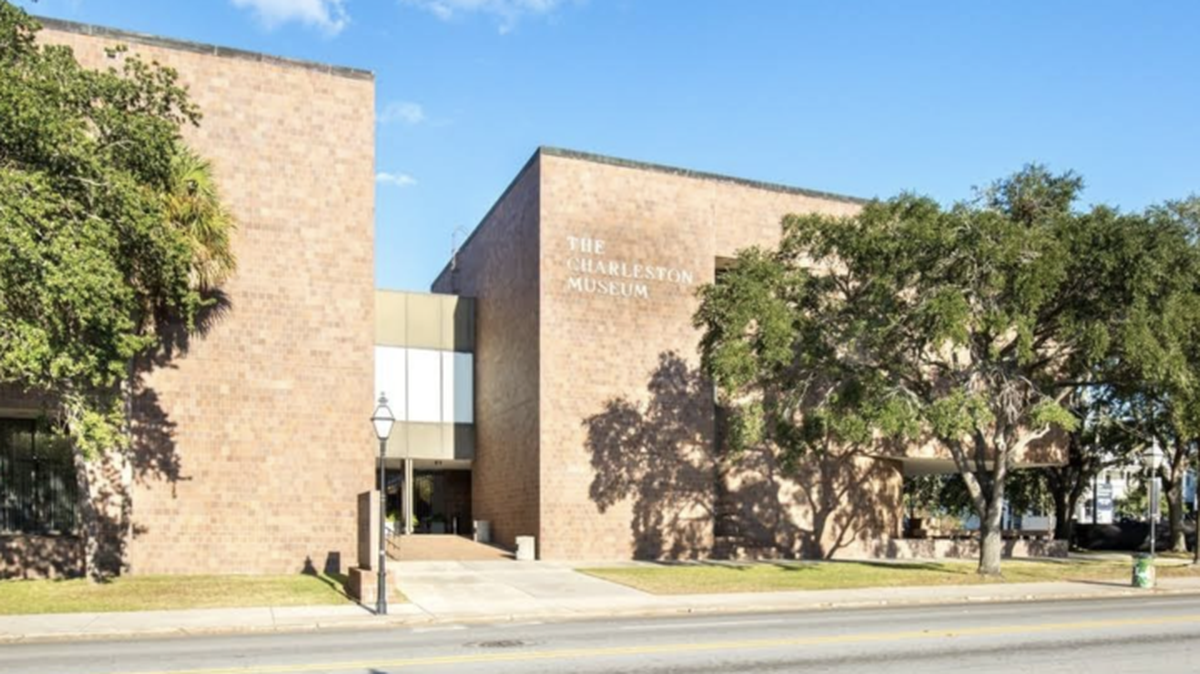
Three organizations account for 97% of the 386 people whose remains are held in the state: the SC Institute for Archeology and Anthropology under the control of the University of South Carolina, the Charleston Museum, and the South Carolina Parks Recreation and Tourism.
Asked by The State why the path to repatriation has taken so long, the institutions had different stories to tell and some were more forthcoming than others.
The SC Institute for Archaeology and Anthropology has 252 ancestral remains and 9,748 known funerary objects, said Jeff Stensland, spokesman for the university. ProPublica, which conducted an inventory of institutions across the country, said USC’s collection is the 66th largest collection of unrepatriated Native American remains in the U.S.
Stensland said the state archaeologist is responsible for curating “artifacts discovered by other state and federal agencies and delivered to SCIAA.”
He said the institute is in the process of making remains available to tribes.
“Artifacts and Tribal ancestral remains are curated in SCIAA facilities for anthropological storage and preservation,” he said.
He declined to say where or how the remains are stored, other than to say they are in Columbia.
He also declined to say why the process has taken so long, where the remains came from, what has been done to identify them and what is the response to tribal leaders across the nation saying the institutions holding the remains have been insensitive and if these people had been white their remains would have been released with no problem.
“SCIAA is committed to following the process established under federal law, which is complex and requires consultation to identify Tribes that may have claims,” he said.
For the past year, representatives of the institute and tribes have been in frequent communication, he said, and expect to make significant progress in the next few months..
Stensland declined to say which tribes are involved.
Federal law requires remains be returned to federally recognized tribes. South Carolina has one, the Catawba Nation near Rock Hill.
Chief Brian Harris could not be reached for comment on the repatriation process.
Other tribes historically located in the state were the Cherokee, Creek, and Cusabo.
South Carolina recognizes the Beaver Creek Indians, the Edisto Natchez-Kusso Tribe of SC, the PeeDee Indian Nation of Upper SC, the PAIA Lower Eastern Cherokee Nation, Piedmont Indians, the Santee Indian Organization, the Sumter Tribe of Cheraw Indians, the Waccamaw Indian People, and the Wassamasaw Indian People of Varnertown.
Carl Borick, executive director of the Charleston Museum, said the museum has 80 Native American remains and has returned two.
“Native American ancestors came into The Charleston Museum’s collections in the late 19th through mid-20th century, during a time when society was less sensitive to the acquisition of human remains,” he said.
Property owners or travelers who discovered the remains accidentally turned them over to the museum and still others came through archaeological expeditions and research by other institutions, he added.
Borick said the museum began repatriation of remains before the federal law — the Native American Graves and Repatriation Act — was passed.
After the law was passed, the museum inventoried its collection, reported to the federal government and sent letters to 500 tribal entities across the U.S.
“The remains are currently housed in a special, restricted section of our collections area. Access is limited to a few pertinent curatorial staff and representatives of Tribal Nations, upon request,” he said.
Two sets of remains have been returned to tribes, he said, and declined to say who they were.
Museum officials are now consulting with 12 federally-recognized tribes.
“To date, we have consulted on Native American ancestors from Kershaw County and Charleston County,” he said. “Consultations for other areas of the state are scheduled for later this year.”
Samantha Queen, spokeswoman for South Carolina Parks Recreation of Tourism said the state agency obtained 42 ancestral remains and 228 associated funerary objects in 1968 when a Charleston County park was excavated.
They date to the Late Woodland/Mississippian period (A.D. 1000-1550), she said.
Inventories were compiled in 2005 and 2019 and listed as culturally unidentified with the federal government.
“Today, we are actively involved in consultation with Tribal Nations who have responded that they have cultural or geographical affiliation with the ancestors and the funerary objects that were excavated,” she said. “This is a unique and sensitive process, and we are grateful to work with the Tribal Nations to facilitate a respectful return.”
The National Park Service has a searchable list of all reported human remains across the nation.
Three federal agencies in South Carolina have Native American remains, Energy, Agriculture and Interior and four universities outside South Carolina have remains found in the state: Yale University, University of North Carolina, University of Pennsylvania and Harvard University.