El Niño to be strong this winter, new NOAA forecast says. Here’s what that means for SC weather
.jpg "An image of storm clouds.")
Colder, wetter weather than usual is on target for South Carolina this winter as El Niño gains strength, a new forecast shows.
Strong El Niño conditions are favored for this winter, which could impact weather conditions in South Carolina and across much of the U.S., according to the latest forecast from the National Oceanic and Atmospheric Administration.
Officials declared that El Niño had begun in June and the weather phenomenon has gained strength ever since. NOAA forecasters predict a 75-85% chance of a strong El Niño from November through January. There is an 80% chance El Niño will last through spring.
There is also a 3-in-10 chance that this El Niño could become “historically strong” and rival 2015-16 and 1997-98 events, NOAA adds.
What is El Niño?
El Niño is a climate pattern in the Pacific Ocean that can affect weather worldwide, NOAA states. During El Niño, trade winds weaken and warm water is pushed east toward the west coast of the U.S.
How could a strong El Niño impact SC?
According to the National Weather Service, a stronger El Niño could cause more rainfall and colder temperatures than average during winter in South Carolina and the rest of the Southeast. And the strong association between El Niño and above-normal winter precipitation across most of the Southeast could lead to spring flooding.
According to the National Weather Service Climate Prediction Center, most of South Carolina has a 50-60% chance of above average rainfall from November through January.
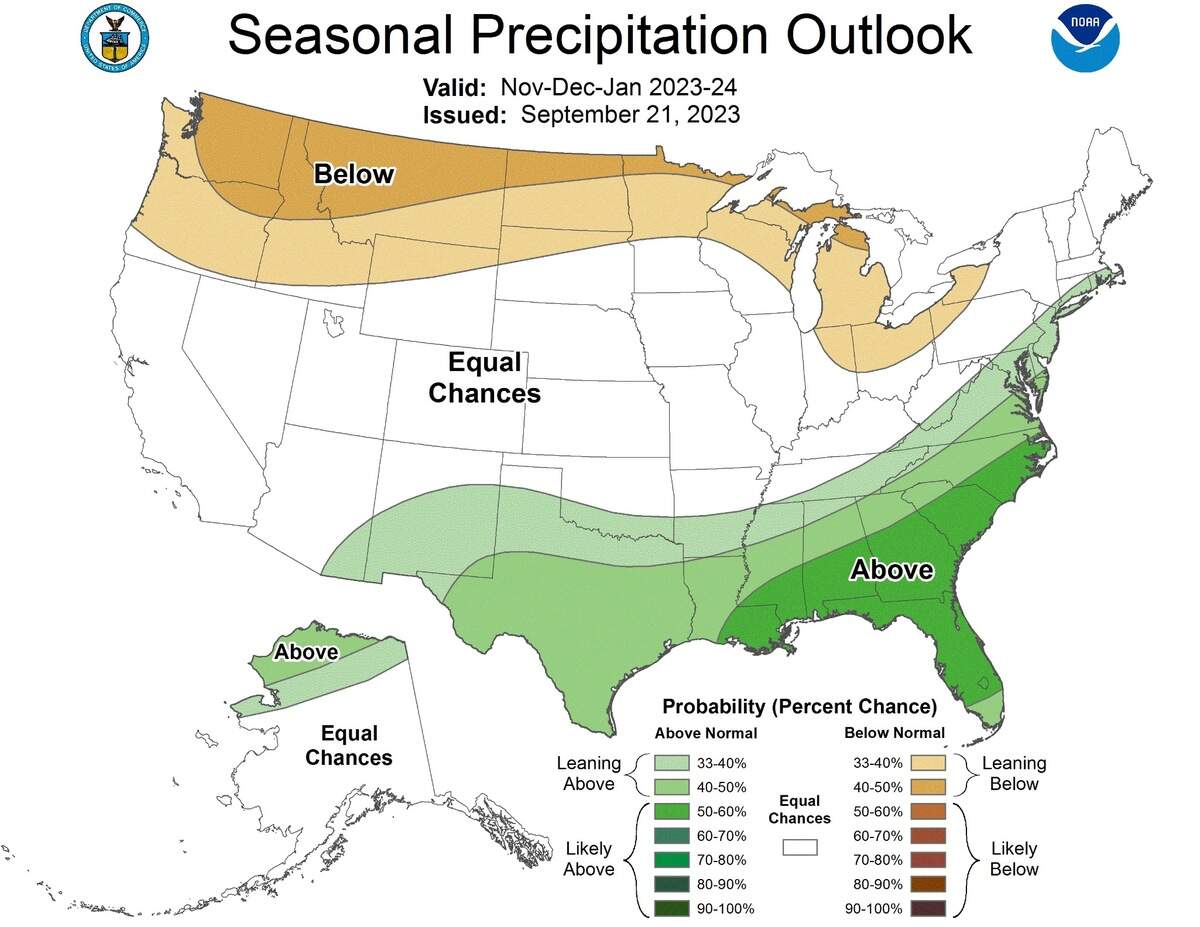
The extra rainfall from El Niño can vary drastically geographically in South Carolina, a study from the S.C. State Climatology Office at the S.C. Department of Natural Resources.
The 2015 study, which measured rainfall in the state over several decades, shows that, for instance, Charleston had an average 47% increase in rainfall during strong El Niño winters and a 15% average increase during moderate to weak El Niño winters. Meanwhile, Columbia had an average 27% jump in rain during strong El Niño winters and an 18% increase during moderate to weak El Niño winters.
Overall across the state, there was a 23% to 56% increase in precipitation during strong El Niño winters, the study shows.