
SC city adds goats to its workforce. Here’s how they are helping
Increasingly, Greenville has become known for its parks.
There is the marquee Falls Park, opened almost 20 years ago, and the recently opened and expansive Unity Park. In all, Greenville’s Parks, Recreation and Tourism Department oversees the maintenance of more than 400 acres at 37 parks.
That’s not counting the 47 acres of gardens.
It’s a lot.
Especially with poison ivy, oak, and sumac, not to mention kudzu — all non-native species — choking out the good stuff.
“The need for non-native species removal within city park systems is an ongoing issue and drain on our staff, volunteers and resources,” said Staci Schafer, parks and grounds administrator.
The answer?
Goats.
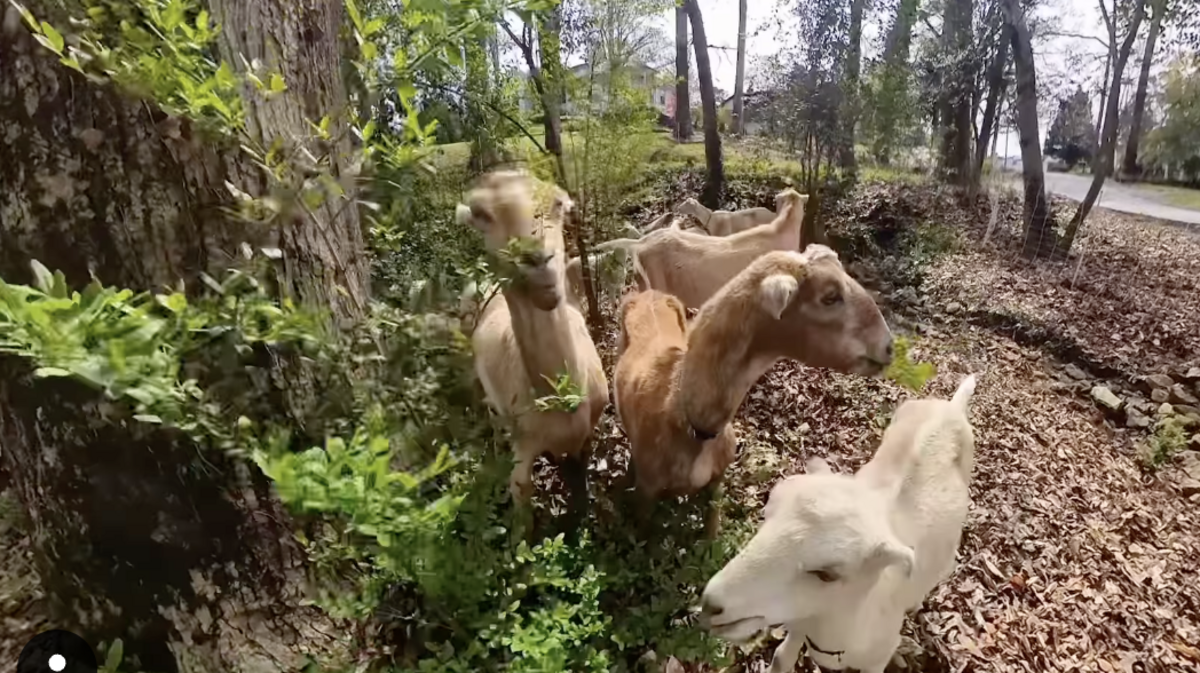
The city has hired A Roxbury Goat Barn of Landrum to bring in five herds to eat it all up. Five acres of weeds and other unwanted foliage for $12,000. It’s called “ecological clearing.”
Three herds are in one of Greenville’s oldest parks, Cleveland Park, just north of the Washington Street bridge along Richland Way, and two small herds are at Gatlin Park, a neighborhood park with a playground and stream at 2 Sylvan Drive.
“The City is participating in “Goatscaping” because of our commitment to make positive changes in our environment by using low-carbon maintenance methods,” Schafer said. “Using goats to control invasive plant species, weeds, and other unwanted vegetation is one of the most efficient and effective methods available.”
There are other benefits as in goat poop.
“During a goat’s natural digestive process, any seeds or reproductive plant materials from invasive plants the goats eat are sterilized and rendered inert once they inevitably come back out,” Schafer said. ”Goat droppings don’t smell, and they make high quality fertilizer, with very little methane.”
No air pollution from machines. No noise. No chemicals.
Perhaps a few sounds of goat chewing.
And the goat fencing is solar powered.
“Goats do not eat bird’s nests, wildlife or insect habitats, which makes for a safer and more accurate control method,” Schafer said.
Like the millions of people who visit Greenville each year, the Roxbury goats seem to be enjoying their stay.