
Giant spiders are invading SC again and making big yellow webs. Here’s how dangerous they are
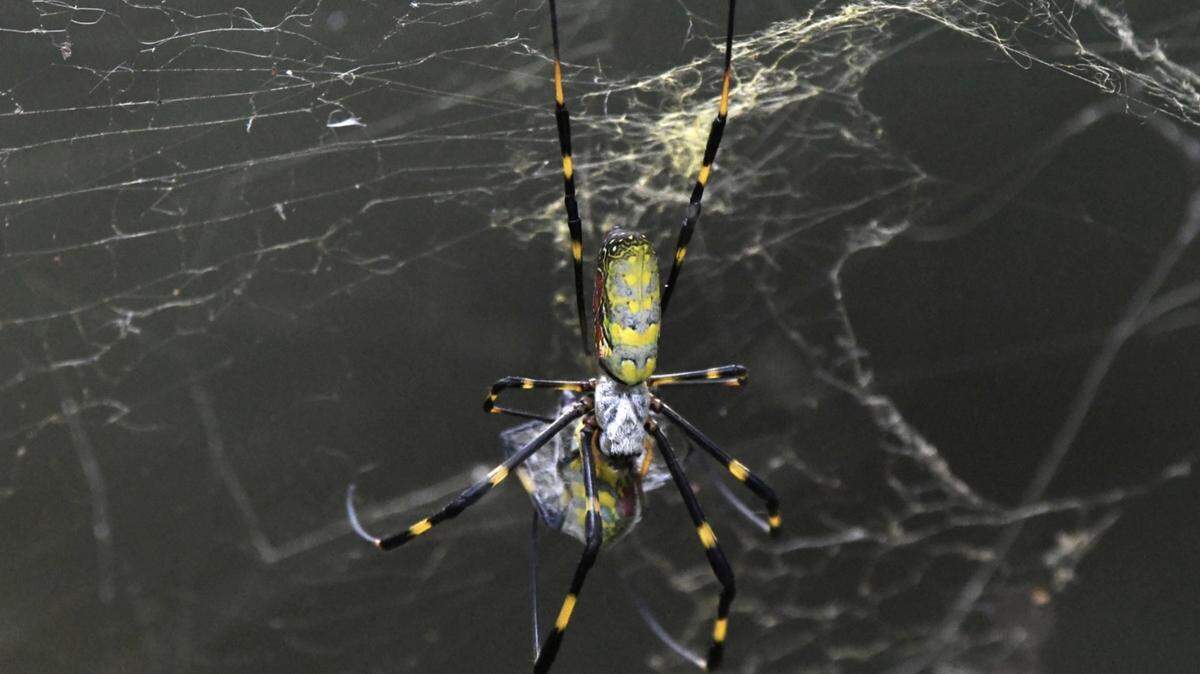
They’re big. They’re yellow, in part. And they’re invasive.
But Joro spiders, now spinning their webs in carports and forests in South Carolina, are not as dangerous or as destructive as many of the invasive species across the state.
More dangerous invasive critters are marmorated stink bugs, which harm fruit trees, legumes, corn, garden vegetables and some ornamental plants. There are also Asian longhorn beetles, which feed on maple, ash, poplar, sycamore, willow, elm and birch trees.
And then there’s the tegu, a particularly ugly lizard that eats anything.
David Coyle, associate professor of forest health and invasive species at Clemson University, said Joros are not “aggressive in any way, shape, or form,” but they are annoying. You probably don’t even notice them until the fall when large females — sometimes an inch long — are around.
He said the most dangerous invasive species in South Carolina would be those that harm people, pets, or livestock and carry diseases. Not Joros.
Then those that cause “some sort of harm — be it economical or ecological — to agriculture or natural resources. “
“Joros fit here,” he said. “They contribute to the reduction in native spider populations.”
“They don’t have any impacts on people or pet health other than being really in-your-face, all over your house annoying,” he said.
Joro spiders, like many invasive insects, are from Asia and thought to have hitched a ride to the U.S. on a container ship. It was first seen in Athens, Georgia, along Interstate 85 and has been fairly commonplace in South Carolina for the past few years.
Young spiderlings secrete strands of silk, 3 feet long or more, that get caught in the breeze and float the spider for miles.
It’s unlikely to bite, and if it does, the effect is less painful than a bee sting.
It doesn’t harm native animals — in fact it eats another annoying creature, the brown marmorated stink bug.
Their presence is pretty obvious — their webs are three-dimensional, golden and measure about 3 feet.
They lay eggs in November and December before it freezes and the adults die in the winter. Sacs range from 400-500 eggs and the babies emerge in the spring.
Females can bite but likely won’t. They run away and hide. They will bite if you hold one too tightly, but here’s their super power — they’ll break off their legs and run away.
The best way to deal with keeping them off your property is using an acaricide used to kill ticks and mites or simply knock them from their web and smoosh them.