
Alligators in SC are waking from winter already. They live in these parts of the state the most
They’re back.
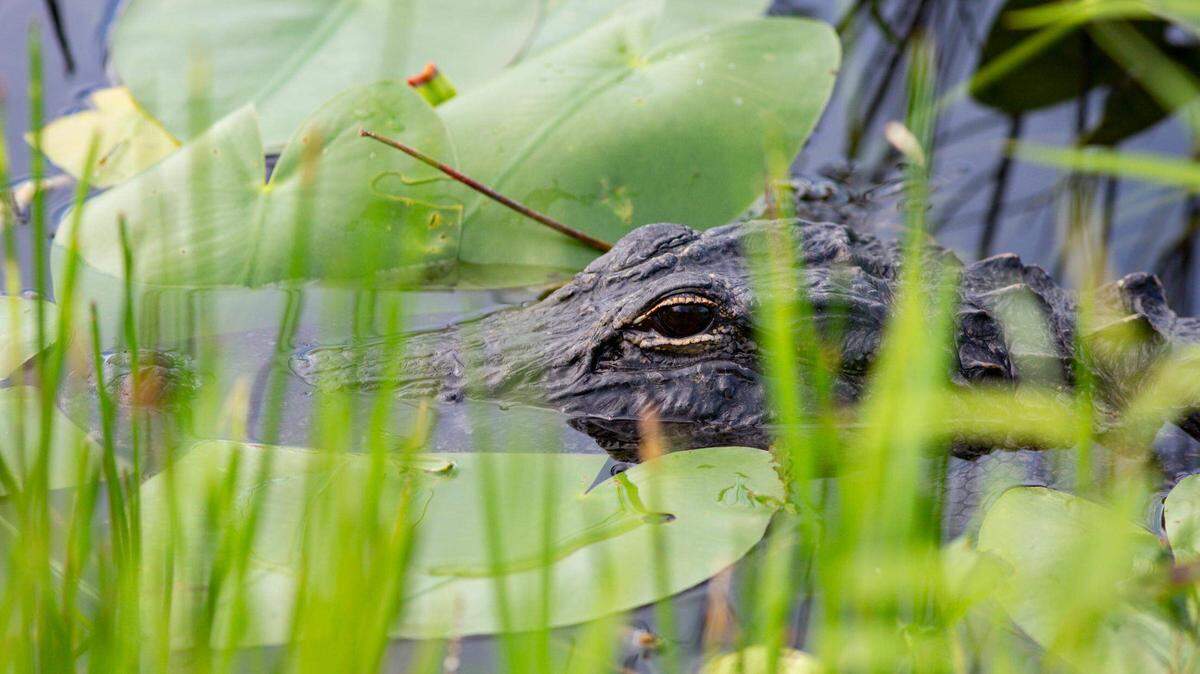
South Carolina’s alligators are emerging from the holes where they’ve spent the winter.
So if you’re east of Interstate 95, be aware, as there are some 100,000 alligators and South Carolina Department of Natural Resources alligator project leader Morgan Hart says pretty much where you’ll see one is where you look the hardest.
They are in any sizable body of freshwater, on golf courses, sometimes they cross roads.
Once a dwindling species in South Carolina, alligators have rebounded thanks to being put on the endangered species list. They are so plentiful now, the state sponsors a limited hunting season in the fall.
Lake Marion, South Carolina’s largest, has the most alligators, followed by Lake Moultrie, Hilton Head Island and Charleston.
Hart said this fall there will be an added hunt for smaller gators — 4 to 8 feet — to protect the trophy sized ones. There are 1,000 tags for any size and 400 for the smaller gators.
She said the GatorWise website launched last year by South Carolina and 10 other southern states has been well received. It was designed to teach people about alligators and how to minimize conflict as property along the state’s waterways becomes increasingly developed.
The next project for the group is to establish parameters for communities to become labeled GatorWise, further teaching about the reptiles to adjust the way people act around them.
What to know about alligators
Attacks are rare, and DNR wants to keep it that way, she said.
Six people have been killed by alligators in South Carolina since 2016.
As mating season begins, you may hear a deep guttural growl — sometimes so loud it’s heard for miles around. That’s the males looking for a mate.
Their mating ritual is private, underwater and quick, usually in late May and early June.
Biologists say females mate with different males to ensure fertilization.
She builds a nest of muck and aquatic vegetation piled into a mound usually near freshwater and lays 30 to 50 eggs from early June to mid-July.
“Alligators are unique among reptiles because the female will guard and protect the nest from predators, including humans,” South Carolina Department of Natural Resources said on its website.
The eggs incubate for about 65 days. Hatchlings, 9- to 10-inches long, leave the nest in late August or early September.
Don’t mess with the mama.
“The female may defend and stay with her hatchlings for up to a year,” SC DNR said.
South Carolina alligators can live to be more than 60 and grow to more than 13 feet. Their homes are large river swamps, lakes, ponds, coastal impoundments, abandoned rice fields, and other bodies of water, SC DNR said.
How to stay safe around gators
Here are some tips on how to stay safe:
- Don’t touch them and especially don’t kill them. It is against the law. Alligators, while more plentiful now than when they were almost hunted into extinction in the 1950s, are still protected due to their resemblance to their evolutionary cousin, the crocodile. South Carolina has no crocodiles. Also against the law is feeding them and having one for a pet. Don’t take that cute little hatchling home. Illegal plus the mama is probably nearby. Dire consequences.
- Don’t let children or pets play by themselves in or around water.
- And don’t swim at night or during dusk or dawn. That’s when they’re eating.
- Never approach an alligator or a nest. Alligator mothers stay with their eggs and hatchlings for months.
- Stay at least 10 feet from the water’s edge.
- Keep your pets on a leash. Alligators cannot discern the difference between their normal prey and your beloved Luna (yes that is the most popular female dog name for 2022).
- Remember that alligators are masters of the ambush. They see you, even if you don’t see them.
- If one comes after you, back away slowly. Chances are they will not chase you, but if they do good luck, They can run short distances up to 35 miles per hour.
This story was originally published March 5, 2026 at 6:00 AM.