
A Super El Niño hitting SC getting more likely, forecasters say. What that means for the weather
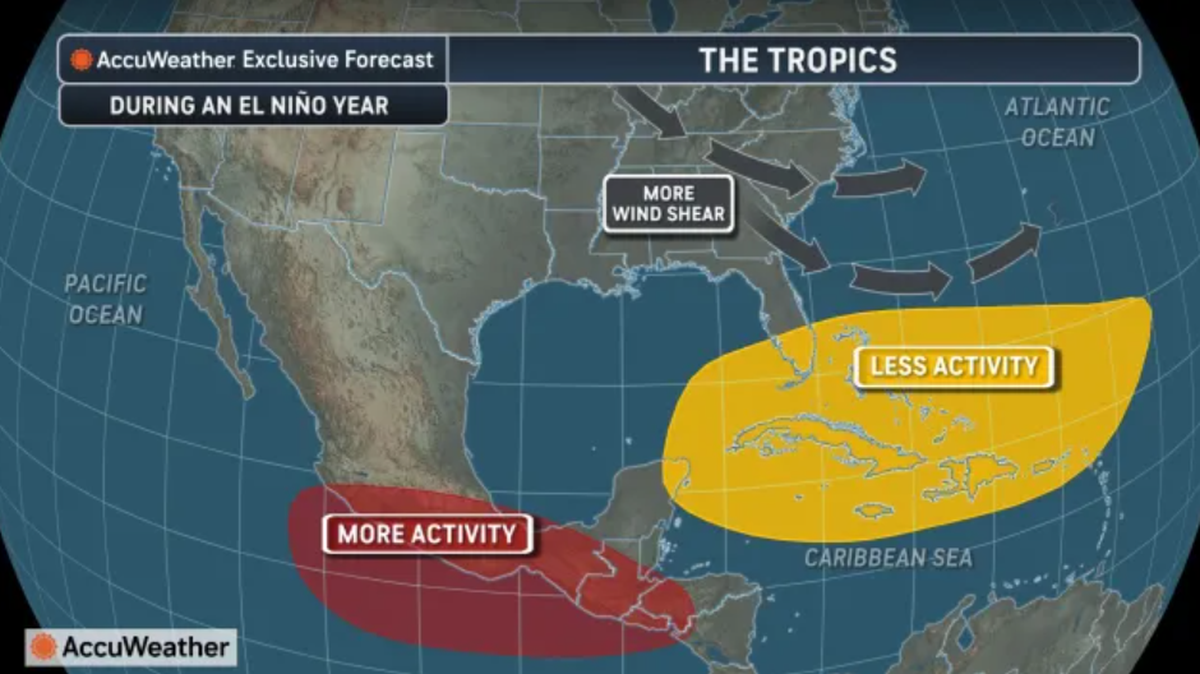
Likely is the word weather forecasters are using to predict whether a super El Niño will spread across the United States this summer, bringing a mild hurricane season but hot temperatures to South Carolina and the Southeast.
The weather phenomenon is expected in June and continue through the end of the year, the National Oceanic and Atmospheric Administration’s Climate Prediction Center said in its most recent update.
Like many weather related words, super is not a scientific term but is used by forecasters. It means they expect El Niño conditions to be strong, as in record high temperatures not just here, but around the world.
Climate change is a factor, they said.
“El Niño is likely because of increasing subsurface temperature anomalies and recent westerly wind anomalies over the western Pacific Ocean,” NOAA said.
They added that the possibility of a very strong El Niño depends on “the continuation of westerly wind anomalies across the equatorial Pacific throughout the Northern Hemisphere summer months, which is not assured.”
They put the chance of a May to July El Niño at 61%.
The Weather Channel put it this way: “Various computer forecast models run this month continue to be bullish on this future El Niño.”
The Weather Channel described El Niño as a periodic warming of water in the central and eastern equatorial Pacific Ocean that can affect global weather patterns for months.
“There have been 27 El Niños since 1950, with one happening on average every three to four years. The last one happened from summer 2023 into early spring 2024,” the Weather Channel said.
But a super El Niño is more rare and is when ocean surface temperatures are at least 2 degrees Celsius warmer than average. That’s 35 degrees Fahrenheit.
The Weather Channel counted five super El Niños since 1950, the last occurring in 2015-16 breaking global temperature records.
“Those two years remain among the top 10 warmest years for the planet, all of which have occurred since 2015,” the Weather Channel said.
“Confidence is clearly shifting higher on potentially the biggest El Niño event since the 1870s,” Paul Roundy, a University of Albany professor and El Niño expert, wrote in a post on X.
“Given last year was the planet’s third warmest year, it seems like a slam dunk that new heat records will be set in 2026, possibly again in 2027,” the Weather Channel said. “A December 2025 study found super El Niño events can drive sudden “climate regime shifts” in both temperatures and precipitation, and that this effect could be increasing in a warming world.”’