Here are the most dangerous intersections in Richland County
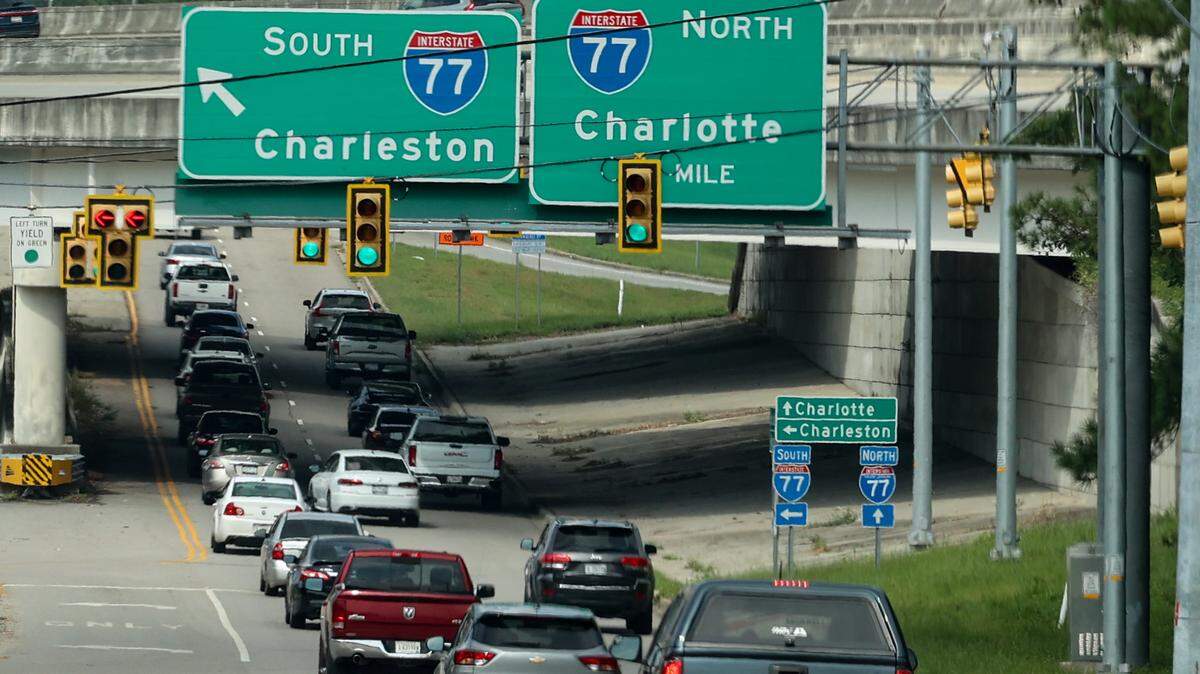
The five most dangerous intersections in Richland County are all located near the three interstates that criss-cross the county, according to data reported by the state Department of Public Safety.
With over 425,000 residents and more than 355,000 registered vehicles, Richland County had 12,450 accidents in 2023, the latest year for which records are available. That was the third highest in South Carolina, behind Charleston and Greenville Counties.
Richland County saw a loss of $3.4 million from traffic accidents in 2023, according to the report.
In car accidents, economic loss for a county refers to the money spent as a result of a collision, including expenses for emergency services, medical care and property damage.
Two of the five most dangerous intersections are located in a notoriously accident prone area known as Malfunction Junction — an interchange where I-20, I-26 and I-126 meet. In 2021, the South Carolina Department of Transportation embarked on a $1.7 billion project dubbed “Carolina Crossroads,” which includes widening portions of I-26, adding several ramps and getting rid of the interchange for Bush River Road off I-26.
So far, the project has eliminated the off and on ramps on I-26 at Bush River Road, replacing them with new entry and exit ramps at Colonial Life Boulevard, which affords access to Bush River Road. Additionally, motorists traveling from Broad River Road are now using the new Colonial Life Boulevard ramps to access and exit I-26.
The most dangerous intersections in the county in 2023 were:
- I-20 at Broad River Road with 229 collisions, including one fatal and 36 others resulting in injuries. An additional 193 resulted in property damage only, according to the report. That’s just under 4.5 a week.
- Next came I-26 at Broad River Road, where 199 collisions were reported. Of those, three resulted in injuries, and 175 involved property damage.
- In third place was Percival Road at I-77, which saw 116 accidents, including one fatal and 19 ending with injuries. Ninety-six crashes resulted solely in property damage.
- The intersection at I-20 at Monticello Road ranked fourth. There, a total of 110 traffic collisions were reported, which mostly resulted in property damage only, at 98. The other 12 crashes resulted in injuries.
- In fifth, 107 accidents were reported at Bluff Road at I-77, where 23 involved injuries and 83 resulted exclusively in property damage.
Contributing factors
While a variety of factors contribute to motor vehicle accidents, the Department of Public Safety highlighted the top five in Richland County in 2023.
In ranking order, they included:
Driving too fast for conditions resulted in 12 fatal collisions, 24 with serious injuries, 770 with injuries and 2,984 with property damage.
Master Trooper William Bennett of the South Carolina Highway Patrol said speeding accounts for nearly half of the 1,000, on average, fatal collisions in the state each year.
“There’s a reason why the term ‘speed kills’ exists,” Bennett said. “That’s why we (as troopers) make such a big deal about people excessively speeding over the speed limit, because we know it’s a factor in collisions and especially in fatal collisions.”
In addition, Bennett said using seatbelts can go a long way to save lives during a crash, citing that half of all fatal collisions involve someone not wearing a seatbelt.
Failure to yield right of way caused seven fatal crashes, 22 involved serious injuries, 735 involved other injuries and 1,789 resulted in property damage only.
Improper lane change or usage spawned four fatal collisions, 3 included serious injuries, 187 involved other injuries and 1,591 resulted solely in property damage.
Following too closely caused 1 accident with serious injuries, 150 included other injuries and 712 claimed only property damage.
Disregarding traffic signs and signals resulted in two fatal accidents, 10 accidents with serious injuries, 251 with other injuries and 488 leaving only property damage.
Another factor that often cause car accidents include distracted driving, Bennett said, pointing to cellphones as the biggest.
Using your cellphone while driving is “the most dangerous distraction because it diverts your attention in three different ways,” he said. “First, it requires you to pick it up, which is a physical distraction. Second, you have to look at it, which is a visual distraction. And third, it distracts you mentally because you have to think about what you’re doing on the phone.”
By simply focusing entirely on the road while driving greatly reduces the chances of an accident, Bennett said.
“Looking at this (South Carolina Department of Public Safety) report gets back to being aware of our speed, limiting distractions, wearing a seatbelt and not getting behind the wheel impaired.”