
Crowded Lexington road could see less traffic with this new interstate exit
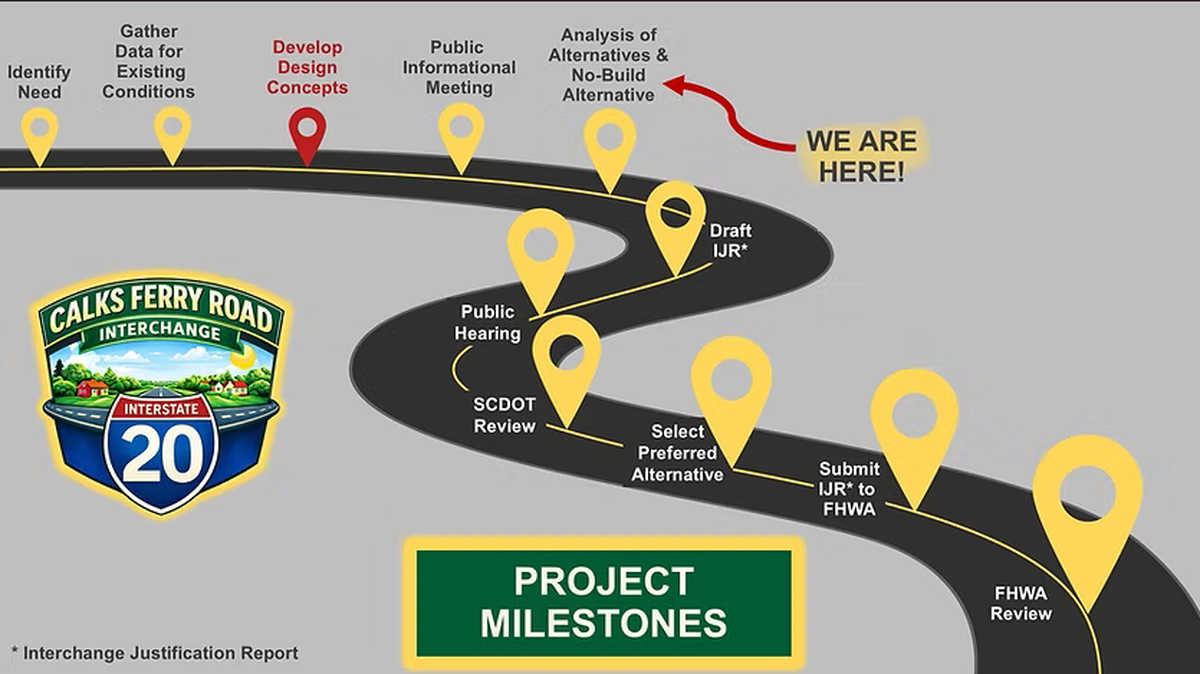
When the S.C. Legislature returns next week to finish work on the budget, lawmakers will decide on whether to fund the next stage of a major road project in Lexington County.
In the state budget proposed for 2026-27, work on a new interchange connecting Calks Ferry Road with Interstate 20 would receive $1 million in a proposal by Rep. Paula Calhoon, R-Lexington. That money would go toward completing and environmental study that runs alongside the interstate and any necessary infrastructure relocation, Calhoon told The State.
“What’s interesting is going toward Aiken there are old visitor’s centers on the right and the left,” she said. “That’s land that’s already owned by the state, so it’s an ideal spot for ingress, for the loops.”
A previous $1 million in the state budget paid for a study to justify the need for a new interchange in the area. Officials hope a new interchange would alleviate traffic at the nearby interchange with Longs Pond Road.
“We have a big problem at Exit 51 with commercial trucks and traffic, with all the manufacturers there and everybody going to school and going to work,” Lexington County Council Chairman Darrell Hudson said of the Longs Pond interchange. “Every day, they’re backed up down into the interstate because there’s so much growth in West Lexington.”
Exit 51 is so busy because it’s the main exit to the Michelin plant, a U.S. Foods center, the Mid-Carolina Electric Co-op and a recycling center, on top of residential developments off of Longs Pond Road.
“There’s so much commercial and residential traffic that it’s a quagmire at Exit 51,” Calhoon said. Planner estimate up to 40% of that traffic could potentially be rerouted to Calks Ferry with an additional interchange, she said.
Hudson said he has been advocating for a new interchange to alleviate traffic in his council district for a decade.
“It’s a major blessing” to see the project moving forward now, he said. “I’m sorry I won’t be in office when it’s finished... I’ll be almost be 80. Maybe I’ll be around to drive on it.”
The plan would replace an existing Interstate 20 overpass with an interchange connecting to Calks Ferry Road, about nine miles southwest of the center of Lexington.
As a part of the project, roadway improvements are planned for the interstate within 1,000 feet of the overpass. The affected area would extend north on Calks Ferry to Two Notch Road and south to Cheryse Drive and Sherwood Drive.
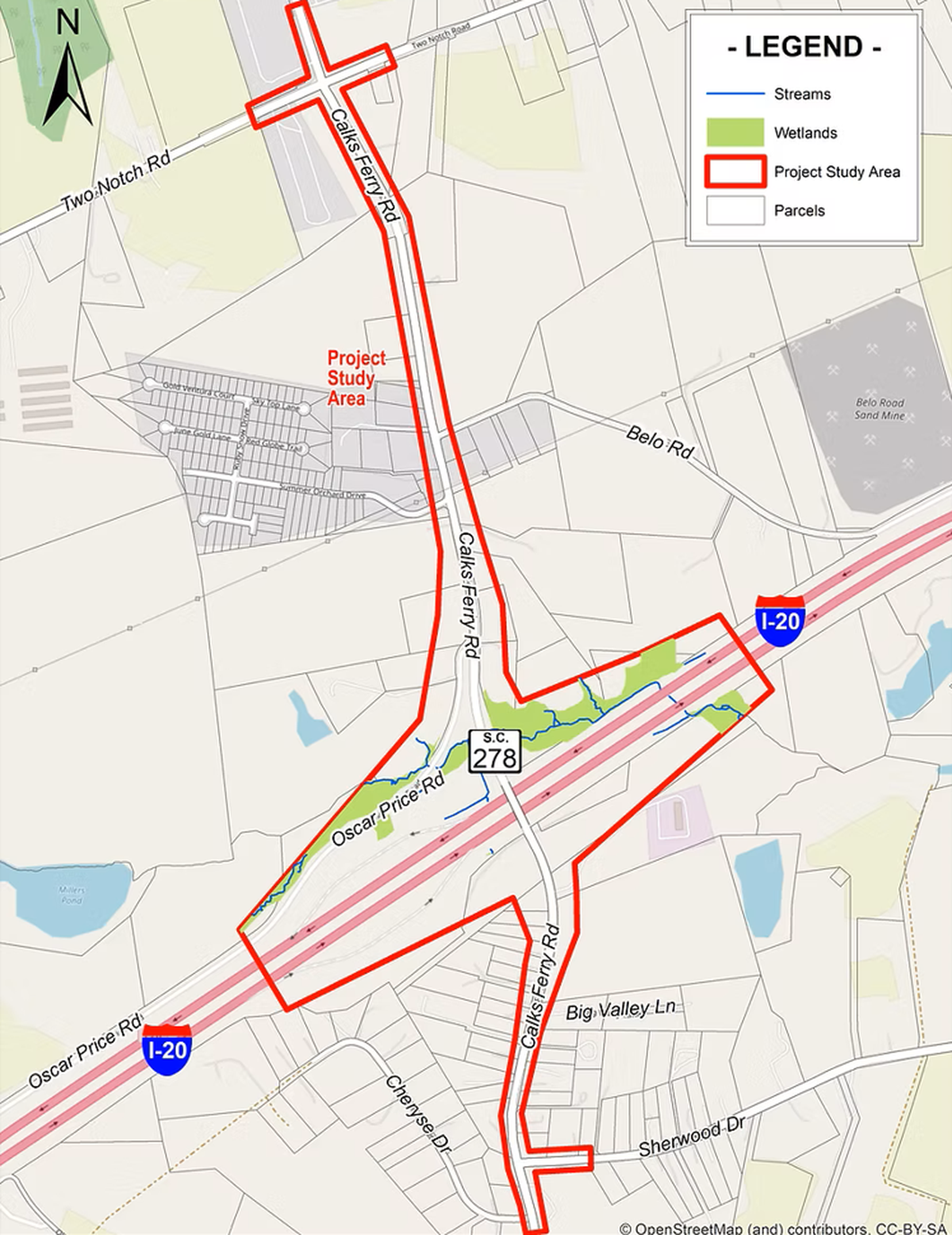
Planners are laying out three versions of the proposal for members of the public to choose from. One would use a partial cloverleaf, with only one “loop” directly southbound Calks Ferry traffic onto the interstate; one where stoplights north and south of the overpass would manage traffic on and off of I-20; and one where new roundabouts would be added to Calks Ferry to manage traffic.
All the plans would expand Calks Ferry to four lanes of traffic, with a new bridge replacing the current one over the interstate.
Several community members came out to offer input on the alternatives at a public meeting last month, and designers with Mead and Hunt will continue to take input at CalksFerryInterchange.com, said project manager Berry Still.
“We’ll have another public meeting later this year to show that preferred alternative,” Still said — and then hopefully move forward with the latest state budget earmark.
But he said the project will still need millions in funding to complete the project. Lexington County, the S.C. Department of Transportation and the Federal Highway Administration would all need to contribute funding to the project.
Council Vice Chairman Todd Cockrell said he was told at the community meeting that it would be “five or six years” before residents will see the interchange completed. “There’s a long list of studies and approvals they need,” Cockrell said. “We already know the traffic’s bad, so I don’t know why you need to do a study, but there’s standard procedures they have to go through.”
As plans move forward on Calks Ferry, Lexington County continues to develop its own transportation plan to handle future development. Planners working on public feedback for those proposals have identified at least $800 million in needs on roadways across the county.
.jpg)