
Greenville’s new $61M Unity Park aims to heal old wounds. Could it create new ones?
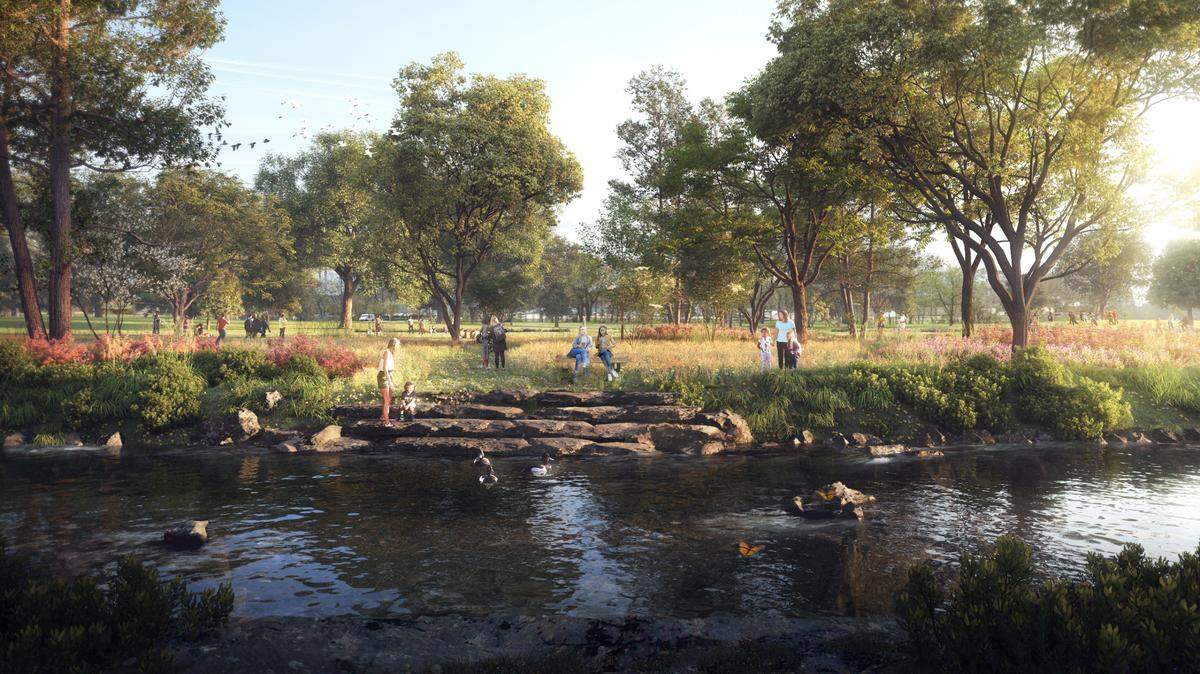
Through the years, the area on the western edge of Greenville was an all but forgotten zone, once home to a stockade, a public incinerator, a landfill and finally a maintenance shed for garbage trucks and other city vehicles.
It was prone to flooding from the Reedy River.
But now the tract is being transformed into a 60-acre, $61 million recreation area, the newest of a string of parks along the Reedy River envisioned by planners more than 100 years ago.
It’s the park Black residents pleaded with city leaders for decades to build. It will be called Unity Park.
City Council member Lillian Brock Flemming, who represents the area, calls it long-delayed justice. Justice for all the children forced to play in the streets, including her own brother who was knocked unconscious by a white man’s car so many years ago. Justice for the hundreds of people forced from their homes by highway projects. Justice for a community long ignored.
When finished in 2022, a half-mile section of the Reedy River and adjacent wetlands will be restored and hundreds of native trees planted, a historic Black baseball stadium will be renovated, three playgrounds will be built, and a popular walking and biking trail will be extended.
Yet, as the land is sculpted, the question is raised whether Greenville can stop the rush of gentrification that always seems to follow such projects. While the park is aimed, in part, to help atone for the city’s past racial injustices, some nearby residents fear it could lead to further diminishing of the historically Black neighborhoods that surround it.
Flemming and other Greenville residents say the history of two adjacent historically Black neighborhoods is just as important as the development of the new park. Their history and the stories of their heroes will be told, she promised.
“This is a park for everybody,” Flemming said.
Improving Greenville
Greenville is known for its planning, especially in recent years with its successful downtown revitalization. But such efforts go way back to 1907 when the city commissioned a study to come up with ideas to better the city. One of the suggestions was to build three parks on the Reedy.
Twenty years later, the first was built. With a $110,000 bond — worth $3 million today — 120 acres nestled beside an exclusive Greenville neighborhood became Cleveland Park, named for the family that donated the land.
The city spent $15,000 — $400,000 today — of that bond money to buy land in a historically Black area on the west side of town, a marshy spread beside the Reedy. City documents describe this area, Mayberry Park, as being for “Negro children.” Part of that land is included in the new Unity Park.
In 1927, a field for baseball and football was added to Mayberry Park. The city made some improvements with Depression-era federal funds, but by 1936, some acreage was taken for a police shooting range. Residents reported finding bullet holes in their walls.
Then, three years later, the heart of the park was ripped out when the city took back 7 acres to build a field for the Greenville Spinners, a minor league baseball team. The field was named Meadowbrook Park and available to the Black Spinners when the white team was not using it.
Pleas from two generations of residents went unheeded, even after a 1950 report said a public park for Blacks was the biggest need for the community as a whole. In the age of Jim Crow and segregation, Cleveland Park was off limits to the Black community. It was not until 1962 that a federal court judge ruled the city must integrate the swimming pools at Cleveland Park. The city responded by putting seals in the pool, then once the seals were gone, filling it with dirt.
It wasn’t until 2004 that the next park in the 1907 plan was built — Falls Park, so named because it begins at Reedy River Falls. It’s 32 acres and includes a pedestrian bridge over the river. It is at the south end of Greenville’s downtown in an area known as the West End.
The project begins
More than a century after it was originally planned, construction of Unity Park began this past summer with sculpting the grounds for the great lawn and playgrounds. The city has chipped in $26 million from income related to tourism, $5 million from stormwater fees and $2.3 million from money that was originally budgeted to bury utility lines. The rest of the $60 million is coming from private donations.
Mike Murphy, Greenville public works director, said the city expected to find debris and all sorts of stuff because of the landfill that had been there. The only things they found were some fuel tanks, dried up and long buried.
Within the next few weeks, the trees along the riverbank will begin coming down. For every tree razed, the city will plant two, but most of the trees to be removed are along the river corridor. Officials with the city and an organization called Trees Upstate have worked judiciously to make the public aware of the hundreds of trees coming down.
.jpg "Unity Park - View-Great Lawn (1).jpg")
Joelle Teachey, an arborist and the chief executive officer of Trees Upstate, said some may be alarmed at the sight, but they should rest assured she and a colleague inventoried all the native trees. They found all but six pecans were unhealthy.
The true problem is most of the trees are non-native or what some would call trash trees. They just grew up along the untended riverbank thanks to birds and other animals spreading seeds. The most common tree is the tree of heaven, a prodigious seed producer that gives off a strong odor. Some know it as stink tree. It grows rapidly and chokes out native trees, Teachey said.
And that’s an overarching problem because without native trees the area does not attract as many birds and butterflies that belong or that pause here during migration.
Native trees to be planted include oaks, magnolias, pines, cedar, sycamore and hollies. Smaller trees such as dogwoods and bushes will complete the landscaping beside the re-routed river. The diversity will be striking, Teachey said.
Through earlier projects, the Army Corps of Engineers had basically turned the river into a canal with steep banks. The new park plan calls for re-engineering the channel into a naturally meandering river with sloped banks.
Murphy said the river will become the park’s centerpiece.
Remembering Southernside
Southernside, one of the neighborhoods adjacent to the park, was once vibrant with groceries and dry cleaners, pool halls and restaurants. Its name comes from proximity to the Southern Railroad depot, where many residents worked. Residents fought to keep the old depot, but it was razed when a new one was built.
Mary Duckett, president of Southernside Neighborhood in Action, said she advocated for Unity Park and is happy with its extensive offerings, but she is worried about what will happen to the surrounding neighborhoods like hers.
She said already newcomers are bringing in amenities that longtime residents cannot afford, such as specialty groceries and restaurants. An attempt to put a brewery beside the Miracle Hill Rescue Mission was turned down.
Duckett wants to see more housing for senior citizens.
“There’s a segment moving in around these parts that want to change the character of the community,” she said. “They want to control what’s going into the neighborhood and what should go.”
At one time, Greenville had 500 Black-owned businesses. Now Duckett estimates 10 to 15, and most are barber shops or beauty salons.
“There’s a very rich history, and I see it diminishing daily,” she said.
Flemming, the city councilwoman, said the area’s history will be told in various places throughout Unity Park, including a 9-foot statue of her mother, Lila Mae Brock, a long-time community activist for Southernside.
Flemming’s family has lived in Southernside for decades. She grew up there and still lives within a few blocks of the family home.
In the 1960s, proposed highway projects — one occurred and one didn’t — carved holes in the community as landlords and homeowners sold out. Homes fell into disrepair. But Lila Mae Brock, a retired dietitian for the school district, would not be undone. She started a community center and cared for everyone.
Flemming doesn’t use the word gentrification when talking about what will likely happen to the land around Unity Park.
“The majority of people are already gone,” she said.
She sees an opportunity to provide quality affordable homes. The city owns several parcels adjacent to the park that it has made available through the nonprofit Greenville Housing Fund to build affordable housing.
Greenville property values along with the cost of rentals have soared since Falls Park was built and the downtown revitalized. The city contributed $2 million to the housing fund, which has released two requests for proposals so far.
Southernside is experiencing a lot of pressure for development, as land downtown becomes more valuable and less available. The city wants to ensure a mix of people remain.
Bryan Brown, president of the Housing Fund, said they are nearing an agreement on one parcel on the main thoroughfare leading to the park, West Washington Street. He said planning is not far enough along to reveal specific details, but he expects 50 to 60 units in a townhouse-like development on an acre.
The units will meet the government’s definition of affordable and will also include what’s called workforce housing, which includes residences for first responders, teachers and the like. Some market-rate units will be available as well.
Brown said he feels the pressure of the community’s expectations on this first project.
“We want to get it right,” he said. That means diversity of residents and a respect for the history and character of the Southernside community.
Duckett said she aims to hold the city to its word.
“What I’ve learned in life is stop taking crumbs and ask for a slice of the pie,” she said. “If they only give you crumbs, march or do whatever you have to do until you get a slice.”
This story was originally published November 16, 2020 at 5:00 AM.