
SC’s last all-women colleges go coed sooner than planned amid pandemic
Jimmie Sanders has moved around a lot. His dad is an executive with Domino’s, the pizza chain, and with each promotion came another move for the family — North Carolina, Illinois, Arizona.
So it’s not a big stretch for him to have gone to college in three places — Virginia, Alabama and now Spartanburg — always looking for the next opportunity to hone his basketball skills.
Sanders, 22, had the opportunity to work with a coach he long admired. But he is also aware of the focus on him as one of the seven men admitted as undergraduates, for the first time, to Converse College last fall. They are seven men among the 700 undergrads on campus, and their ranks will soon be growing as the college pushes forward with coeducation for the first time in its history.
Converse, founded 132 years ago, held out a long time as an all-women’s college since the first rumblings of the need to become coeducational began a decade or more ago. At least one former president proclaimed it would never happen on her watch.
But the trend is clear. Since the 1960s, when women’s colleges hit their peak, the number has dropped and then dropped again. Then: 280 women’s colleges in the United States. Now: about 30.
Columbia College in the state capital made the same shift, admitting men as undergraduates for the first time last fall. And, like Converse, Columbia pushed its integration a year ahead of schedule due to the effects of the coronavirus on colleges.
Converse President Krista Newkirk said the numbers make the case for going coed. On the SAT college entrance exam, 2% of high school girls nationally said they would consider an all-women’s college. On the ACT it was worse — less than 1%.
“That was a wake-up call,” Newkirk said.
Rising expenses and decreasing enrollment have combined to put financial pressure on all women’s colleges.
The pandemic has made it worse, said Emerald Archer, executive director of the Women’s College Coalition and director of the Center for the Advancement of Women at Mount Saint Mary’s University in Los Angeles.
Still, Archer said, even as women’s colleges become rarer, they play an important role in higher education because the focus on women’s leadership carries over into a graduate’s entire life.
“It’s also worth noting that many women’s colleges and universities serve a large percentage of low-income and minority students,” she said.
Deciding to change
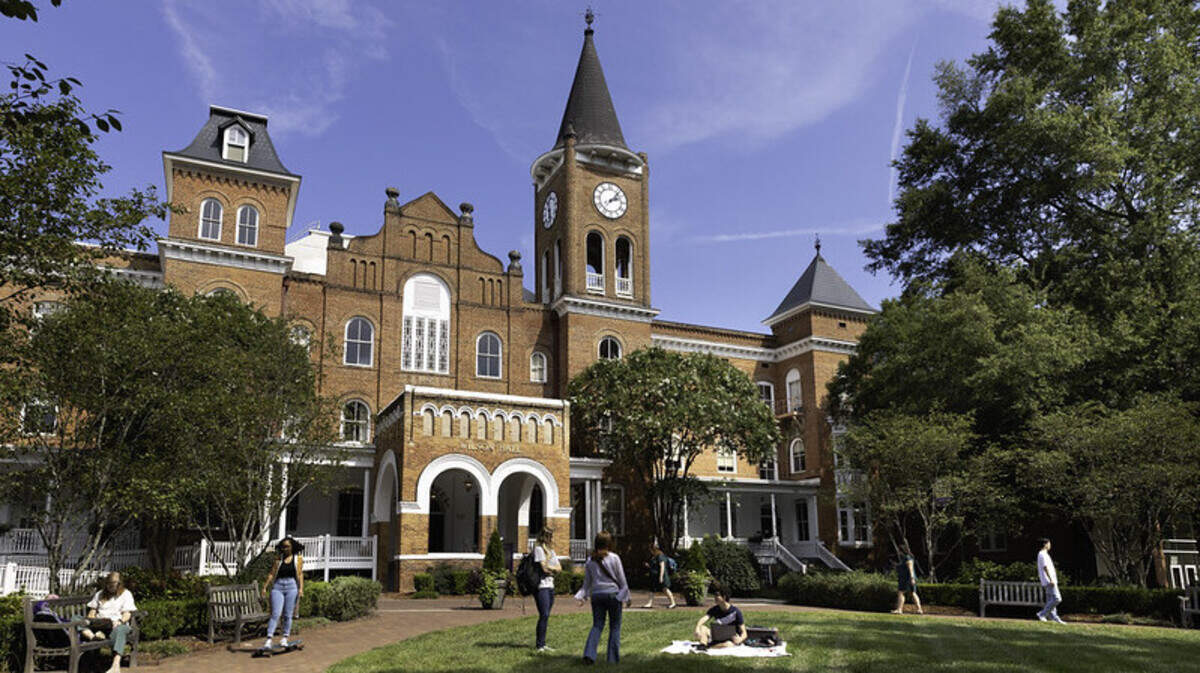
Situated in the northwestern corner of South Carolina, Spartanburg is a community grown from frontier trading post to textile mills to a major manufacturing center with a BMW automotive manufacturing plant at its southern entrance along Interstate 85.
With a population of 37,000 in the city, 310,000 in the surrounding county, it has five colleges, three of which, like Converse, are four-year schools.
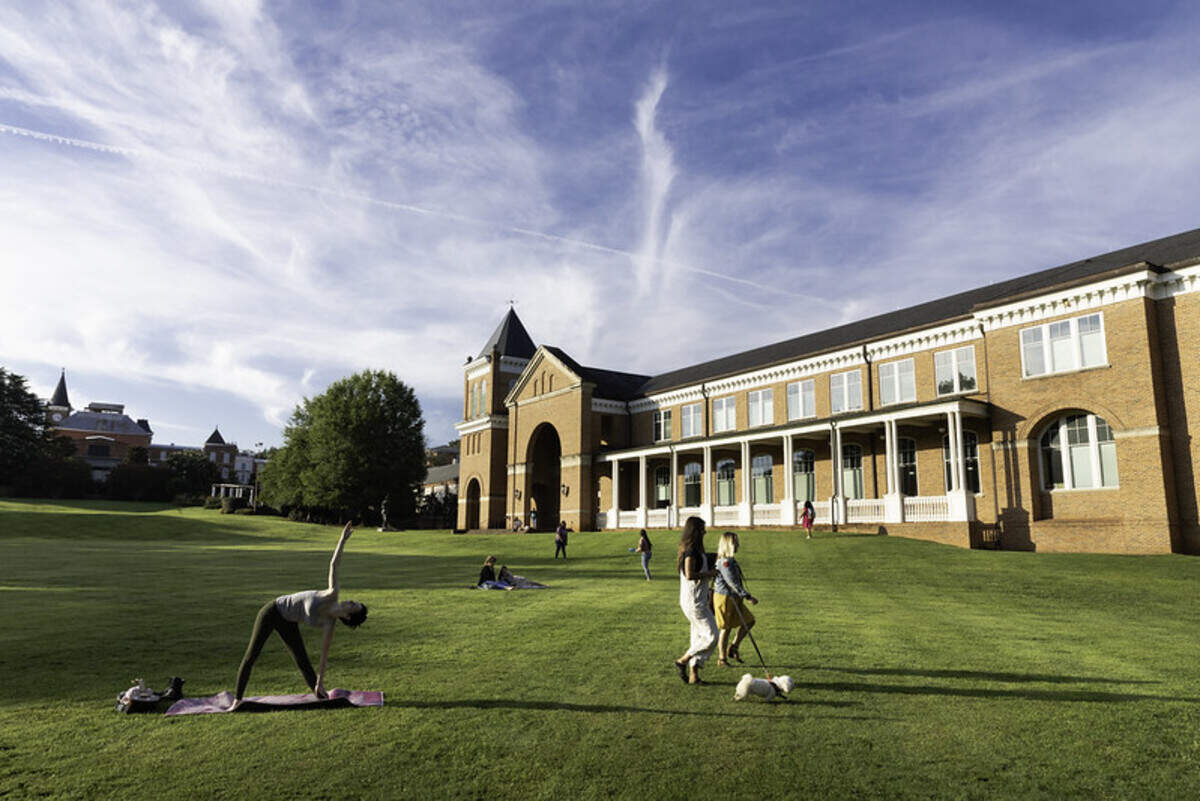
Two of them, Converse and Wofford College, still have at their core the buildings and green expanses of their founding more than a century ago. For many years, Converse and Wofford were considered sort of companion schools — small, private, single-gendered liberal arts colleges that not infrequently saw their students graduate and get married.
Converse Trustee Laura Bauknight, a 1987 graduate, was one of them. By the time her husband, John, attended Wofford, his once all-male school had admitted women. Bauknight, though, was happily living among the 700 or so female students on Converse’s still single-gendered campus.
Originally from Sumter, she said she knew from the night she spent on campus as a high school student that Converse was her place. It grew from there. Close friendships, academic challenge, a beautiful campus; she felt motivated as a leader.
So it was not wholly her desire for the school to become coed when the trustees began researching other previously all-women’s colleges to see what worked and what didn’t. Trustees began research in 2019 and announced their decision in February 2020.
“I took pages and pages of legal pad notes,” Bauknight said.
It was clear after Bauknight’s committee visited Mary Baldwin University and Randolph Macon College, both in Virginia, that a coed Converse could be more, not less.
The main points she took away from other schools that had transitioned were to be transparent and don’t dawdle. Once the decision is made, do it.
As the Converse community began seriously discussing gender integration, Bauknight said she and other college leaders answered every email, attended town halls and talked, but mostly they listened. Some longtime friends did not hold back their opinions.
One simply agreed to disagree.
But, Bauknight said, it came down to this: Finances built on an enrollment declining over time were unsustainable. They needed to expand the school’s pool of students, not continue to limit it.
The way forward
Newkirk, Converse’s president, said a key element to the coed transition would be establishing a women’s college within the school, much like an honors college. It would offer some classes just for women but would focus more on retreats and other special programs on leadership, Bauknight said.
It also would be a place to retain the tradition of “Big Sis, Little Sis,” a program that pairs juniors with freshmen to help navigate the new world of college. A more gender neutral but similar program would be established for the school as a whole.
What to do about traditions was taken up by its own committee. The bracelet ceremony, during which sophomores are given bracelets to honor the school’s core values, could feature a watch instead. May Day, held each year to honor scholars, leaders and community servants, could name both a king and a queen to the May Court, Bauknight said.
Discussions like these are still underway, college spokeswoman Holly Duncan said.
“My biggest concern was the classroom experience,” Bauknight said, calling her own experience in the classroom “powerful.”
She feels the professors will make the adjustment because they are committed to being in their student’s lives. The feeling of community is strong, she said.
As of now, the men will live together in one dorm. Whether women will live in the same dorm depends on enrollment, Duncan said.
Another significant change for the school as a whole will come this summer when Converse College becomes Converse University.
Newkirk said the name better reflects the scope of what the school offers. Graduate programs, which have always admitted men (who lived off-campus), were established in 1964 and have grown to offer master’s degrees in education, leadership, liberal arts, music and family therapy. Doctoral programs are offered in leadership and education administration.
Men’s sports to debut in the fall
Converse coaches are working to fill new men’s team rosters for basketball, soccer, track and field, cross country and tennis, which will play in the Division II Conference Carolinas.
Newly hired men’s basketball coach Ryan Saunders said while he expects his team to be competitive, his mind is focused on character. He said that is especially important considering his team will be the first male undergrads living on campus.
Jimmie Sanders and another player have been on campus this school year; the rest will arrive in the fall.

Sanders said it’s been exciting to be the first and to be part of developing a new team. They are literally starting from scratch.
“We had to go out and buy basketballs,” he said.
Coach Saunders said the rims on the side baskets in the school’s gym had to be replaced to account for dunking.
Among his 10 signed players are one from powerhouse Dorman High School, a local team, and two others from Charleston.
He’d like to have 24, which would enable him to have a developmental team.
The seven men enrolled last fall will grow to almost 90 when school begins in August. And not all are athletes.
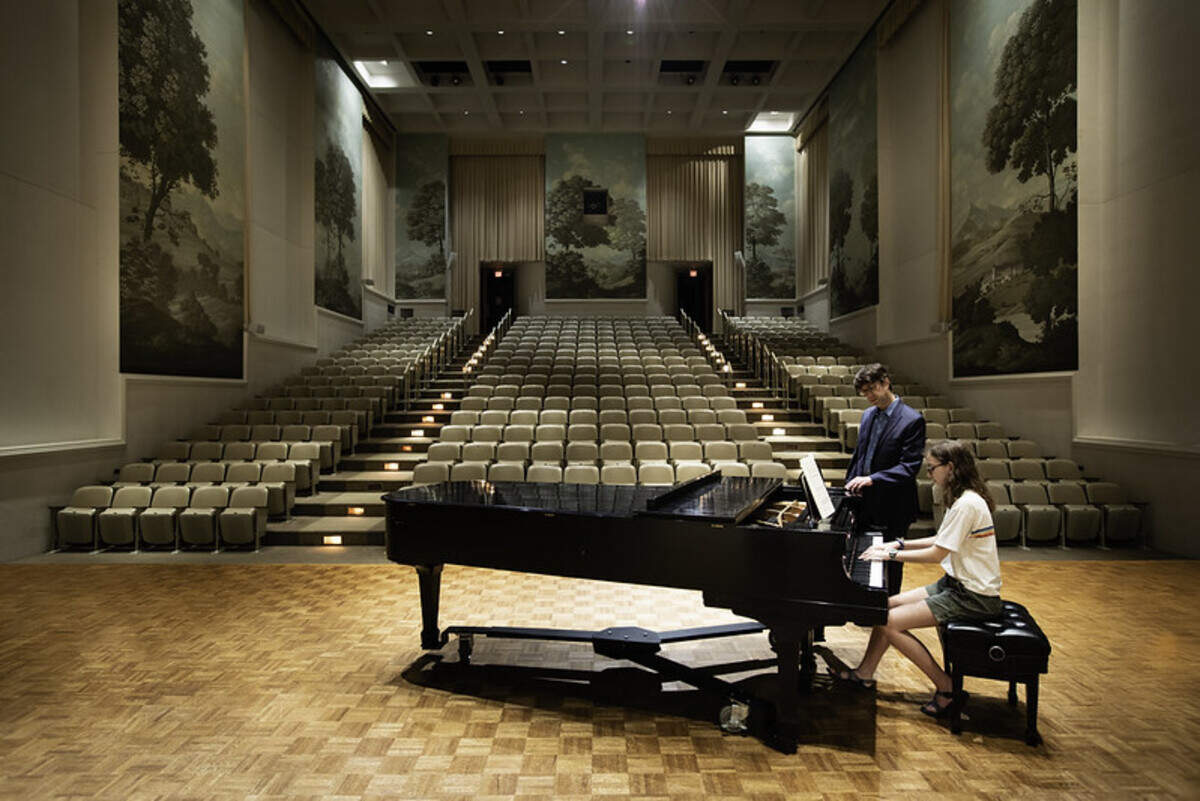
Steven Greer chose Converse because with the pandemic he wanted to stay close to his Wellford home. Plus, class sizes were small, and he could continue to hone his skill on the viola. He’s not a music major but expects many people he knew from playing in his high school symphony to be drawn to Converse’s Petrie School of Music.
He lived in a dorm during the fall semester but moved into his parents’ house for the spring because of the cost and the pandemic.
Asked whether men’s sports might overshadow the long history of women’s sports at Converse, Saunders said he doesn’t think that will happen. On the contrary, he thinks recruiting female athletes will be easier. The talent pool will expand among women who would not previously consider attending an all-women school.
He expects the team to retain the name Valkyries, which in Norse mythology is a group of female figures sent to battle by Odin, the god, to choose who lives and dies.
“That’s who we are,” Saunders said. “It’s tradition, history. We’ll wear the logo with pride.”
This story was originally published February 11, 2021 at 5:00 AM.