
Historic Black hospital moved to make way for SC development. Where did it end up?
When Edward McClaren graduated from Howard University College of Medicine in Washington, D.C., in 1935, he could have gone anywhere. Instead, he chose the Jim Crow south, Greenville to be precise, an hour up the road from his hometown of Abbeville.
His office was in West Greenville, an easy walk from three major neighborhoods where Black people lived. This was a time when Black doctors could not practice at Greenville General Hospital so when the only Black hospital burned down, McClaren built one next door to his house.
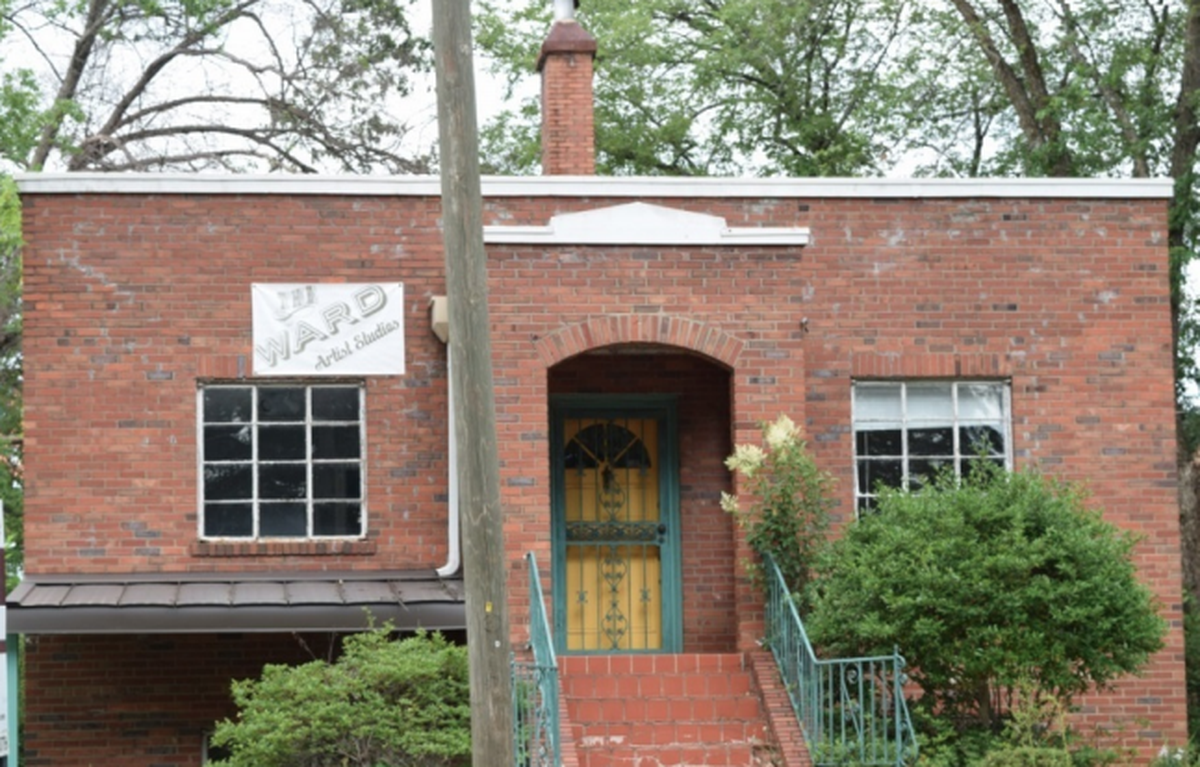
It had nine patient rooms and an operating suite. Until recently, the building stood on the same piece of land that McClaren built it on, deteriorating, used only as a place for the homeless to get out of the weather.
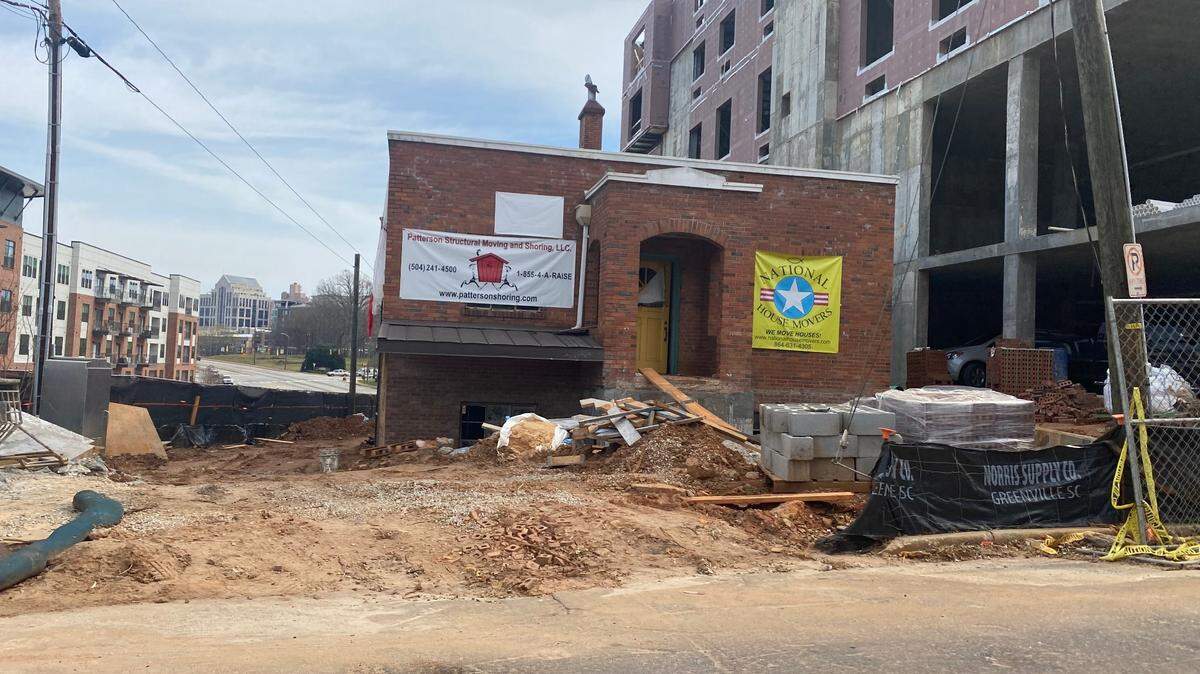
Now, the building is headed for a new life after community members and the developer of a high rise apartment building going up on the site joined to save it.
The building has been moved onto a slip of land beside the complex.
Members of the West Greenville Neighborhood and Historical Preservation Advocates, while grateful the building is being preserved, are disappointed it is wedged between the apartment building’s parking garage and busy state U.S. 123, or Academy Street. The residential complex covers a city block and dwarfs the one-story plus a basement clinic building.
Pamela Adams, spokesperson for Neighborhood and Historical Preservation Advocates, said the original drawings showed more space between the complex and the clinic. Now, it looks like an afterthought, rather than a place of historical significance, she said. This building was one of 10 in Greenville selected by a historical review panel several years ago as a possibility for inclusion on the National Register of Historic Places.
“Everybody likes shiny new things. Greenville is not known for historical structures, some homes, some churches, everything else is new construction,” Adams said.
The redevelopment of downtown Greenville has led to gentrification, harming the historic Black neighborhoods, she said.
So many important places such as the Black business district have been lost, Adams said she was determined the McClaren Medical Shelter would not be added to the list.
She was at a Martin Luther King breakfast when she learned of the development proposal for the property that included the McClaren Shelter.
Everyone she needed to enlist help from was there.
“I went from table to table meeting with five Black elected officials,” she said. She told them, “We need to revisit this.”
The developer, David Mann, whose Lighthouse Living company is located in White Plains, New York, could not be reached for comment.
Scott Johnston, the architect for the development, said what ensued was more meetings and more interest than any project he’s worked on.
He acknowledged the siting of the building is close to the development, but he believes the landscaping, patios and an outdoor gathering space will give the building the historical prominence it deserves.
One of the original depictions of the site did have more space between the McClaren and the complex, but that idea was scrapped by the S.C. Department of Archives and History because they wanted the building oriented in the same way it was originally, facing Wardlaw Street.
Mann’s other apartment buildings are located in the Northeast. He decided to invest in Greenville after visiting his brother, who lives there, Johnston said. Mann plans other projects in Greenville as well.
Johnston said he and his staff inventoried the building once he found out its historical significance. It had been used as an art studio and was painted in wild colors, including a wooden staircase. Few artifacts remained. One that stood out to Johnston was a medical sink.
Greenville City Councilwoman Lillian Brock Flemming said she is thrilled the building has survived. She acknowledged it is close to the parking garage, but has told community members to remember they do not own the building.
“It’s going to be tight but we can work with it,” she said. “People don’t need to stand up and march around his building.”
Flemming had allergies as a child and saw McClaren a few times a year until she enrolled at Furman University. She and future opera star Sarah Reese were the first two Black women graduates.
She said he was a concerned and caring doctor and remembers the clean, medicinal smell of the office.
The clinic operated as a hospital from 1949 until 1954 when Black doctors were allowed privileges at Greenville General Hospital.
Maxine Morangy, a retired teacher and principal for Greenville County Schools, knew McClaren and his wife, Mildred, from Allen Temple AME Church. Morangy was the organist and the doctor was an accomplished violinist who liked to talk with her about music. She called him doc and his wife grandma.
“He was just a blessing,” Morangy said.
She hopes the building will be used as a museum to remember him and his dedication to Greenville.
Adams said her group is working with the city to do just that and possibly a visitor’s center since the property is located at the western entrance to downtown. She also hopes it can be a meeting place for community groups.
But there’s a lot to do before that can happen, most importantly raising money and finding artifacts. They have collected a series of oral histories from people who knew McClaren and a few who were born in the building.
“We want to re-educate the community on all matters preservation,” she said.
And no matter what the building is used for, McClaren’s name will endure. The apartment complex is called The McClaren.
This story was originally published March 22, 2021 at 3:22 PM.