
While the US is consumed by the coronavirus, global dangers continue to simmer
The invisible coronavirus has infected thousands of people, the country’s economy and financial stability, killed jobs and stalled the daily lives and educations of millions while corrupting political campaigns for choosing government’s next leaders at all levels.
This sudden singular obsession with the epidemic and its ephemera is deployed by a media eagerly using the health crisis and accompanying fears to attract hungry news consumers with no balancing social life and — oh, look! — further inflict damage and distractions on an administration that can be proficient at doing that itself.
But this nonstop saturation of body counts, unqualified speculation and unremitting gloom has also obscured a global rash of foreign events that collectively pose more serious long-lasting threats to the country’s well-being.
The normal uncertainty and political turbulence of a presidential selection process can present to potential adversaries tempting glimmers of vulnerability to seek strategic advantages.
Because of the virus, the Pentagon last week extended its global lockdown of the entire military from early May until the end of June. This means canceling all new deployments, extending existing ones, halting all travel, training and leaves, even critical war games with other units and allies.
Many units have been operating for weeks now on minimum staffing with other members trying to work from home but on unclassified devices. Even recruiting and the start of basic training were delayed.
The U.S. military now has about 1.3 million active duty members and 865,000 reserves. A geographically-dispersed organization with a vast array of diverse duties and assignments around the country and world, it operates on complex interlocking schedules designed months in advance by each service. To suddenly wipe out more than two entire months creates a Star Wars-type disturbance in the Force with cascading effects tumbling into the future on training, readiness and morale.
The virus knocked out of commission one of the Navy’s 10 nuclear carriers, the USS Theodore Roosevelt, now docked in Guam minus 85% of its 4,800-person crew.
In recent days, Iranian, Chinese, Russian and North Korean forces have tested U.S. readiness and resolve. Russian military planes regularly approach U.S. boundaries, tracking radar frequencies and reaction times. Now, they’re more frequent and aggressive.
Already developing military bases in the South China Sea, China is stretching its maritime muscle, sending its aircraft carrier to probe national waters around Taiwan and Japan. Its other forces sank a Vietnamese fishing boat in disputed waters.
Also this month, Iran announced the successful deployment of its first military satellite. And it has increased its naval harassments in the Persian Gulf, recently sending 11 high-speed patrol boats to harass U.S. Navy ships. That prompted President Donald Trump to order the destruction of any that get too close. The Pentagon later moderated the bluster to mean normal self-defense.
Satellite photos of mass graves and intelligence and social media reports indicate that the mullahs in Tehran, already stricken by tightened U.S. and allied economic sanctions and a drastic drop in oil prices, are also experiencing serious and widespread problems with the coronavirus.
Provoking an incident with the enemy that killed its top military leader last winter could provide a unifying domestic distraction, a tactic to shift public attention during difficult times that’s not unknown in the West.
Then, there’s North Korea, the Pennsylvania-sized hermit kingdom about which little is reliably known. There’s no reason to think its scientists have halted work on ballistic missiles and warheads. This month, its forces carried out exercises involved firing land- and air-based missiles into the sea.
Conflicting rumors recently swirled around its 36-year-old leader, Kim Jong Un, some reporting his death. He’s not been seen publicly for more than a month. That in itself is not unprecedented. He did that once before, then showed up walking with a cane. One lightly-sourced report this month said he was gravely ill from a cardiac problem. Both his father, Kim Jong Il, and grandfather, Kim Il Sung, the country’s founder, died from heart attacks.
In my experience, South Korean intelligence officials have the best information. This time, they played down the health report, despite Kim not appearing April 15 for the country’s most important holiday, the birthday of its founder.
Information control in North Korea is deemed essential to the dictatorship’s survival. It’s controlled through state media and strictly enforced by layers of secret police and agents unfamiliar with Miranda rights. Especially sensitive is the current Kim’s location. Like Iraq’s Saddam Hussein, he moves among several luxurious residences for unpredictable periods, sometimes daily.
If that Kim family had a Facebook page, its relationships would be listed as complicated. Kim Il Sung had two wives over the years, numerous mistresses and children by all. One story says his first wife died in childbirth, another has her fatally knifed in the garden.
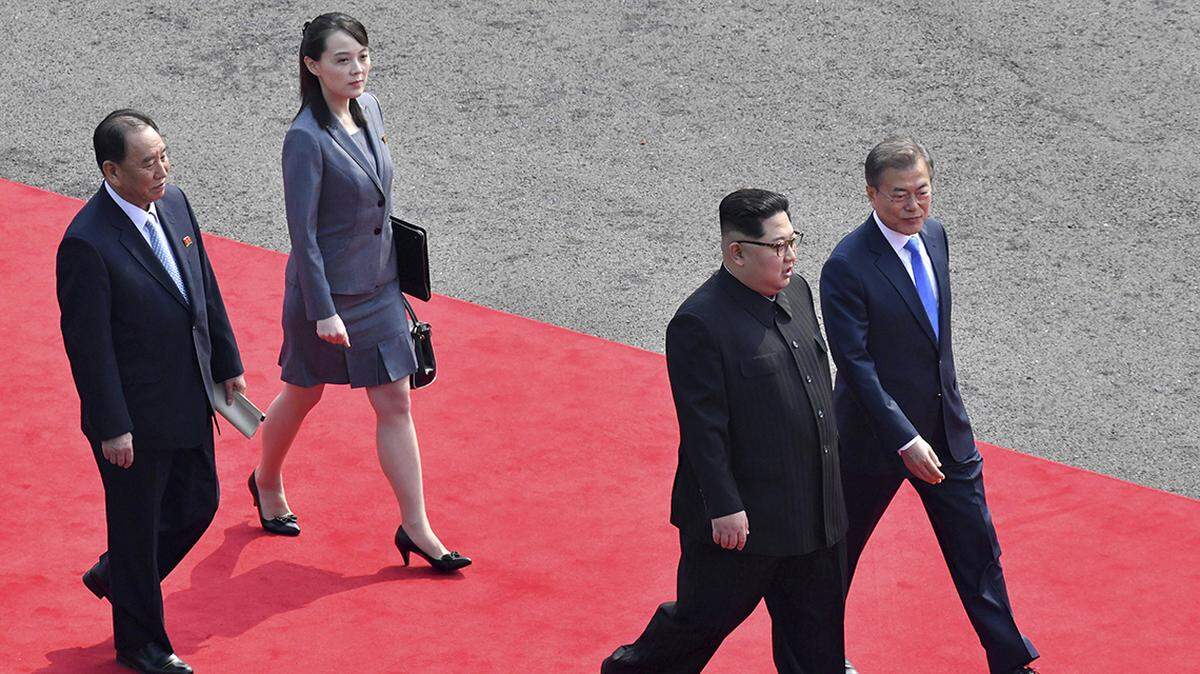
The current Kim’s father ruled from 1994 until 2011. He too had mistresses. One of them produced the current Kim and his sister, Kim Yo Jong, now a prominent Workers Party official. The mistress had another son, Kim Jong Nam, by another man.
That half-brother, a potential heir, was assassinated in the Kuala Lumpur Airport in 2017 when two women rubbed the nerve agent VX on his face. Hey, accidents happen in such dynasties.
The most dangerous scenario would be if Kim were incapacitated but not dead, creating military and political instability in a nation with nuclear weapons but making succession plans appear treasonous in the paranoid dictator’s eyes.
Satellite photos show Kim’s personal railroad train parked at one of his personal railroad stations on the East coast.
If something did happen to Kim, natural or otherwise, the expectation is that the bloodline would rule, making his sister or an obscure uncle the country’s likely new exalted leader and next high-stakes nuclear negotiator and/or provocateur with whomever survives November’s U.S. election.
Such interim agreements are typical in communist successions, which aren’t hindered by bothersome elections. At least while others behind the scenes (meaning, men) sort out more permanent power arrangements to present to the world.
All these non-virus dangers continue to simmer. Now, back to House Speaker Nancy Pelosi’s expensive refrigerators.
This story was originally published April 28, 2020 at 6:00 AM with the headline "While the US is consumed by the coronavirus, global dangers continue to simmer."