
All of South Carolina can be thankful for its artists. Here are three that depict the state
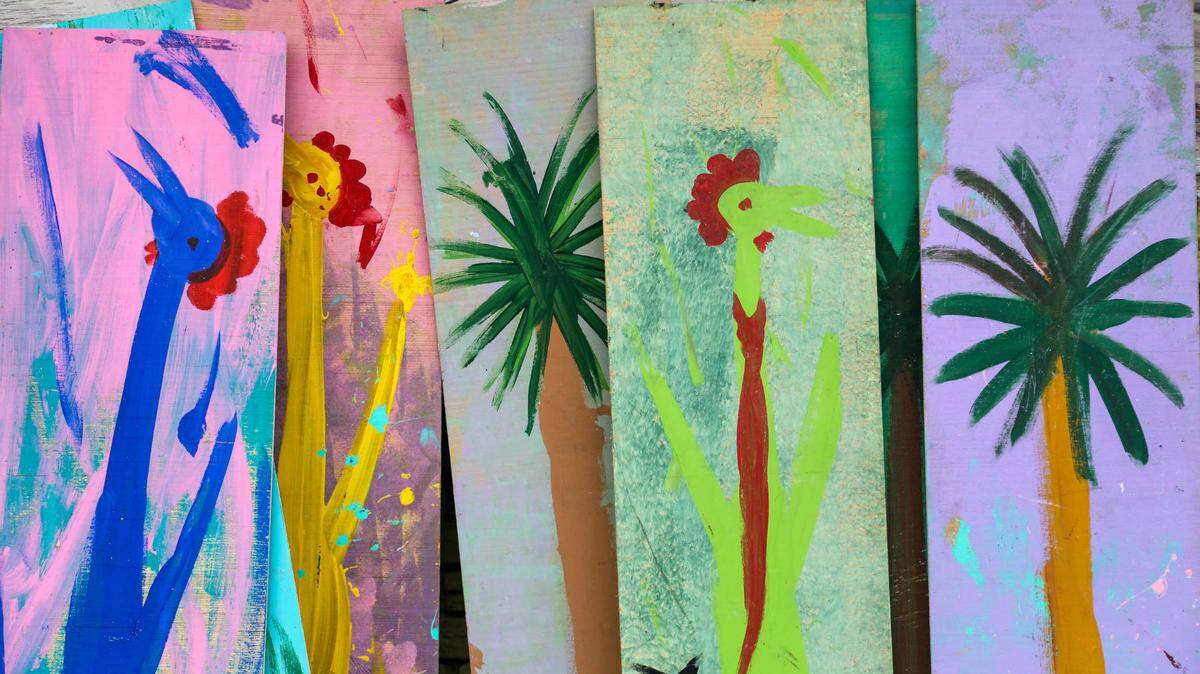
Soon the Chicken Man, Ernest Lee, will be just off Columbia’s Gervais Street in his shabby, paint covered Santa suit slathering color on scraps of wood to make some of South Carolina’s most joyous art.
As South Carolinians stuff their turkeys, make all sorts of mayonnaise and fruit salads, and argue about politics and whether sweet potato or pumpkin pie is better — it’s sweet potato — we can all be thankful for Palmetto State artists.
Lee’s folk-art renderings of dancing chickens and palmetto trees have become something of a symbol for South Carolina. Beyond his well known motifs, he’s also positioned himself as an artistic chronicler of some of South Carolina’s defining moments in the last decade. He’s painted a tribute to Mother Emanuel AME Church, where a gunman killed nine worshipers in 2015, and the moment when the Confederate flag came off the State House grounds.
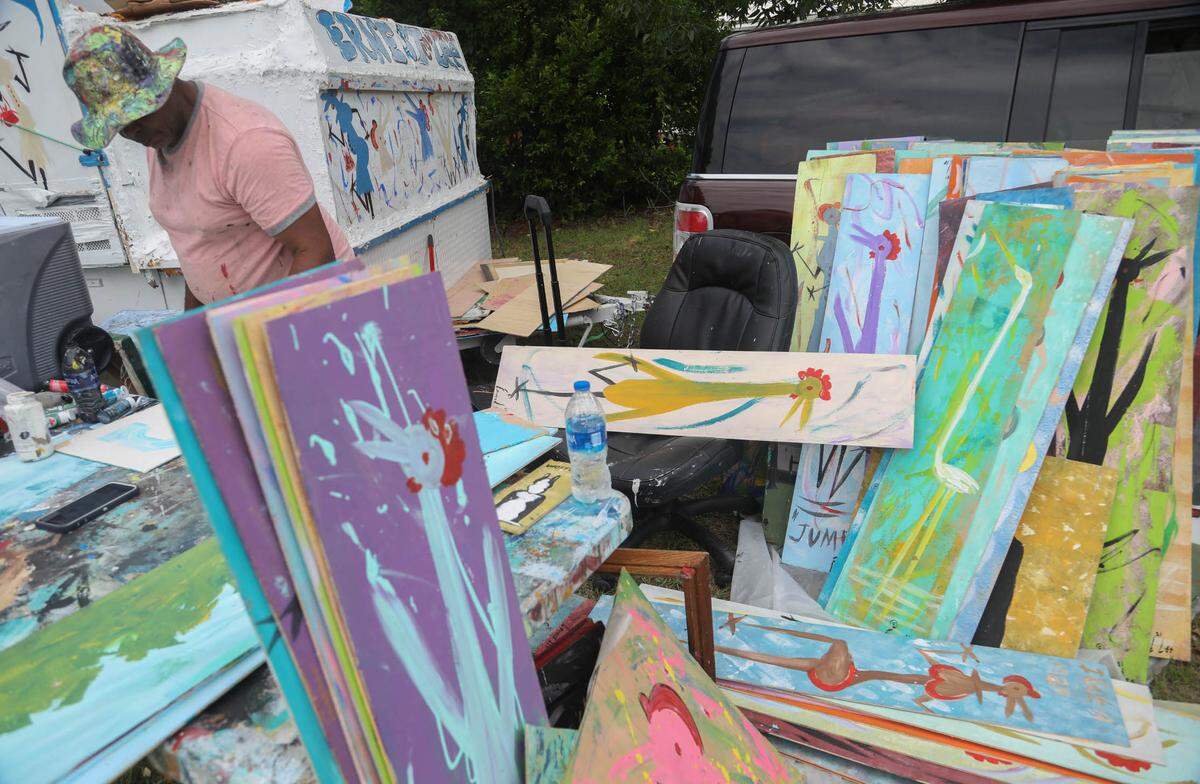
The way Lee has imbued his work with a South Carolina essence by dedicating himself to simple impressions of the state’s iconography makes him one of my favorite local artists.
Sean McGuinness, the Godzilla-loving artist who creates a variety of works under the banner of Neo Monster Island, is another of my favorites. Like Lee, McGuinness uses symbols of South Carolina as the basis of some of his art, but twists those images by inserting his favorite big, green monster.
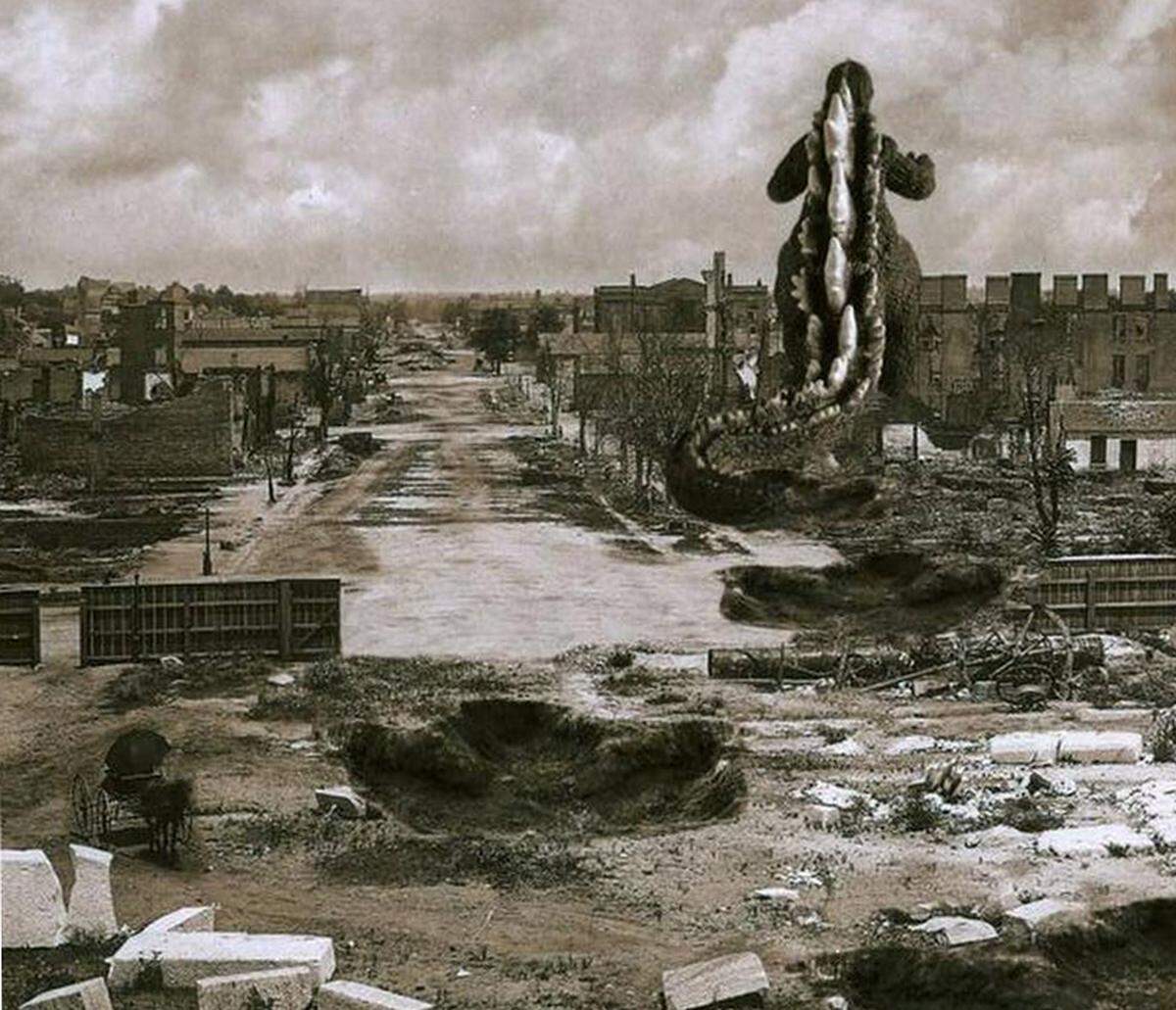
It’s a simple formula for McGuinness — take a South Carolina symbol or scene and put Godzilla in it. McGuinness has imposed Godzilla on the South Carolina flag, towering over a packed Williams-Brice Stadium and onto images of a destroyed Columbia from the Civil War.
If that sounds absurd to you, that’s exactly the art’s strength. The absurdity provokes an emotional reaction for me. It makes me laugh. It makes me happy. It makes me think. What is the monster in South Carolina that’s causing the state’s self-destruction?
Ment Nelson keenly renders South Carolina in his art. His paintings, photography and documentaries depict scenes from his experiences in the Palmetto State and his Lowcountry home.
A print of his that I own depicts a man on an old red tractor in one frame, and the same man on a horse near the kind of squat white-colored church that’s home to a small but faithful congregation.
“During the week, two things the reverend enjoys most are farming and riding his horse, Carla,” is written at the bottom.
The work Nelson creates gets at the soul of everyday moments that distinguish the South and South Carolina.
Everyone of these artists depicts South Carolina in a different way, but all of them embody what it means to be part of the Palmetto State.
Having their art in my home reminds of the awesomeness this state can create, and I’m thankful for that.
This story was originally published November 23, 2022 at 1:34 PM.