
Myrtle Beach doesn’t hold lifeguards to national swim standards as drownings persist | Opinion
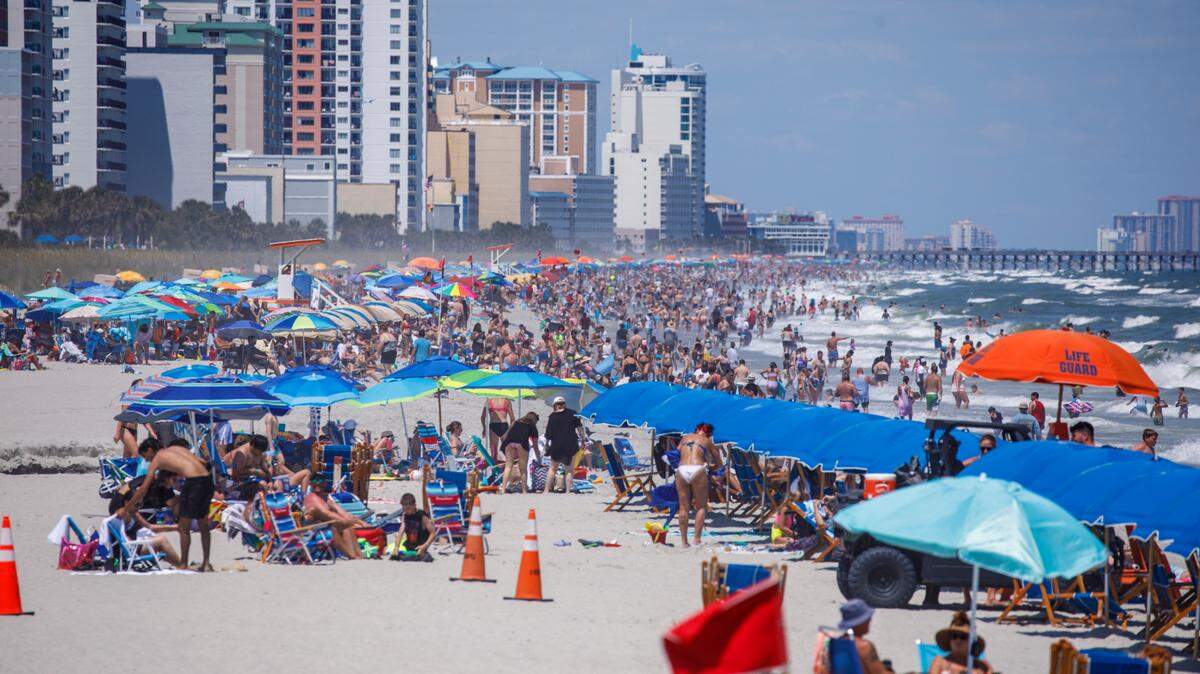
A long Labor Day weekend is again attracting countless beachgoers to the South Carolina coast and Myrtle Beach most of all. Pray for their safety.
Drowning deaths remain rare in South Carolina but still happen, especially in tourist areas, and especially in Horry County: 20 of the state’s 42 recorded surf zone fatalities since 2011 happened in that county. One led to a nearly $21 million judgment against one of Myrtle Beach’s two lifeguard companies. Another may soon lead to a $1 million settlement with the second lifeguard company. Stunningly, neither company is held to the national swim standards for lifeguards who may be called to a rescue at a moment’s notice.
Myrtle Beach, one of the nation’s most popular tourist destinations, must soon decide how and whether to continue lifeguard services, with two city contracts set to expire. Its city council should consider the history — and contemplate the future — of lifeguarding.
In 1871, the U.S. Life-Saving Service, a precursor to the Coast Guard, created a network of stations to rescue people from shipwrecks. In 1891, the first beach patrols in the U.S. began in Atlantic City. Lifeguards became common as trains, cars and roads made beaches accessible and crowded on both coasts, and more and more people drowned. San Diego’s lifeguard services, for example, started in 1918 after 13 people drowned in a single day at Ocean Beach.
Now the American Red Cross and other groups certify individual lifeguards, and the nonprofit United States Lifesaving Association (USLA) certifies agencies in 20 states that employ them. But like most states, South Carolina doesn’t mandate lifeguards. A state law here authorizes but doesn’t require “lifeguard and other safety-related services on and along public beaches,” either by “using municipal employees or by service agreement with a private beach safety company.”
While the city of North Myrtle Beach stopped its contracting in 2006 and became the first municipality along South Carolina’s well-traveled 60-mile Grand Strand to assume control of beach safety, Myrtle Beach and Horry County both contract with companies to provide lifeguard services. In Myrtle Beach, it’s John’s Beach Service and Lack’s Beach Service.
The USLA, a nonprofit association of beach lifeguards and open water rescuers, currently certifies John’s Beach Service but not Lack’s Beach Service. It revoked the Lack’s Beach Service certification in 2008 because guards were responsible for both rescues and beach chair and umbrella rentals. Myrtle Beach ended the unusual dual role last year following a $20.7 million judgment against Lack’s after a man drowned on a day in 2018 when three lifeguard stations closest to him made $1,173.
That judgment is being appealed. The company argues it shouldn’t pay so much because it has a contract with Myrtle Beach and state tort law limits awards for damages to $300,000, and doesn’t allow punitive damages, against governments.
Another lawsuit, filed against John’s Beach Service after a June 2020 drowning, may settle for $1 million. The dead man’s wife asked a judge to approve a deal last month.
The deaths have spurred change, just not enough. Last year, Myrtle Beach and Horry County amended their contracts to require that lifeguards responsible for beach safety do not rent accessories. Now they wear different colored shirts.
So will that continue in Myrtle Beach? Last month the City Council received a staff presentation that outlined three options: new private contracts, municipal lifeguards, or no service at all.
It seems unlikely the council would choose Door No. 3 and just as unlikely it would bring the services in-house, which staff said would be “a very complex operation and very expensive.”
If the council keeps private lifeguards, it should consider the U.S. Lifesaving Association’s national standards and ensure Myrtle Beach’s lifeguard requirements mirror them. They don’t.
The contracts require, as the USLA advises, that lifeguards be trained in first aid and CPR and have “adequate vision, hearing acuity, physical ability and stamina to perform the duties of an open water lifeguard.”
But the USLA says lifeguards must be able to swim 500 meters (550 yards, or five and a half football fields) in 10 minutes or less, “without equipment that enhances buoyancy or propulsion.” The current Myrtle Beach contracts substantially weaken that requirement, omitting the reference to “without equipment” and calling for it to take 12 minutes.
That two minutes is a huge difference when lives are at stake and every second counts. The discrepancy shows Myrtle Beach doesn’t care enough about saving lives.
This story was originally published August 29, 2024 at 6:00 AM.