
Gov. McMaster should halt SC’s next execution and grant Richard Moore clemency | Opinion
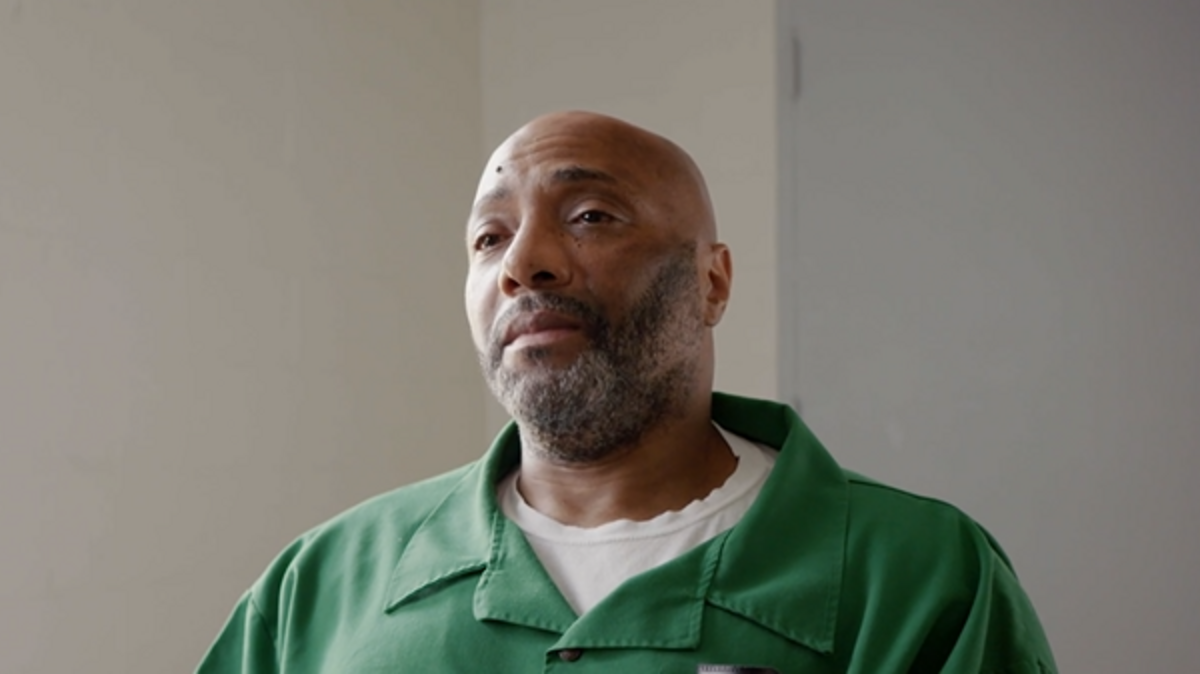
Unless Gov. Henry McMaster grants him clemency, convicted murderer and born-again Christian Richard Moore will be executed in South Carolina Friday for killing a convenience store clerk with the clerk’s gun and stealing $1,408 in Spartanburg in a robbery gone horribly wrong 25 years ago when he was 34.
Will McMaster show mercy? It seems unlikely for a tough-on-crime governor who was South Carolina’s attorney general for eight years when the state executed 14 people and who did not grant clemency to Freddie Owens just last month when the state resumed executions after a 13-year pause. There was also no sign of leniency in 2022 when the governor last discussed Moore’s death sentence.
“I have no intention to commute a sentence,” McMaster said then. “This penalty is a very strong response to criminal activity — but it is a necessary response.”
So could the governor change his mind this week? Only he knows. Should he? Definitely.
Down on his luck and destitute, having recently lost his job, Moore walked into Nikki’s Speedy Mart in the early morning hours of Sept. 16, 1999. A man playing video poker in the store saw Moore walk over to a cooler just after 3 a.m., and moments later, heard the clerk say, “What the hell do you think you are doing?” By then, Moore had wrested one of the clerk’s guns from him in a struggle. Moore told the video poker player not to move and shot at him. Moore missed, and the man “dropped to the floor and played dead.”
These are the facts of the case as laid out in a 2022 state Supreme Court ruling against Moore.
Gunshots rang out. The clerk was shot, and Moore fled the store in his pickup truck with a bag of money. He sought out an acquaintance who could sell him crack cocaine and help get him to an emergency room, and told the man he’d “done something bad and needed to turn himself in.”
Back in his truck, Moore struck a telephone pole backing out of the man’s yard. When a passing officer approached, Moore got out of his truck and lay down in the road.
“I did it, I did it, I give up, I give up,” he told the officer.
A jury recommended the death penalty after finding three of the aggravating circumstances of the case warranted it: murder during an armed robbery, murder for the purpose of getting money, and a great risk of death to more than one person in a public place because of the gun.
Years later, Moore testified he was short of change and asked the clerk if he could take some from a change cup on the counter. Moore testified the clerk said no, the two exchanged words and the clerk was shot after they struggled over a gun the clerk pulled out when Moore wouldn’t leave. Moore said he fired “blindly” at the clerk after seeking cover.
Here is what legal experts say is important and what McMaster might consider.
For one thing, prosecutors acknowledged they could find no case in South Carolina where someone ever got the death penalty for a crime committed after entering a business unarmed.
For another, there are plenty of murderers who didn’t get the death penalty. They include serial killer Todd Kohlhepp getting seven consecutive life sentences for seven murders as part of a plea deal in 2017 and prominent lawyer Alex Murdaugh being convicted of killing his wife and son with brutal premeditation and getting two consecutive life sentences in 2021.
As if that weren’t enough to consider commuting Moore’s sentence, there are also troubling racial elements to his case. Moore, who is Black, was convicted by a jury of 11 white people and one Hispanic person of killing store clerk James Mahoney, who is white. Between 1985 and 2001, Spartanburg County prosecutors sought the death penalty 21 times, and in all but one case the victim was white. In the first eight years of that span, prosecutors sought the death penalty in 43% of eligible cases with a white victim but not once in a case with a Black victim.
Moore’s death sentence is truly disproportionate. But don’t just take my word for it.
Take the word of Jon Ozmint, a former director of the South Carolina Department of Corrections and a staunch proponent of the death penalty, who oversaw 15 executions as its head from 2003-2012. He now believes Moore’s case should be commuted to life without parole.
And take the word of Kaye Hearn, a former state Supreme Court justice who affirmed 11 death sentences on direct appeal without second-guessing any until 2022 when in a dissent she called Moore unquestionably guilty but argued his disproportionate death sentence should be vacated.
She wrote that Florida has reversed a death sentence “based on comparative proportionality review” at least a dozen times, and that the North Carolina Supreme Court has found at least eight death sentences disproportionate during the modern era. The supreme courts of Georgia, Louisiana, Mississippi, New Mexico, Tennessee and Utah have also all vacated at least one death sentence after considering comparative proportionality. By contrast, the South Carolina Supreme Court has never found a single death sentence disproportionate dating back to 1977.
Hearn said that state government sees this statistic — 0 for 78 — as “proof that our capital sentencing scheme functions as it should.” She sees it differently, as proof “our system is broken.”
“Richard Moore will be put to death for a sentence that I do not believe is legal under our law,” she wrote with great moral clarity. “The death penalty should be reserved for those who commit the most heinous crimes in our society, and I do not believe Moore’s crimes rise to that level.”
Ozmint had never made such a recommendation until he wrote McMaster in 2020 to argue that Moore should be allowed to live in prison, where he has shown “the heart of a born-again follower of Jesus” and become “a powerful force for good.” Ozmint said that since arriving on death row 23 years ago, Moore has had only two infractions, resulting in verbal reprimands, once for foul language with an SCDC staffer and once for having Skittles outside of his cell.
“Dozens of murderers currently serving life sentences in SCDC had more serious criminal histories and committed far more heinous killings,” Ozmint wrote to McMaster in 2020.
“Most compelling is the uncontested fact that Richard did not have a weapon when he entered the store where he shot Mr. Mahoney,” the former corrections director wrote. “By all accounts, he attempted to make a purchase but when he went to check out he had insufficient funds.”
Perhaps all of this is enough for McMaster to decide Moore should live out his life behind bars. South Carolinians will soon know. But if the governor does not intervene, our state may never overturn a death penalty case, and we will all be divided over whether our system is perfect or broken.
This story was originally published October 29, 2024 at 6:00 AM.