
What’s in the Hargray name? The Hilton Head spark that lit up the SC Lowcountry | Opinion
Hargray Communications has been rebranded as Sparklight.
Hargray was the oddly-named telephone company for Hilton Head Island that grew to include high-speed internet connections and cable television.
In a transition that began this summer, Hargray is now under the Sparklight brand that serves more than 1 million customers in 24 states as part of Cable One, which purchased Hargray in 2021.
I wish it the best no matter what it calls itself, of course, especially since they bring the world to my laptop.
But before Sparklight offers South Carolina 10G speeds, let’s pause to salute one of the Lowcountry’s brightest moments.
Hargray was more of an era than a moment, because it started from scratch, overcame a cruel twist of fate, and somehow advanced through adversity to cope with a Hilton Head growth explosion akin to the First Army showing up unannounced for dinner.
Hargray was named for its two founders, a Lowcountry couple whose story of grit and vision and daring helped rewrite history.
Their little company took part of each name from Leroy E. Harvey Sr. and Gertrude Gray Harvey Leonard.
Leroy was from the Hampton County town of Fairfax and Gertrude was from the Grays community on the outskirts of Gillisonville.
Their brand was very personal, marked by pluck, kindness, common sense, small-town values and labor.
Leroy worked for the phone company in Savannah. He and partner John Cantrell dragged telephone service into this poor and sparsely populated region in 1947 in their off-hours.
Then, as soon as they got a link to Hardeeville, a storm destroyed their work and they had to start over. They eventually reached into Bluffton.
Leroy was ceded the tiny “market” of Hilton Head, and this time he buried his phone cables with a $412,000 loan for his folly from the Rural Electrification Authority.
Then came the cruel blow. Leroy died weeks before his phone lines were to go live in the summer of 1960. He was only 52.
On paper, it seemed that Miss Gertrude, as she was known, may have had zero chance of making their dream come true.
She was from a farming family. She was only about 10 when her mother died and 13 when her father died. She and Leroy had met at a gas station in Gillisonville and married young, and neither had a high school diploma.
Yet she did succeed.
She called her daughter, Gloria Shepard Taggart, to the scene from her banking job in Savannah. They hired moonlighters to do the outside work while they ran the shop and wrote bills by hand. And over time, they brought in general managers Tony Capici and Jay McDaniel.
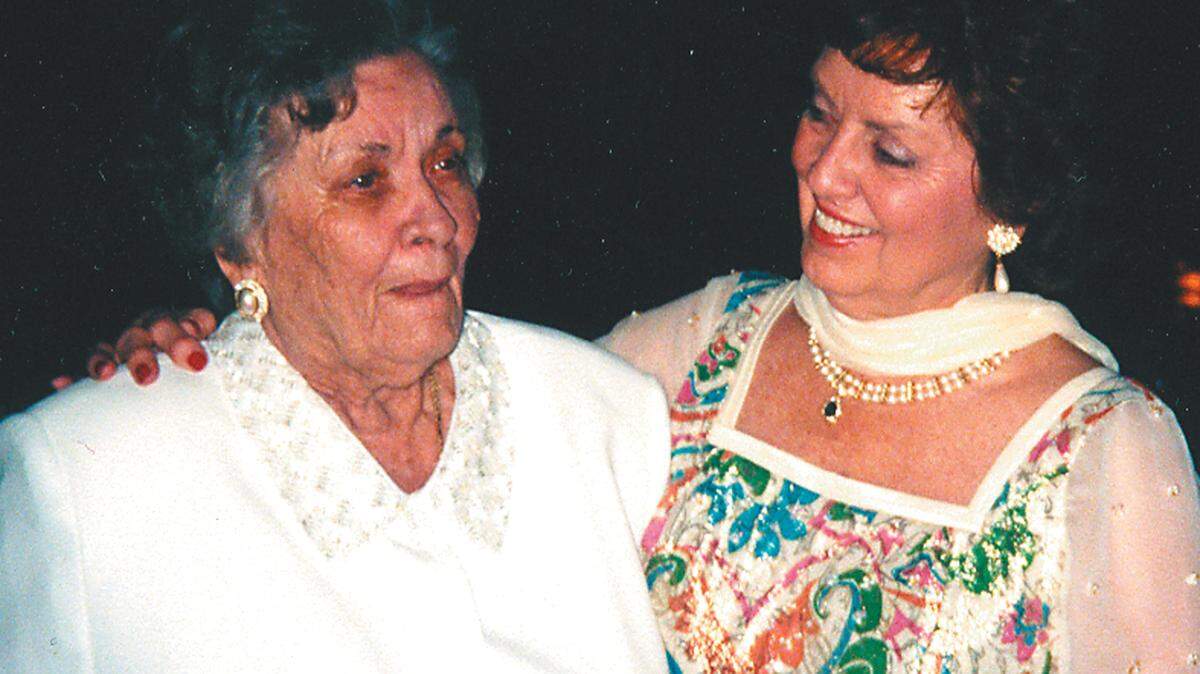
The company mushroomed with Gloria as its public face and Miss Gertrude the quiet rock in the background.
I wrote about Miss Gertrude when she died. People told me that when Miss Gertrude spoke at board meetings, everyone listened, and that when many suitors came to buy the company, they found her to be a steel trap. No matter how heavy — or underhanded — the outside push, Miss Gertrude never blinked.
She was straightforward. She didn’t beat around the bush. She was business savvy.
She continued to shell butterbeans, make jelly, boil peanuts and fry fish. She loved the Eastern Star and gave generously to her church, Calvary Baptist in Savannah. She continued to live in the same brick duplex where she and Leroy reared their family.
The company was sold to a private equity firm not long before Miss Getrude died in 2007 at age 95.
Hargray was long a major benefactor in the Lowcountry, but never more than the time it gave $3.5 million to jumpstart the University of South Carolina Beaufort’s New River campus.
Jane Upshaw, who was chancellor at the time, said it was an historic sum.
“But what she and her family were really committed to was opening doors,” Upshaw said. “Miss Gertrude wanted to open doors for others that hadn’t been opened to her.”
The Hargray Building anchors the campus of a school that was soon able to offer four-year degrees.
Maybe that’s how this community will remember the funny name of Hargray.
It sure was a spark. And it sure burned bright.