
SC’s recent monkey escape would be nothing compared to a potential brewing storm | Opinion
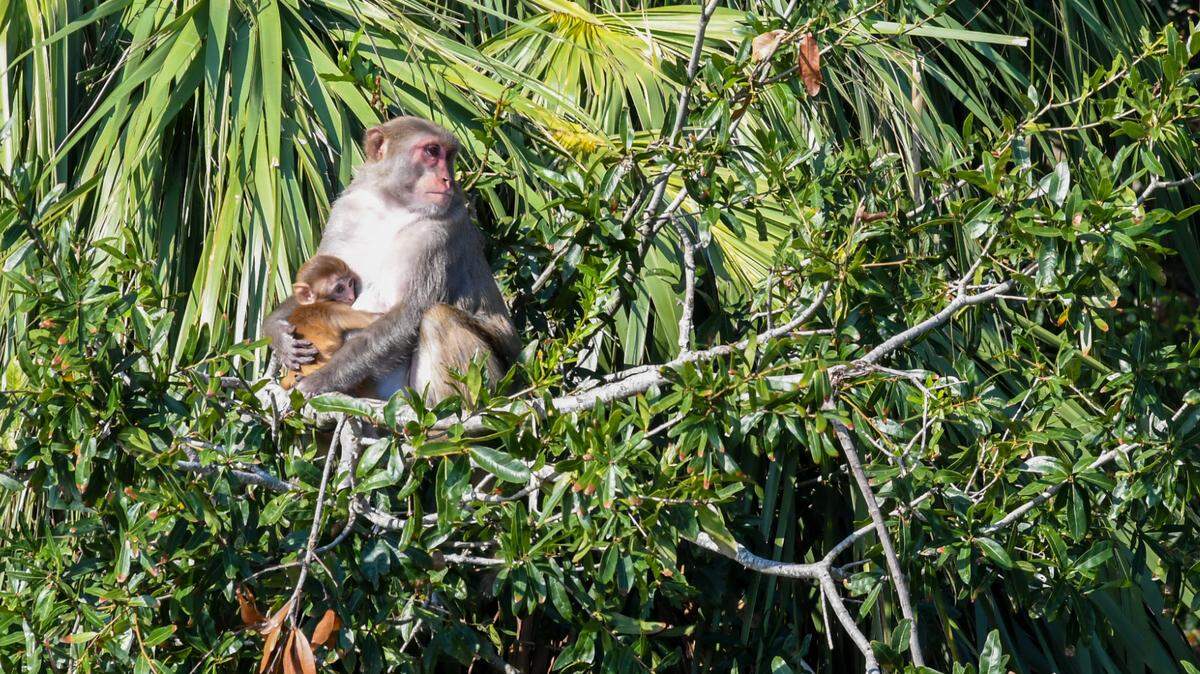
When 43 monkeys escaped from captivity into the South Carolina Lowcountry village of Yemassee last month, almost everyone seemed to be rooting for them to elude capture. Now, all but four of the adolescent female rhesus monkeys have returned as I write this.
The great escape inspired greater memes and creative merchandise — including a new beer — and reminded people in our area that Beaufort County is a monkey capital of the world.
The 43 little rogues who did nothing more than walk out an open door are among a cohort of nearly 10,000 that includes some 6,500 monkeys living in Beaufort County and 3,000 more in a nearby facility in Hampton County. They are bred and sold primarily for biomedical research.
It’s big business. Millions of dollars change hands between the private sector, federal government and the South Carolina Department of Natural Resources.
It’s all managed by a company called Alpha Genesis, whose primary customers are the federal government, pharmaceutical companies and universities.
Beyond occasionally recurring questions that arise about escapes, animal maltreatment and animal ethics in general comes a big question that too few contemplate: Are we vulnerable to a mass escape that would amount to more than just the monkeying around of this past month?
About 3,500 monkeys run loose on Morgan Island, just north of St. Helena Island in the mouth of the Combahee River, and a storm surge from a hurricane could sweep them into the wilds of precious Lowcountry lands protected from development. It would be a problem similar to the one with pythons in the Everglades, said a retired DNR biologist who lives in northern Beaufort County has long sounded the alarm about the monkeys.
Sally R. Murphy wrote about it in her 2019 book, “Turning the Tide: A Memoir,” which focused on her career of saving sea turtles. As DNR’s first sea turtle coordinator, Murphy knows well the personal and professional cost of successfully bucking resistance to a sensible cause.
Murphy is an advocate for what we call the ACE Basin, the collective conservation named for the Ashepoo, Combahee and Edisto rivers. It encompasses parts of four counties between Beaufort and Charleston, and The Nature Conservancy has called it one of the “last great places” on Earth.
Murphy says the thousands of monkeys raised on Morgan Island are the single greatest threat to the ACE Basin.
She says it’s not a question of if a storm surge will disperse the monkeys, it’s a question of when.
“No nesting bird would be safe,” she wrote. “It would be like having feral hogs that climb.”
I asked her last week about the monkeys involved in the much ballyhooed recent escape.
“The ones in Yemassee seem to be tamer and more accustomed to people and were easier to catch,” she said. “I doubt the ones on Morgan Island are this way. If they are carried by storm surge into the wilds of the ACE Basin, there will be no catching them. Period!”
This is where money can cloud good sense.
The Department of Natural Resources gets about $1.5 million a year to lease Morgan Island, which it owns. That money pays for all or part of the salaries of 33 employees in a department that in recent years has seen its state budget shrink.
But the public owns the island and it should be open to the public, and the state is so flush with money that it lost track of $1.8 billion. It can fund DNR without public land being used as a cash cow.
Here’s what Murphy says we should do:
“Buy out Alpha Genesis for the remaining lease on Morgan Island.
“Remove ALL of the monkeys on Morgan Island.
“Over the decades, the monkeys have decimated all living things in/on the ground and the understory on the island. It would be interesting to see how it is recolonized by both plants and animals. This would be a great study for many of the biology department students at USC-B.
“Move the monkeys, staff and facilities in Yemassee to the other facility in Hampton County, away from the Ernest F. Hollings ACE Basin National Wildlife Refuge.”
The 43 monkeys’ 15 minutes of fame would be nothing compared to the enduring impacts of thousands of missing monkeys.