
Faith, farming and humility: How Jimmy Carter inspired a South Carolina politician | Opinion
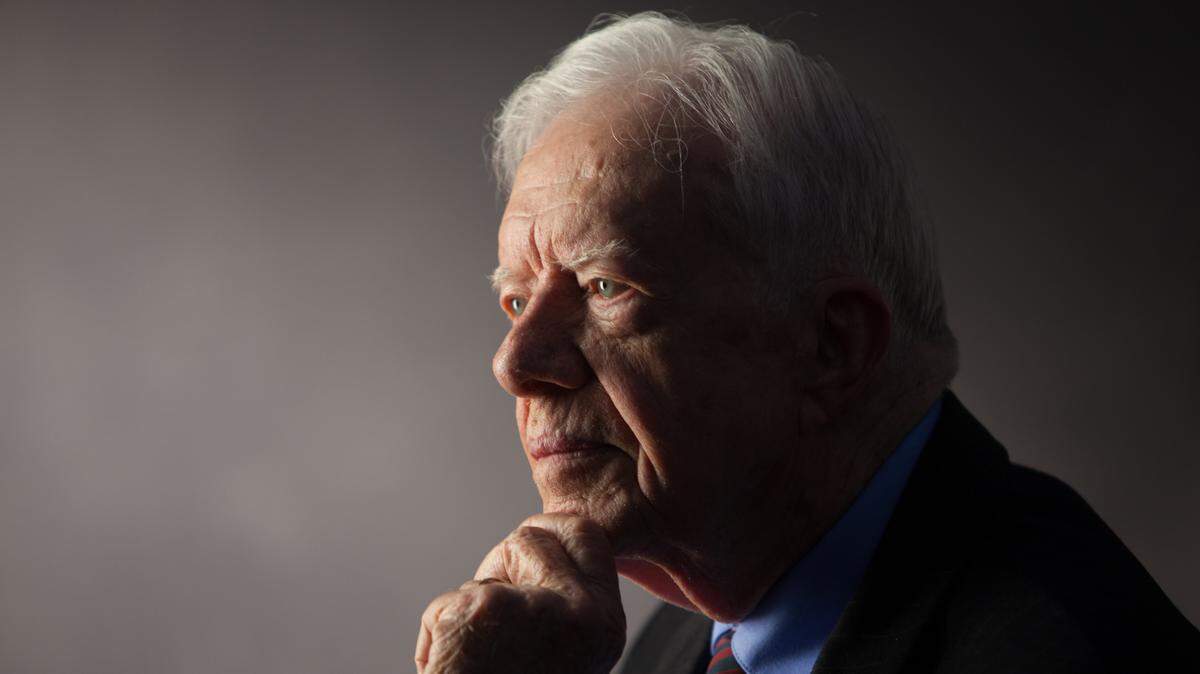
They say you shouldn’t meet your heroes, but Mandy Powers Norrell knows that’s not true.
There are humble exceptions. Former President Jimmy Carter was hers.
It’s why she found herself in tears while shopping for a New Year’s Eve dress at Goodwill on Dec. 29. Suddenly, her phone was pinging with condolences from friends as far away as California and Hawaii, sharing the news that the nation’s longest-living president had died at the age of 100, nearly two years after entering hospice care.
It almost felt as if he could live forever. We all saw a bandaged, black-eyed Carter constructing corbels after a fall at the age of 95. He would outlive one of his obituary writers in The New York Times by eight years. Yet even permanence is impermanent.
Memories rushed back. When she was 7, she sent a letter to Carter asking him to campaign in Lancaster, their small South Carolina town. She told him she had her parents’ permission to let him stay in their extra bedroom. When she was 10, she read Rosalynn Carter’s entire 420-page autobiography, “First Lady from Plains.” It was the longest book she’d ever read, and she couldn’t put it down. She even took it on field trips. When she was 12, her dad went to New York City to repair tenements with Carter and others. He returned with his autograph for her. She wrote him another letter, thanking him and noting he could still run again for president. Carter wrote back to thank her and say he didn’t plan to do so but that he appreciated her faith in him.
Faith. It’s a word long and often associated with Carter.
Politicians of both parties appreciate that. Republican South Carolina Sen. Tim Scott said, “President Carter’s public witness of his faith was a blessing to his family, the church, and our country. His legacy as a Sunday school teacher, faithful husband to his bride, and a man of deep Christian convinction in private and public service will inspire Americans for generations to come.”
Another South Carolina Republican, Rep. Ralph Norman, marveled, “There’s something to be said about a person’s life when ‘President of the United States’ could easily be a scant mention in his obituary…. What an incredible life of service, which was part of his Christian calling.”
Carter is why Powers Norrell, a former four-term state representative who ran for lieutenant governor in 2018, became a Democrat and why she remains a leading blue voice in a red state.
“I grew up a Southern Baptist in Lancaster,” she told me the week after Carter’s death. “We were so proud because he was a farmer and we were a farming family and he had the values of people we see who work with the land, and a deep and abiding faith.”
Faith. That word again.
“As I’ve said so many times on the campaign trail myself, it doesn’t matter who you are and where you come from,” she said. “You can achieve in this country. That was such an example of the American Dream, that you don’t have to come from privilege and you don’t have to come from wealth and you don’t have to come from the city. You can come from the farm and come from the rural South and do great things for this country.” You can rise. You can be respected.

Powers Norrell has met many politicians over the years who haven’t lived up to the hype.
“You go through life and you see all of these politicians who end up disappointing you,” she said. “I can’t tell you how many campaigns I have worked on and got to know the person I was putting my time and talents into getting elected and then became disappointed in knowing them.
“That never happened with Carter. He was the epitome of a good, moral person who lived his values. That, more than policy or anything else, was the most important thing to me.”
Many Americans who remember Jimmy Carter’s presidency will tell you stories about it. They will involve long gas lines or the longer Iran hostage crisis. They’ll involve inflation and a war in Afghanistan, which will sound familiar. Others will focus more fondly on Carter’s post-presidency — his 2002 Nobel Peace Prize, his tireless work for Habitat for Humanity, his love for Rosalynn.
Powers Norrell’s stories are personal. They speak to something both smaller and greater.
In 2009, she, her husband and their two children attended Carter’s Sunday school class in Plains, Georgia, and listened to him talk eloquently about pride, the first and worst of the seven deadly sins. She cried continually as a former U.S. president discussed the truism that humility is not thinking less of yourself but thinking of yourself less. It’s a powerful lesson and memory.
So there she was on Dec. 29, crying again, thinking of others, setting out to buy a dress and having the day take an unexpected and sad turn, like so many days in so many lives do. Yet she was buoyed and strengthened by both her affection for Carter and by others’ knowledge of it.
When her daughter found out, she drove from Columbia to Lancaster to give her mother a hug.
Carter was Powers Norrell’s north star. Her mother was talking about him as far back as Powers Norrell can remember. Her daughter was the same age upon meeting Carter as Powers Norrell was when she wrote to him for the first time. She still has those letters in her house.
Their impact on her is obvious. As is Carter’s, on the world he has left behind. That world now is a better place because of the example he led, the faith he put in it and the faith people had in him, and he will live on in people like Powers Norrell whose lives he has nourished.
It’s what farmers do: Plant seeds and let them take on lives of their own. That is the truth of it.
This story was originally published January 6, 2025 at 6:00 AM.