
This Martin Luther King Jr. trip to South Carolina could’ve changed the course of history | Opinion
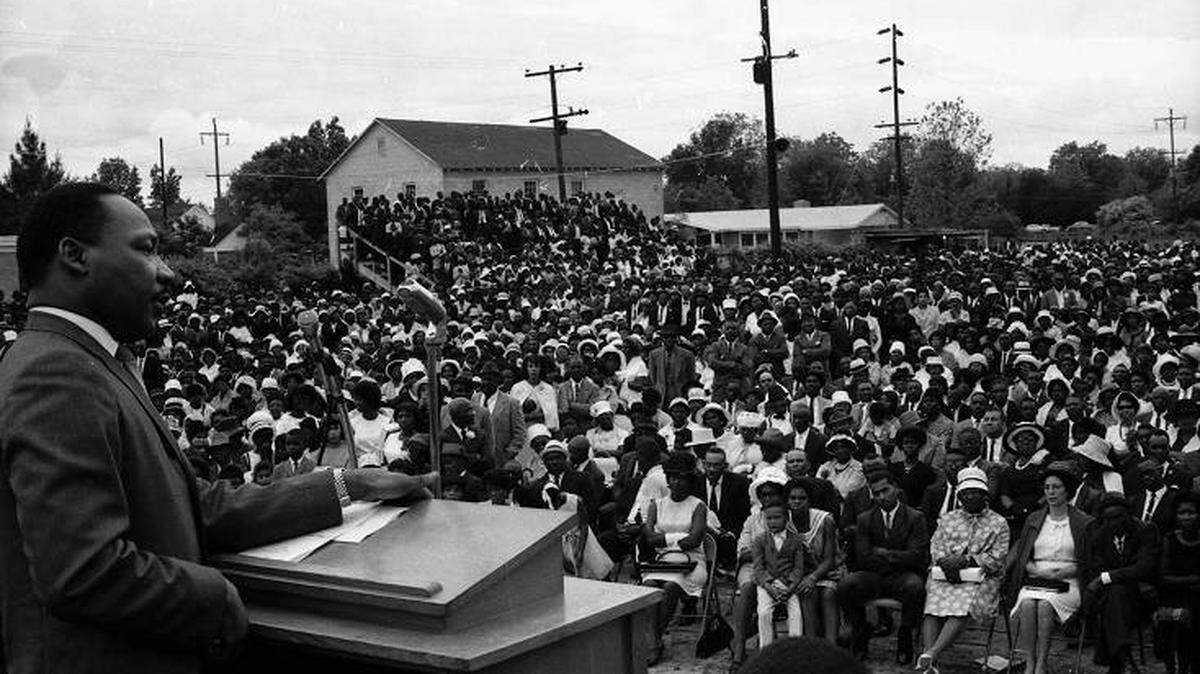
In a better and, yes, more perfect world, Dr. Martin Luther King Jr. would have appeared as announced at the Zion Baptist Church on Washington Street in Columbia on April 3, 1968, to send his soaring oratory toward the heavens and give goosebumps to listeners in the crowd.
“King Will Appear At Columbia Rally,” heralded the headline in The State the week before.
He might have spent the night in South Carolina’s capital and never traveled to Memphis, Tennessee, to support striking sanitation workers. He might have been 600 miles from the Lorraine Motel where a shot rang out in the early evening of April 4.
He might not have been assassinated on its second-floor balcony.
But we don’t live in a world of what if. We live in a world of what now.
So on Monday, for the 40th straight year, we will recognize Martin Luther King Jr. Day as a national holiday and remember the legacy of one of the great leaders of his or any other time. Residents of South Carolina and North Carolina recalling the man and his message this week can also recount King’s connections to our states. They are as monumental as the man.
Yes, if history had other plans, King could have been in Columbia, not Memphis, on April 4. But he also wrote parts of his “I Have a Dream” speech at South Carolina’s Penn Center. And he first delivered the famous “I Have a Dream” refrain at a speech in Rocky Mount, N.C.
The Penn Center says on its website that its Beaufort County locale is where King drafted early versions of the speech and planned the massive March on Washington, where he delivered it in 1963. The Penn Center is a remote site where King and his colleagues at the Southern Christian Leadership Conference (SCLC) held several gatherings in the mid-1960s. It had a rich history in the Black community and was seen as a safe space for interracial conversations.
It was founded in 1862 as a school for freed slaves and became a health clinic, a farm bureau, a “catalyst for community action” and finally a Reconstruction-era national historical park. The National Park Service says, “The isolated campus on St. Helena Island became a bastion of peace and a place of refuge where King could unwind, breathe freely and express himself openly, saying things in front of groups at Penn that he couldn’t say on the national stage.”
“At Penn,” the park service website says, “King was able to voice publicly his unpopular anti-Vietnam War stance and express his concerns for the 40 million Americans living in poverty, which led to his strong opinions about the intrinsic evils of capitalism.”
His opinions weren’t always well received by locals. Charleston News and Courier columnist Hugh Gibson compared the SCLC to radicals under Communist control. Gibson wrote in 1964, “It was difficult to realize that American history was written at Penn Center under the old oaks festooned with Spanish moss. You had to listen very carefully to catch the distant rumble of drums. But it was there, lads, indeed it was.” King received the Nobel Peace Prize that year.
As King told SCLC staff at the Penn Center in 1967, “There are times in life when you must take a position that is neither safe, nor politic, nor popular. But you do it because it is right.”
In a speech at the site in 2010, South Carolina writer Pat Conroy said, “I watched my whole country change because of meetings that had taken place at Penn Center.”
Conroy, whose own writing offers valuable lessons in civil rights, is now buried close by in Mount Helena Memorial Gardens cemetery. He was the first white person buried in the graveyard near the Penn Center.
Conroy’s resting place is a testament to the enduring appeal of King’s famous line about the day his children might be judged not “by the color of their skin but by the content of their character.”
King helped change history across our nation by speaking up and showing up. He helped change life in South Carolina by doing the same thing. If only he’d visited one more time.
This story was originally published January 17, 2025 at 6:00 AM.