
Presidential pardons change lives and legacies. Don’t let them change history. | Opinion
Gerald Ford’s pardon of Richard Nixon is now not even among the worst 1,500 in history.
President Donald Trump’s blithe act of forgiveness for more than 1,500 defendants involved in the Jan. 6, 2021, attack on the Capitol is a greater stain on this nation’s nearly 250-year history than Ford’s attempt to move on from the Watergate break-in and other Nixonion abuses of power.
Ford at least wasn’t trying to rewrite history. Trump’s complete disavowal of a riot in which one officer shot and killed a San Diego woman and 140 police officers were injured is the worst act of executive erasure in history. Some of those officers were beaten with batons and shields that were ripped from their own hands. The U.S. Attorney General attributed five subsequent deaths — one by stroke and four by suicide — of officers at the Capitol to fallout from that day’s violence.
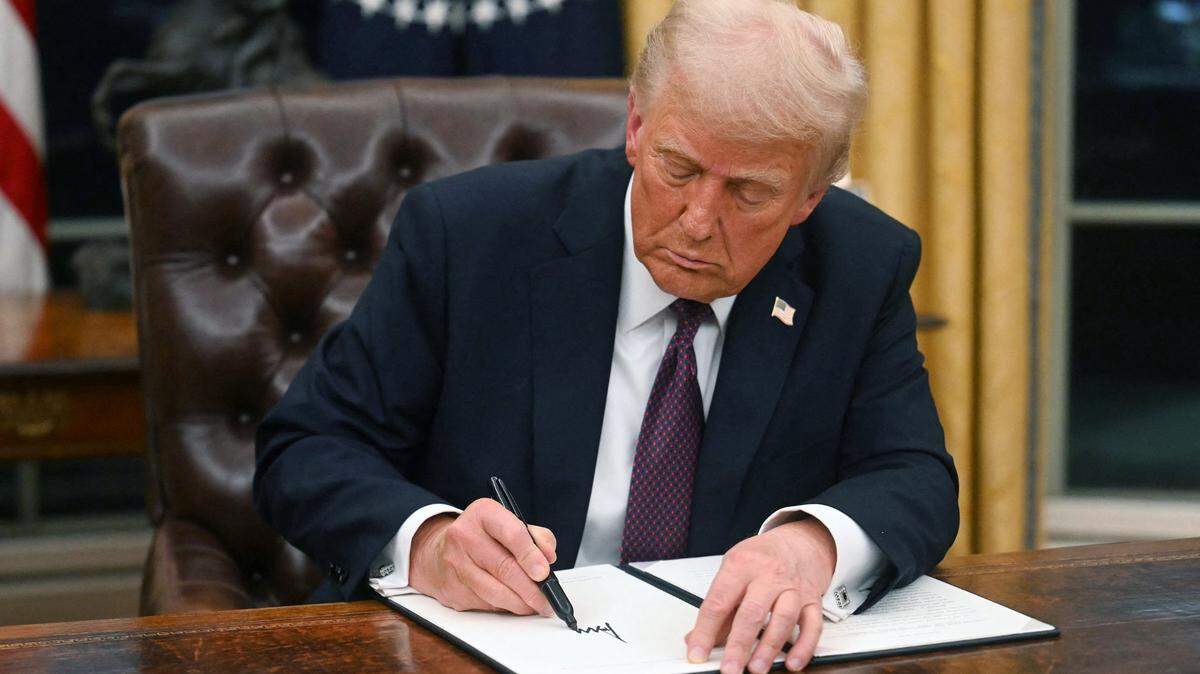
In ceremoniously issuing the pardon and unceremoniously ending the biggest criminal investigation in U.S. history, Trump said he “ends a grave national injustice that has been perpetrated upon the American people … and begins a process of national reconciliation.”
Hardly. A Reuters/Ipsos poll released Tuesday found that 6 in 10 Americans opposed the mass pardon.
Trump wasn’t the only president handing out pardons like candy and making a mockery of them this week. Outgoing President Joe Biden issued a preemptive pardon for five family members in his last hour, adding to several final acts of clemency that drew mixed reviews and did more damage than good for democracy, including poorly explained death penalty pardons.
Presidential pardons in history
Presidential pardons have been an unchecked power since the founding of the United States, borrowed from the British monarchy whose control so many Americans died to escape. But they’re not inherently bad. They can balance powers of others in government or make a point.
As Supreme Court Justice Oliver Wendell Holmes Jr. once wrote, they are, at their loftiest, “the determination of the ultimate authority that the public welfare will be better served by inflicting less than what the judgment fixed.”
They are also, unfortunately, ripe for abuse and favoritism.
Thousands have been issued over time, and thousands of others will follow. Those will no doubt spark debate, too. Everyone who recalls Bill Clinton’s pardon of billionaire fugitive tax cheat Marc Rich on his last day in the White House will always be outraged by it. Rich had fled to Switzerland after being indicted on charges he avoided paying $48 million in taxes following an oil deal with Iran as it held U.S. hostages. He never returned.
As we are seeing anew, pardons will always be a president’s attempt to have the last word. Amid the usual public outcry, it’s rare that it works, but in a South Carolina case, it may.
Meet Columbia’s E.W. Cromartie
Largely lost outside the Palmetto State in the outrage over Biden’s preemptive pardons and Trump’s Jan. 6 pardons was Biden’s pardon of former Columbia Councilman E.W. Cromartie. Cromartie is a legend in Columbia. He became one of the first two African Americans elected to the Columbia City Council in 1983 and served until his resignation in 2010 after pleading guilty to tax evasion.
Biden signed Cromartie’s pardon Sunday, the same day he visited Charleston as a guest of South Carolina’s Democratic U.S. Rep. James Clyburn.
Cromartie has apparently decided not to give any interviews, so the full story behind the pardon and his thoughts on it may not surface. But we know he acknowledged guilt and paid his dues to society. He gave up his law license, spent 10 months in federal prison and was required to pay $58,000 in back taxes. He’s now 79.
For someone who has given so much to society and also paid his debt to it, the pardon may seem reasonable even if it only came about because of Biden’s close friendship with Clyburn. But of course Biden didn’t stop with that pardon. And Trump has four years to issue more of his own.
No one should be surprised by any pardon now. It seems restraint exists only in bygone eras.
Other times with group pardons
It has long been controversial that the Constitution gives the president “Power to grant Reprieves and Pardons for Offences against the United States, except in Cases of Impeachment.” It has also long been used to pardon entire groups, not just individual people.
President James Buchanan pardoned Brigham Young and other Mormons to end a rebellion in 1858. Andrew Johnson pardoned all Southerners who had been involved in the Civil War in 1868. Jimmy Carter pardoned every Vietnam War draft dodger on his first day in office in 1977.
Trump’s pardon of the Jan. 6, 2021, defendants is not a blanket pardon because of one small detail. He commuted the sentences of 14 people in the most serious cases rather than giving them the “full, complete and unconditional” pardons he gave all the others. But that slight distinction seems mostly irrelevant, both to those who were behind bars and to those willing to criticize Trump on this. His thoughtless pardon signals that for all of Trump’s pro-police talk, he is not a law-and-order president. Actions speak louder than words, and this act of his speaks clearly.
Trump’s ‘dangerous message’
Just this month, the Justice Department announced it had charged 1,583 people with federal crimes for their actions on Jan. 6, 2021. Some were relatively minor, but more than 600 faced charges of assaulting, resisting, impeding or obstructing law enforcement, and 174 of those for having weapons or resulting in serious bodily injury to an officer. At last count, 69 had pleaded guilty to assaulting law enforcement with a dangerous or deadly weapon.
These violent offenders were not “tourists” waving around only phones and cameras.
This week, the Fraternal Order of Police, the nation’s largest police union, which endorsed Trump in 2016, 2020 and 2024, issued a statement with the International Association of Chiefs of Police, saying they are “deeply discouraged by the recent pardons and commutations granted by both the Biden and Trump Administrations to individuals convicted of killing or assaulting law enforcement officers.” It didn’t specify which cases. Trump’s only such pardons involve Jan. 6.
The statement called these crimes “attacks on society” that “undermine the rule of law” and said the related pardons send “a dangerous message that the consequences for attacking law enforcement are not severe, potentially emboldening others to commit similar acts of violence.”
It said, “Allowing those convicted of these crimes to be released early diminishes accountability and devalues the sacrifices made by courageous law enforcement officers and their families.”How can you not back the blue on a statement like that?
Most Americans rightly bristled when Tucker Carlson called the Jan. 6 criminals “sightseers.” Now Trump wants to rewrite history and reshape the U.S. as he sees it with the first act of clemency in his second term.
Judging by the polling and the police response, he won’t succeed. But worse, he may not have only lost some of his supporters’ good graces. He may have incentivized some of his supporters to do bad things.
This story was originally published January 23, 2025 at 6:00 AM.