
Why South Carolina should be proud Scott Bessent is Trump’s treasury secretary | Opinion
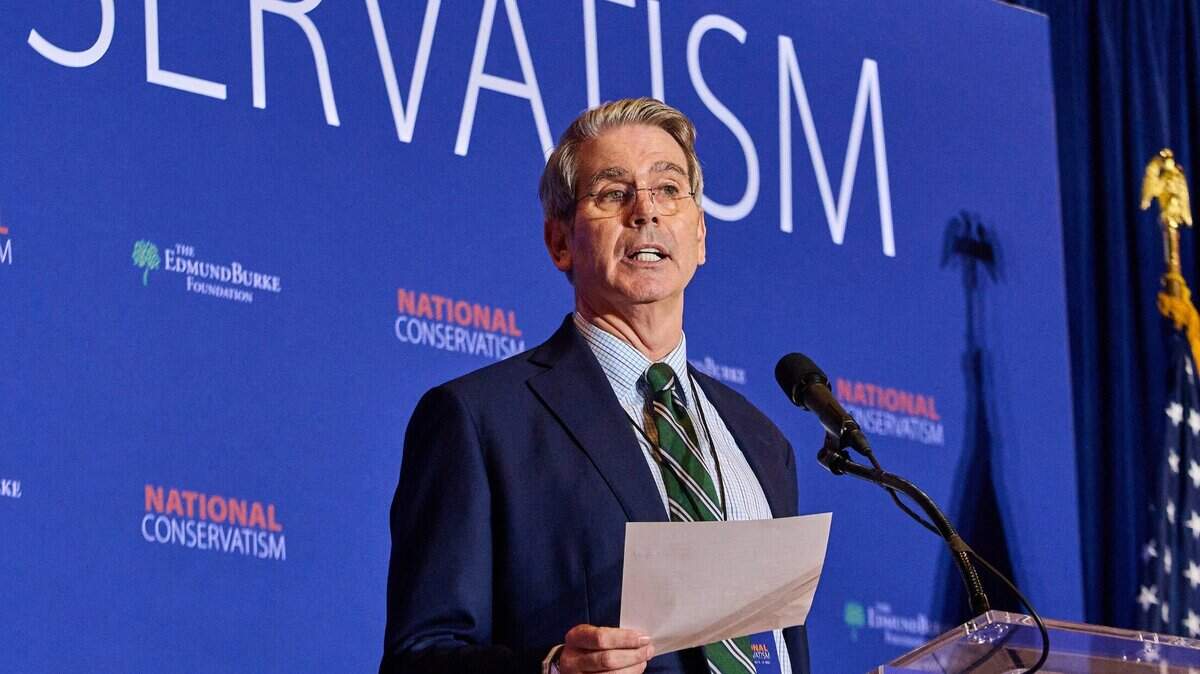
Lost in the firehose of national news this past week was a proud moment for the Palmetto State.
Amid the hue and cry over President Donald Trump’s picks to be the secretaries of defense and health and human services, South Carolina native Scott Bessent coasted to his Senate confirmation as treasury secretary. He is now fifth in the line of succession for the presidency.
Bessent is only the 12th South Carolinian to live in the White House or land on that “Top 5” list, a group led by President Andrew Jackson and Vice President John C. Calhoun in the 1800s. Of the 79 people to oversee the Treasury Department in U.S. history, Bessent is the first from South Carolina.
South Carolina has had just two House speakers (second in the line to the presidency): Langdon Cheves and James Orr, also back in the 1800s, and four Senate presidents pro tempore (third in line): Ralph Izard and Jacob Read in the 1700s, John Gaillard in the 1800s and Strom Thurmond from 1981-1987 and 1995-2001.
There have been only three South Carolinian secretaries of state (fourth in line): Hugh S. Legaré lasted 42 days and Calhoun less than a year in the 1840s while James F. Byrnes stayed in the role for a year and a half in the 1940s.
That’s how rare Bessent’s ascension is. He is just the third South Carolinian in 180 years to be a few breaths from the presidency. He’s not focused on that, of course. His plate is already full.
He is staring at a record $36 trillion national debt and $4 trillion in tax cuts that are expiring this year. Like Trump, Bessent embraces cryptocurrency and tariffs, two things on which he’ll have to work hard to help Americans understand. And like Trump, he has become a target for deranged men.
On Monday, the day of Bessent’s heavily bipartisan 68-29 Senate confirmation vote, a Massachusetts man armed with knives and Molotov cocktails was arrested near the Capitol after telling a police officer he planned to kill several Republican officials, including Bessent.
The New York Times reported that the 24-year-old thought to use “small bottles of vodka to start fires and later wrap them in rags soaked in alcohol, light them and throw them at Bessent’s feet,” according to a court affidavit. It makes you wonder why anyone would pursue politics.
A prominent Trump pick
Bessent grew up in Little River with big dreams.
He was born in Conway, a small town some people never want to leave, and he has gone far. He’s visited nearly 60 countries over 40 years in the global investment management business.
At 62, the billionaire has split time between Washington, D.C., and Charleston with his husband and two children. He bought a three-story pink mansion in Charleston in 2016 and listed it last year for $22 million. Life was good living mostly out of the spotlight. Now he won’t escape it.
The nation’s sky-high inflation under President Joe Biden helped Trump win the 2024 election, and a stubbornly bad economy could cost Republicans the mid-term elections in 2026, so Bessent isn’t just one of Trump’s most prominent picks. He’s perhaps his most important.
Those who know his life story would probably bet on his success. He’s sure-footed and self-assured, having learned from others’ mistakes and from big decisions of his own when he was younger.
His uncle was South Carolina Congressman John Jenrette, who spent 13 months in prison for a 1980 bribery conviction.
“I was able to imagine I could achieve great heights,” Bessent wrote in a eulogy for Jenrette. “Because of his downfall, I was also able to see that guardrails were required to maintain solid values and good relationships and close friendships.”
As reported in The Wall Street Journal, Bessent’s mother was married five times, including to his father twice, and his father went bankrupt following bad real-estate investments. The Journal story says Bessent “considered attending the U.S. Naval Academy but was unwilling to lie about his sexuality.”
He graduated from Yale University instead. In 2015, Bessent told Yale Alumni Magazine, “If you had told me in 1984, when we graduated, and people were dying of AIDS, that 30 years later I’d be legally married and we would have two children via surrogacy, I wouldn’t have believed you.”
Yale is where Bessent wanted to become a journalist — until he ran to be editor of the Yale Daily News and lost. That’s when, as the Journal reported, he “went into investing after meeting and working for James Rogers, Soros’s first partner.” Yes, George Soros. The man Trump and many other Republicans have vilified for making giant contributions to Democratic causes.
Bessent was most recently CEO and chief investment officer of a global hedge fund called Key Square Capital Management, which he founded in 2015. Before that, he was the chief investment officer of Soros Fund Management and, in the 1990s, the managing partner of its London office.
Bessent’s Soros connection is interesting because Trump has used the billionaire Democratic donor as a bogeyman in ways the Anti-Defamation League has criticized as antisemitic. A now two-year-old fundraising pitch from Trump’s 2024 presidential campaign labeled Soros “a corrupt left-wing billionaire” who “thinks he can single-handedly BUY Joe Biden’s second term.”
The ties reportedly almost cost Bessent the treasury job. But his pitch was too good.
Hamilton’s favorite tool
A week before his nomination, Fox News published a commentary from Bessent headlined, “Let’s talk tariffs. It’s time to revitalize Alexander Hamilton’s favorite tool.”
Hamilton, the nation’s first treasury secretary as now memorialized in song, “also happened to be America’s original proponent of tariffs,” Bessent wrote. Bessent called tariffs a revenue-raising tool, a way of protecting strategically important industries in the U.S. and, under Trump, a negotiating tool with our trading partners.
Tariffs, he wrote, are “a means to finally stand up for Americans.”
If the essay didn’t lock down his nomination in Trump’s mind, it certainly helped.
But the world’s richest man, Elon Musk, wasn’t on board with Bessent. As Trump weighed other options, Musk derided the potential Bessent nomination as a “business-as-usual choice.”
Yet Trump trusted his instincts, not Musk’s, and picked Bessent 17 days after the election.
“Scott is widely respected as one of the World’s foremost International Investors and Geopolitical and Economic Strategists,” Trump wrote in a Nov. 22 announcement. “As a lifelong Champion of Main Street America and American Industry, Scott will support my Policies that will drive U.S. Competitiveness, and stop unfair Trade imbalances, work to create an Economy that places Growth at the forefront, especially through our coming World Energy Dominance.”
The headline in the next day’s The Wall Street Journal was “How Scott Bessent won the ‘knife fight’ to be Trump’s treasury secretary.”
Getting the gig was the easy part. Winning Americans’ confidence with egg prices going through the roof and high home, energy and medical prices leaving a lot of people without a roof will be the challenge.
I, for one, am not going to bet against Bessent.
This story was originally published January 31, 2025 at 6:00 AM.