
Why South Carolina needs state treasurer Curtis Loftis to resign as others have | Opinion
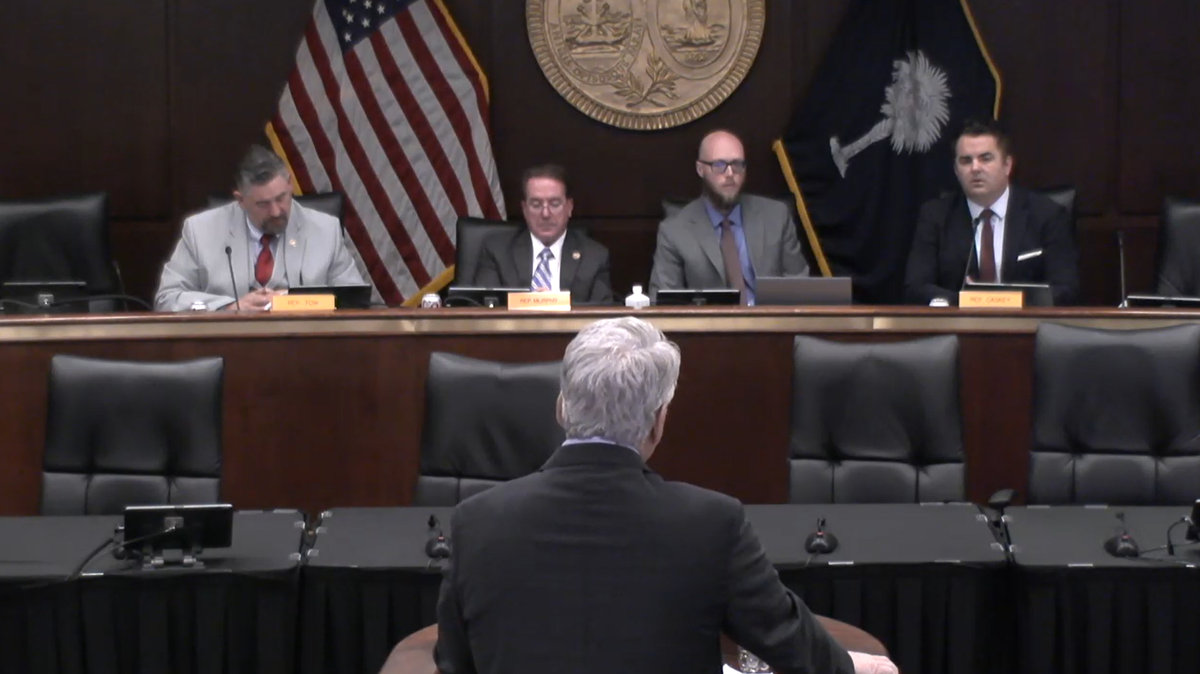
The state official at the heart of South Carolina’s growing accounting scandal testified before lawmakers Tuesday, and if you’re inclined to stop reading at this point, don’t.
That’s what state Treasurer Curtis Loftis — essentially the state’s banker — wants in the wake of a consultants’ report that found that the vast majority of a mysterious $1.8 billion state fund was “not actual cash” but rather “incorrectly recorded” during a conversion to a new accounting system. We’ll sweat the details below, but I urge everyone now to ignore Loftis’ suggestion that South Carolinians don’t care because no actual money is missing.
Loftis told lawmakers last year the money we know now is mostly non-existent had earned $225 million in interest!
The state has paid high-priced out-of-state consultants nearly $3 million to get to the bottom of this. It has spent another $5 million and wants $4 million more to pay higher-priced legal experts to help South Carolina respond to a related Securities and Exchange Commission investigation.
Millions more will be allocated after the biggest and most costliest errors by state officials in a long time. That money could have funded about a bazillion other needs around South Carolina.
Longtime readers of my columns here will remember the second one I ever wrote. Loftis had abruptly ended an interview and kicked me out of his office after just 30 minutes of me asking him tough, respectful questions about the scandal in April. He told me, “You’re never gonna understand.”
I posted the entire audio online because I wanted South Carolinians to judge Loftis and me. I was new to the state, and I didn’t think it was my place to suggest he should step down at the time. Lawmakers had done so, though. When I brought up the calls for him to resign later and asked him if he would consider that given his health, the harsh spotlight on him and his publicly announced plan not to seek re-election in 2026, he called the question “completely unfair.”
The question is dogging Loftis, first elected in 2010, more and more each day. He is the last of three state financial officials left whose decisions and inaction led the state into its current financial crisis.
Elected Comptroller General Richard Eckstrom left office last April, resigning after 20 years in it. George Kennedy, the state’s unelected auditor since 2015, resigned suddenly last week. Meanwhile, questions are mounting about inaccuracies in certified annual reports designed to assure regulators, bond holders and others about state coffers. These reports affect the scope of the state’s borrowing ability. Problems can jeopardize interest rates and infrastructure needs.
Loftis said in Wednesday’s hearing that he would finish his term.
He also said that hospitals are being “built with one-year money” now.
State Rep. Micah Caskey, R-Lexington, hit the nail on the head in one tense exchange.
“Mr. Caskey, let me say this, not a penny is missing,” Loftis said to defend his work. “This is accounting. No state has ever gone where we are right now. We have placed in peril the financial system and reputation of this state. We have excluded ourselves from the normal avenues of municipal finance because we’re discussing accounting entries on the front page of the paper instead of finding out exactly what happened and when it happened.”
“The problem is that this issue was not raised to the General Assembly to further investigate,” Caskey interjected. “And so rather than be in a position where we could have spent thousands of dollars in inquiry as to where this $1.8 billion had come from, we now have been forced to spend millions of taxpayer dollars. And I assign responsibility for that to all of those who were involved in this process, those with the ‘shared responsibility’ as you’ve termed it.”
The writing is on the wall for all to see. Loftis should do what he didn’t during this debacle: Look.
The issue, as Caskey laid out so well, is not what South Carolina has in the bank but that it is spending millions on something it could have addressed much more cheaply and quickly earlier.
“Given that it now has risen to this level, I don’t think it’s fair to expect the public to not pay attention to this,” Caskey told Loftis. “And if that has resulting consequences, that is something we will have to deal with. Our borrowing costs will likely increase because of this fandango.”
On page eight of the consultant’s report, AlixPartners lays out the fuzzy math in plain English.
It says that the state’s comptroller general’s office and treasurer’s office “were both aware of the (what we now know to be an incorrect) decision” to exclude the fund in question from the state’s 2016 certified financial report. It says that the fund contained entries the treasurer’s office made “to adjust for any differences between the State’s accounting system and the bank balance such that the two would match” but that — importantly — the office “did not investigate the underlying cause of the differences between the State’s accounting system and the bank.”
Instead, the consultants wrote, the office “held broader theories” any variances would “‘wash’” upon conversion to a new accounting system. “We understand,” the consultants wrote, that a treasurer’s office employee who has since left “was more focused” on ensuring that the system “balanced to the bank accounts rather than understanding the reason for any imbalance.”
The short version is Loftis’ office chose not to mention a vital state fund in 2016 financial statements, a seeming violation of Securities and Exchange Commission protocols, then chose not to investigate or even understand the imbalance between bank and accounting system.The obvious question is why. And that’s no doubt part of what the SEC is investigating — at great cost to South Carolina taxpayers, money that could be spent on any number of other needs.
SEC investigators are good at their jobs. I know. I covered an SEC probe in San Diego when the nation’s eighth-largest city issued inaccurate certified annual reports. The failures cost the city its ability to borrow gobs of money, then untold dollars in higher interest penalties over time.
Like Loftis, that city’s beleaguered mayor took great umbrage at any suggestion he should resign. The day Time Magazine named him one of the three worst big-city mayors in America, he held a hastily-called press conference in his driveway and told me to “Tell Time magazine that they just don’t understand what’s going on.” He announced his resignation a week later.
Outrage over his intransigence spurred the city to end 73 years of city manager-led government. “America’s Finest City” got a strong mayor government and a new nickname: Enron-by-the-Sea.
The bottom line is that the SEC does not suffer fools gladly. Loftis, at the least, is acting like one.
I don’t say this lightly, as I’ve tried to show here, but it’s time for Loftis to go.
His office knew about the fund. It didn’t disclose the fund as required. The buck must stop with him, as it has already stopped with the longtime comptroller general and the longtime auditor.
The only question is when he will leave, not if and certainly not whether he should. Loftis must go so South Carolina can turn the page and put in place new procedures and people to avoid a repeat performance. Until he does, it’s possible the SEC continues its investigation and South Carolina keeps having to funnel millions of dollars toward defending the indefensible. Consequences matter.
Among the consultants’ many recommendations for South Carolina, they included one for the state Treasurer’s Office: “Develop comprehensive policies and procedures outlining the roles and responsibilities of the STO which must require that the STO report (and independently confirm, as needed) cash and investments in its custody by agency and fund at least annually.”
A new treasurer should do that, as soon as possible.
“It didn’t have to be this way,” Caskey told Loftis on Wednesday. “All it took was for our officials entrusted with the responsibility to manage these things to come and tell us.”
That should have been done years ago.
At this point, there’s only one thing left for Loftis to tell us: when he’s resigning.
This story was originally published January 30, 2025 at 6:00 AM.