
I proposed South Carolina use firing squad executions. Here’s what I think now. | Opinion
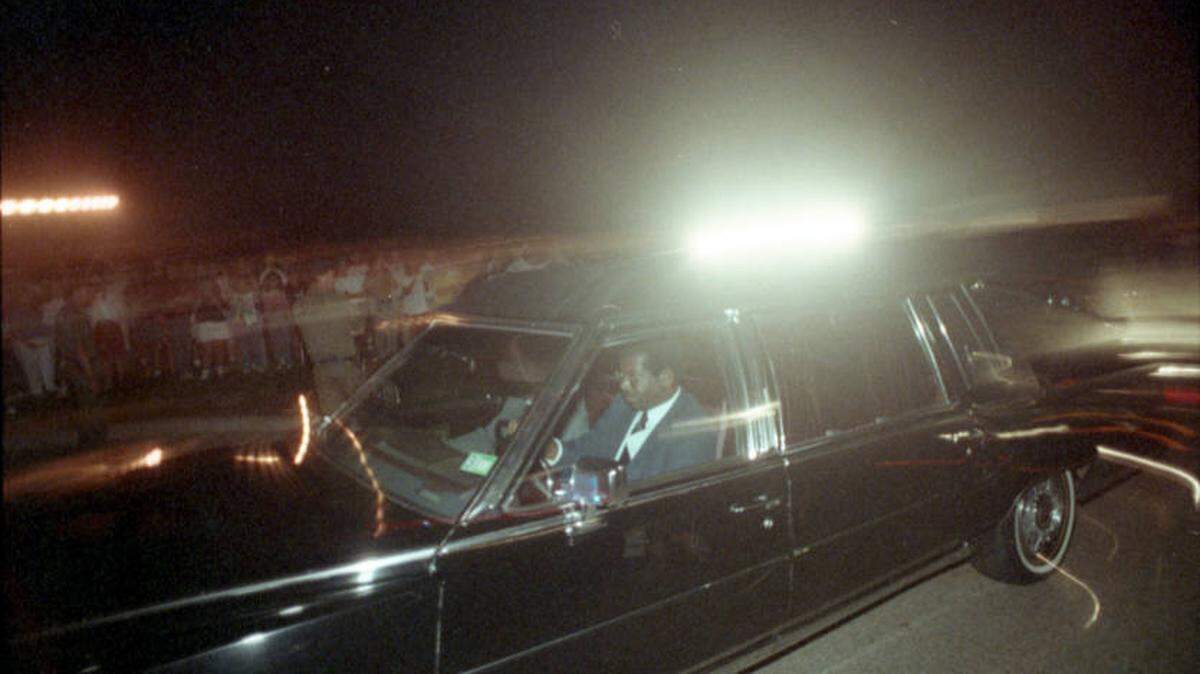
In the first week of September 1991, I received an invitation to witness the execution of Donald “Pee Wee” Gaskins, a man I had prosecuted and convicted in 1983. After a six-week trial, Solicitor Jim Anders and I obtained a conviction and sentence of death for Gaskins’ 13th murder.
I didn’t attend the execution for two reasons.
First is that, while I did my job and Gaskins received a just sentence from the jury, watching him die would perhaps make me no better than him, a man who relished watching his victims die.
And second, I didn’t want to leave my wife and child, who were being guarded by a detachment of South Carolina Law Enforcement Division agents assigned when the agency uncovered a plot by Gaskins to have associates kidnap my 4-year-old daughter.
After Gaskins’ execution, I spoke with law enforcement officials who had been witnesses. Their descriptions of his death were horrifying. The first attempt was not successful; it took two separate jolts, his hair caught on fire, his eyes burst, and he died in agony.
While I was and still am generally supportive of the death penalty in the most horrendous of cases, I believe society should not stoop to the level of cruelty of those we seek to execute.
In my four years as the elected solicitor of Richland and Kershaw counties, I exposed only one of a dozen potential death penalty defendants to that penalty. I believe it should be used very sparingly.
My belief is that the electric chair is cruel and barbaric — an opinion I have formed as I learned even more about its use. Before we knew each other, my wife served as a senior clerk to a U.S. district court judge in New Orleans who heard a death penalty case challenging the cruelty of electrocution as a method of execution, based primarily on the frequent failure of the chair to kill on the first attempt, exposing the conscious condemned to excruciating pain and mutilation from fire and burning.
She told me about the unforgettable testimony and photographs she viewed, which further confirmed her and my belief that the chair constitutes a cruel method for the state to end a life.
Subsequently, the South Carolina legislature added lethal injection as a means of execution. It was and is an obviously less cruel and less painful alternative that the condemned could choose.
Bear in mind that the law of the land in America as decreed by the U.S. Supreme Court is that punishment by death is not cruel and unusual.
I was elected to the South Carolina Senate in 2018, and by 2021 the state was unable for a variety of reasons to obtain the drugs needed for lethal injection. So we were back to the electric chair as the only method of execution in the state.
Not wanting South Carolina to resume the literal burning alive of its condemned, I looked at alternatives and concluded that the firing squad is the best alternative and, along with other senators, proposed and passed legislation to add the firing squad as an alternative method of execution.
Even liberal U.S. Supreme Court Justice Sonia Sotomayor has said the firing squad might be more humane than other methods of execution, writing in a 2017 case, “In addition to it being near instant, death by shooting may be comparatively painless.”
I hesitate to explain my misgivings with the method of execution while many believe there should be no executions. I am not someone who either relishes or enthusiastically offers to “pull the switch.” We should mourn the loss of any life, even the life of Gaskins, who murdered his last victim while in prison after confessing to killing 12 other people. Even Gaskins’ death diminishes us all.
But, as my father — who flew B-17 bombing missions over Berlin before D-Day — believed, some deaths should be viewed in their context as acts of regrettable but necessary self-defense. And when we act in self-defense, we should not torture or needlessly inflict pain.
Our goal should always be to act in the interest of protecting society.
This Friday a condemned prisoner has chosen to be the first man in South Carolina to be executed by a firing squad.
It was a choice he made after a lifetime of bad choices, but it was his choice.