
One of America’s most famous music producers has a refreshingly nuanced take on OCD | Opinion
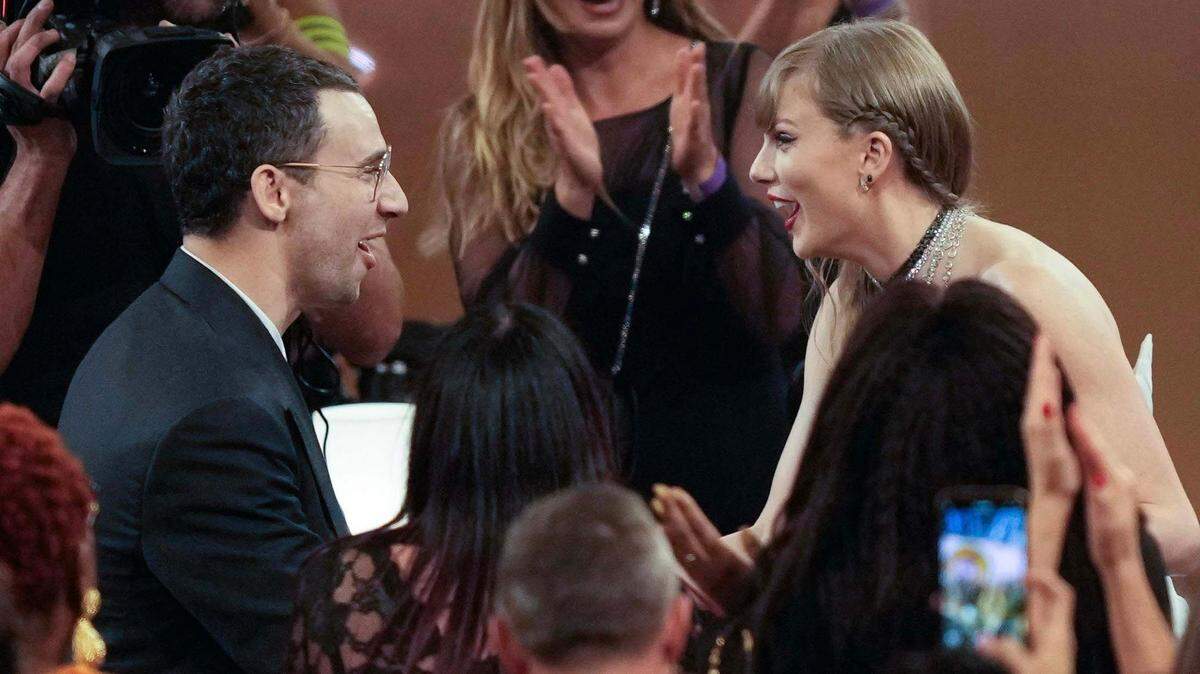
If you don’t know who Jack Antonoff is, I’m certain that you have literally heard him: You’ve been affected by the meticulous ways he paints a sonic landscape, cranks the verse of a Taylor Swift song, angles the hook of a Sabrina Carpenter tune or shreds a fun guitar solo into a place both new and familiar.
Today, on his 41st birthday, I am grateful for something the singer-songwriter and record producer brings to the recording studio that some of his fans might not recognize: his refreshingly nuanced take on obsessive-compulsive disorder.
If you have OCD, you plug into the world at a different frequency. You wonder which doors are clean enough to touch, which thoughts are pure enough to think, when your loved ones might die or whether you’re truly in control. It’s like being tuned into an existential radio station all the time, with no pop music to offer a break.
Living with OCD
OCD is a condition that plagues between 1% and 2% of the American population, takes an average of 14 to 17 years to correctly treat and currently has few proven interventions (the two most prominent being medication and exposure-response-prevention therapy). A 2023 analysis found that untreated OCD led to an annual loss of more than $8.4 billion in the U.S. alone, primarily due to missed work, decreased productivity and medical costs.
With such a large impact, we need more and better options for the disorder. We should also widen our hearts and minds to learn from the lived experiences of those with OCD. And Antonoff helps us do so by talking openly about how his concerns about touching his face with unwashed hands stems not so much from being a classic germophobe, but from a profound awareness of his own mortality.
Antonoff is one of the few OCD advocates to hit squarely on the root note of the disorder itself — the existential dread of death — while simultaneously tapping the overtones of life and possibility rising above it: the overarching brilliance and beauty of hope.
Antonoff is tuned into a bigger process than merely finding relief for symptoms. He is more concerned with learning about the good, bad, ugly and everything in between.
“There’s a scale where it’s like, can you leave the house? Can you connect with people? Can you care for yourself right? If you can’t do those things, you have to heal,” Antonoff told Time. “But everything else, I think, is an attempt to understand. I want to understand why I feel certain ways. I want to understand why I can’t do certain things and can do other things. I want to get myself the way I get other things.”
Antonoff’s inspiration
Beginning at the age of 5, Antonoff watched his older sister struggle through brain cancer (she died at the age of 13, when he was 18). His own brief stint in an intensive care unit for pneumonia and his deep awareness of grief inform as much of his OCD as his capacity to find joy and brilliance in the transient moments of life.
“I think that things are really fleeting,” Antonoff said on NPR’s “Wild Card” podcast. “The thing about sick people — people who are unsure how long they’ll get to live, especially kids in that position — (there is a) lack of cynicism, (and an) obsession with creation, joy, love, family.”
This is the hidden upside of OCD: the light contrasting with the dark, so often treated away or dismissed as a side effect of having unusually heightened feeling and imagination.
OCD is part of the larger human story, the creative project of sifting through what is important and elemental, and how to find nuance in all that messy beauty. It’s about being a self that is constantly changing while staying the same — of containing multitudes.
“We all have this stuff we carry in an invisible suitcase,” Antonoff told Time. “You can’t keep it all, because (then) you can’t move forward. But you can’t let it go, because if you let it all go, you’re not yourself. The great balancing act of life is, ‘What do I keep in here?’”
Nuanced craft
The nuance of OCD is noticing how challenging and essential it is to be constantly finding and losing yourself, capturing on the master tape the many mini-deaths and rebirths we all undergo. And those with OCD are accustomed to looking just that far inward, but it’s about more than just the hardship.
This intensive introspection is apparent in the way Antonoff — as music producer — crafts an unconventional five-step key-change in Sabrina Carpenter’s “Please Please Please,” making listeners feel as if the singer is crafting the song in real time just for them. Or the way a brassy arpeggio can rain down praise into a puddle of sonic bliss.
Listeners feel it in the echo of the snare-drum heartbeat as the waltz of a Taylor Swift ballad longingly skates past you. With pared down guitar and an ethereal combination of vocals and Mellotron, Swift wrote the song “Lover” to sound “like the last two people on a dance floor at 3 a.m. swaying.” And Antonoff, true to his nuanced craft as Swift’s music producer, achieves that by keeping the song as timeless and natural as Swift intended it. Somewhere between a love song and a lullaby, it’s the bittersweet yearning of pure love: “Can I go where you go? Can we always be this close?”
Antonoff gets at the piercing and poetic heart of OCD — the way it sensitizes us to the cold and broken Hallelujah of an iconic Leonard Cohen tune. Antonoff makes us listen, if only for a brief moment, for that looping arpeggio you never realized wasn’t just repetitive, but constantly driving the tune forward, one note at a time.
This story was originally published March 31, 2025 at 9:02 AM with the headline "One of America’s most famous music producers has a refreshingly nuanced take on OCD | Opinion."