
A middle-class income tax hike of hundreds of dollars in South Carolina? Stop the insanity | Opinion
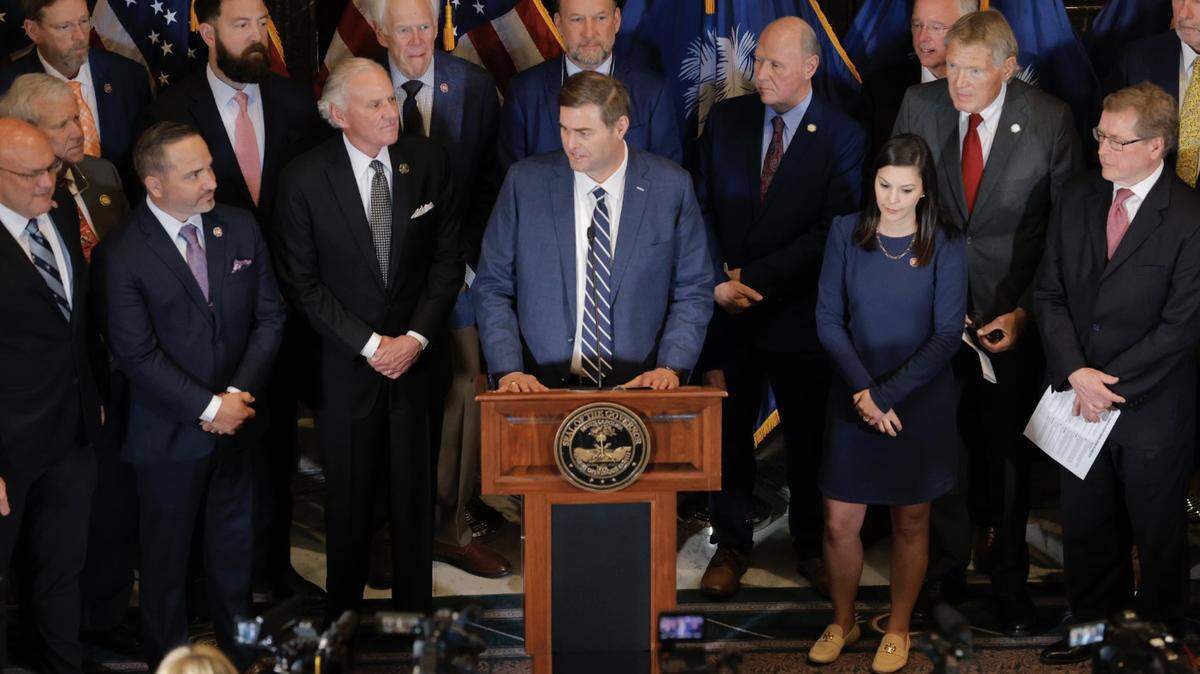
South Carolina lawmakers are making a big bet on the state’s future — with your money.
Under a new plan advancing through the House of Representatives at the State House, nearly 60% of hard-working South Carolinians would see a tax increase next year, 21% would see no change and 19% — almost everyone making over $150,000 a year — would get a tax cut.
The rich always get richer, but c’mon. More than 1 million people making less than $75,000 — the state’s annual median income is just $67,800 — would have their taxes go up by hundreds of dollars initially. The state would take an additional $500 to $800 from almost everyone with a middle-class income of $45,000 to $135,000 next year. Meanwhile, most people with a million dollars in income would get bigger bank accounts. Their tax savings would average $30,800.
So much of the new way lawmakers would like to tax state income next year is hard to believe: The scope, the spin, the targets, the timing. It’s like they want us to vote them out of office.
I could boggle your mind with more figures from the South Carolina Revenue and Fiscal Affairs Office’s statement of estimated fiscal impact of House Bill 4216, but I won’t. The bottom line is the same South Carolinians who have struggled to buy everything from gas and groceries to cars and houses would be asked to give more to the government under South Carolina’s proposed flat tax than they do now under a tiered tax system that traces its roots back more than a century.
Americans just elected President Donald Trump five months ago to put more money into people’s pockets and restore common sense from coast to coast. Yet South Carolina lawmakers want to take that money away in a proposal that seems nonsensical the more you learn about it.
The lawmakers’ pitch is tax liabilities will decrease in future years, assuming continued revenue growth, as the state brings in enough income tax from a bigger tax base to incrementally reduce a flat tax rate from 3.99% next year to 2.49% at an unspecified future date. Assuming continued revenue growth....
The thinking is that a low flat tax would help South Carolina compete with surrounding states with flat or no income taxes. In all, 14 states have flat income taxes and nine do not tax income. Nearby, Georgia and North Carolina have a flat state income tax while Florida and Tennessee have no income tax.
If revenue continues to grow and everything else goes according to plan in South Carolina so the flat tax rate reaches 2.49% — a big if — the state’s revenue analysts estimated that about three in four South Carolina tax filers would pay less in taxes and 23% would pay the same.
But what if revenues don’t grow as assumed? Middle-class tax filers would be stuck paying more in taxes, not less, at a time of great national economic instability.
That’s not to say the tax system doesn’t deserve scrutiny. Currently, 44% of South Carolina tax filers don’t pay any state income taxes after tax deductions and credits. That makes for a narrow tax base. It also would make the move to a flat tax more difficult and more distressing than the House and Senate leadership and Gov. Henry McMaster are really letting on while pushing their plan.
South Carolina currently has a 6.2% tax rate for high earners but an effective tax rate of 2.85%, as House Speaker Murrell Smith has said. You know what’s easier than raising taxes on people? Explaining that.
It doesn’t take a lot of time, energy or thought to tell people (and business leaders looking to relocate to the Palmetto State!) that our graduated tax rate is pretty good, especially when factoring in what South Carolinians pay in sales and property taxes. It’s not complicated to explain. I just did it pretty quickly. Lawmakers, more expert in matters of taxation, can do it, too.
Many people would swear that South Carolina’s economic successes are actually a result of growth driven by sensible tax and fiscal policies by the party in power, by supposed champions of fiscal conservatism. But this switch would cost $3 million upfront for vendor programming costs, worker training and public communications. And it would mean $216.6 million less for the state’s general fund in fiscal year 2026 and an eventual tax reduction of $2.7 billion. That’s a lot of uncertainty in a state with a lot of needs.
Those services cost money. Less money means fewer services. Fewer services means less of a state. It’s a vicious cycle. Oh, and the plan would hammer most state taxpayers every year around April 15.
Instead of allowing South Carolina state taxpayers to apply the federal deductions to their income — currently $14,600 for single filers and $29,200 for married couples filing jointly — the new tax plan would create a new South Carolina deduction. That would be set at $6,000 for single filers and phased out for filers with income between $30,000 and $40,000. It would be $12,000 for married couples filing jointly and phased out at income levels of $60,000 to $80,000.
It’s tax time now, so South Carolinians can truly reflect on what this would really mean: Pain.
Look, if there’s an appetite among residents for a flat tax, voters can let everyone know in future elections by choosing among candidates who support or oppose such a system. But adopting this now is crazy. Inflation is still too high and federal tariffs are about to jack up prices on goods and services. If egg prices are slowly returning to normal, car prices are about to go through the roof. And stock market and retirement funds keep losing value amid turmoil with no end in sight.
It’s so weird that a conservative state isn’t more fiscally conservative. Do you think the people who put today’s lawmakers in power thought those leaders would basically pickpocket them?
It’s also weird that a state whose tax policies have been an actual beacon bringing more new residents to South Carolina than almost anywhere else in the nation would toss aside those policies in favor of a prayer that relies on risky revenue growth assumptions at a time of economic precariousness in a nation that has recorded 14 recessionary periods since 1929.
State lawmakers should stop toying with the tax system like they’re fat cats and it’s a ball of yarn. Or the only yarn they’ll be spinning is when telling stories about why they were voted out of office by people upset about giving even more money to the government.
Now’s not the time to tinker with the tax system.
This story was originally published April 2, 2025 at 6:00 AM.