
Why the answer to Columbia’s conversion therapy conundrum is clear | Opinion
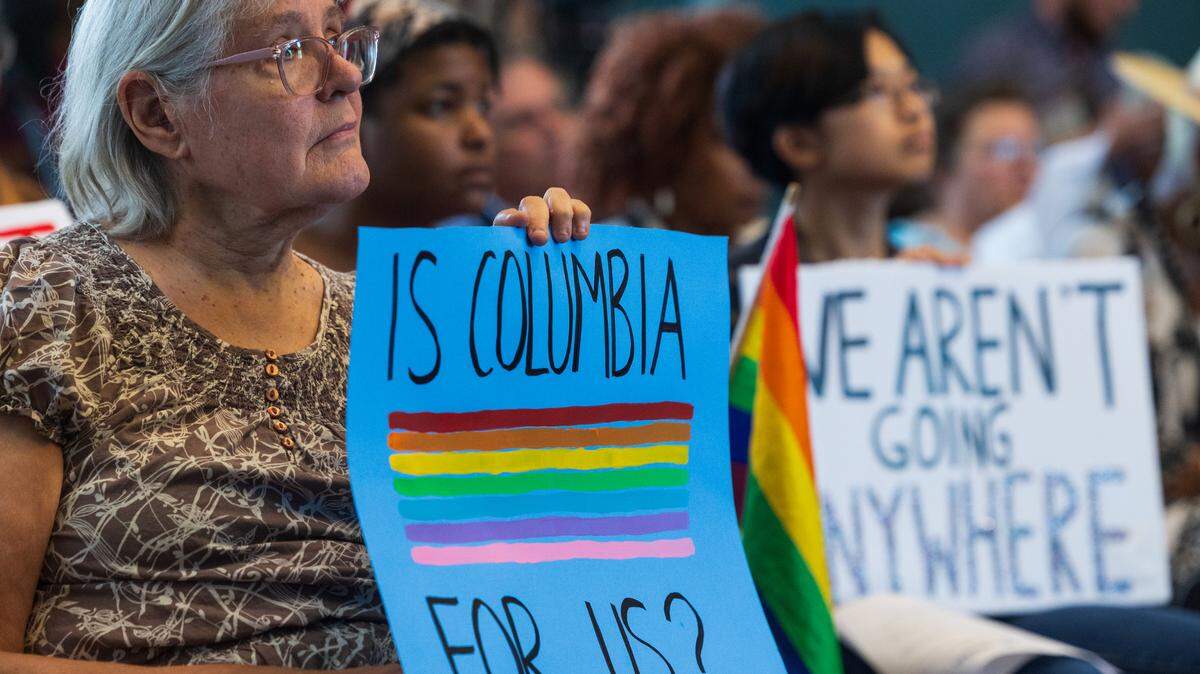
There are three reasons for the Columbia City Council to repeal its ban on conversion therapy, which, since a close 2021 vote amid a wave of similar votes nationwide, has prevented licensed professionals from trying to change the sexual orientation or gender identity of anyone under 18.
One, South Carolina Attorney General Alan Wilson has threatened “future legal action.” He says the overly broad and vague policy violates free speech and free expression and thought while also conflicting with a state law precluding interference with medical practitioners’ professional conduct and judgment in providing services such as therapy and counseling.
Two, state Sen. Josh Kimbrell, R-Spartanburg, a critic of Columbia’s ban since 2021, persuaded the General Assembly to include a proviso in next year’s budget that would “claw back” any state aid to any municipality with conversion therapy bans for minors. Columbia stands to lose $3.7 million next fiscal year.
And three, it’s the right thing to do in a state where faith and family are closely connected.
There are also three reasons for the Columbia City Council to keep its conversion therapy ban.
One, the practice has been widely discredited for decades by leaders in the medical community and has been decried as harmful rather than helpful to young people in the LGBTQ community.
Two, there’s a principle called Home Rule that should be held sacrosanct in South Carolina, which lets local jurisdictions make laws germane to its jurisdiction, safe from state interference.
And three, the U.S. Supreme Court said in March — a month before Wilson’s April 22 warning to Columbia and Kimbrell’s April 23 proviso introduction — that it would consider a legal challenge to a ban like this in the state of Colorado next session. That means by about this time next year justices will offer more certainty in a nation where freedoms of speech and religion are protected by the First Amendment but where currently 23 states ban conversion therapy for minors, four states have partial bans and four others have court orders or state laws prohibiting local bans.
Nineteen states, including South Carolina, have no state laws or policies regulating conversion therapy, which has led hundreds of U.S. municipalities, including Columbia, to ban it for minors.
So what’s the Columbia City Council to do?
It has no idea at this point.
Mayor Daniel Rickenmann and six other other council members have struggled with that question in two consecutive public hearings, postponing scheduled votes on a repeal at a regular meeting on Tuesday, May 20, and in a hastily called meeting on Tuesday, May 27.
“We voted on an ordinance [in 2021] that has no teeth,” Rickenmann said at the most recent meeting. “But I can’t have any part of our community feeling vulnerable. So what do we do?”
At these meetings, the council weighed the legal and financial threats from two prominent state politicians – both of whom are considering whether to launch formal campaigns for governor later this year — against pleas from members and allies of the LGBTQ community who were holding signs that read “Is Columbia for us?” and “Queerness doesn’t need a cure.”
What’s the Columbia City Council to do?
The answer is clear.
As it did in 2021 when it imposed its ban, the City Council should listen to all the medical practitioners who have known and said for so long that both science and surveys argue against licensed professionals conducting conversion therapy. And it should let faith practitioners keep pursuing their constitutionally protected and God-given rights to free speech, as they can now.
It should protect vulnerable members of the LGBTQ population from a pseudoscientific practice that makes LGBTQ youth hate themselves and can double suicide rates among teenagers in that community.
It should stand tall against the legal and financial extortion of those who would be governor.
And it should let the legal process work itself out in the highest court in our land, as is occurring.
All this Sturm und Drang — a German phrase meaning storm and stress — has been unnecessary.
If anyone wants to toss out this law, there is a way to do that. They can challenge it in court. But a similar challenge has already reached the apex of our legal system, the U.S. Supreme Court, so the best, fairest thing to do is to wait patiently for that to resolve itself. Given that, any threat to file another lawsuit or withhold state aid is exploitation for political purposes.
Time will tell whether the Supreme Court strikes down or validates conversion therapy bans like Columbia’s. Time will also tell if this issue wins votes in the next governor’s race. For now, the current governor, Henry McMaster, should veto the budget proviso that takes aim at — and threatens to take money from — the lone city in South Carolina with such a ban, in violation of Home Rule. And the Columbia City Council should be able to discuss its own budget free of intimidation.
Everyone should simply be allowed to focus on other matters that the public and our elected officials could and should be focusing on and then see what the Supreme Court says in a year.
What’s the harm in waiting for that ruling?
There isn’t any.
But there is harm in a repeal in Columbia.
This story was originally published May 29, 2025 at 5:00 AM.