
Sen. Lindsey Graham is hurting the people he’s supposed to represent | Opinion
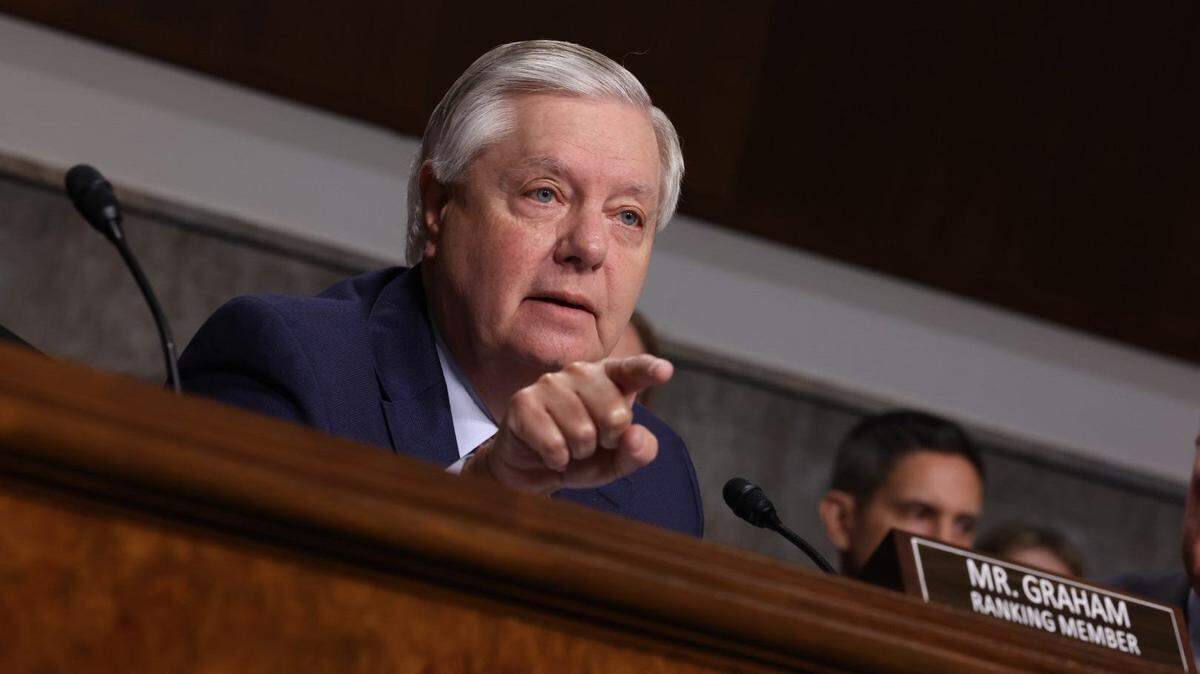
Sen. Lindsey Graham apparently doesn’t believe President Donald Trump’s “One Big Beautiful Bill” is cruel enough. Seems he’d prefer one that hurt even more poor and working-class people than the version that recently passed the House of Representatives by a single vote.
Freedom Caucus Republicans were warning the Senate not to water down massive spending cuts, and CNN’s Manu Raju asked South Carolina’s senior senator, “What do you say to them?”
“Some of these cuts are not real,” Graham responded. “And we’re talking about over a decade — you know, if you do a trillion and a half, that’s like a percent and a half. So let’s don’t get high on our horse here that we’ve somehow made some major advancement of reducing spending because we didn’t.”
The bill Graham was referencing proposed a trillion-dollar-cut to spending designed primarily to help poor and working-class Americans to finance a massive tax cut that would largely benefit the wealthiest among us. Those cuts would hit Medicaid and food stamp programs the hardest, as well as Obamacare subsidies that had finally made health insurance affordable for millions who made too much to qualify for Medicaid but not enough to afford private insurance. According to the Congressional Budget Office, if President Trump gets to sign the “One Big Beautiful Bill” into law, more than 13 million Americans may lose health care access.
Because of the combination of safety net and regressive tax cuts, the richest Americans would see a net gain while the poorest experience a net negative in income and resources.
There is no clearer illustration of transferring wealth upwards — literally taking from the poor to give to the rich. That even accounts for no taxes on tips and for child tax credit provisions because they’ve been structured in a way that benefits higher-income workers.
Graham, a long-time senator in one of the poorest states in the union, wasn’t lamenting that the people who have kept sending him back to Washington, D.C., to represent their interests would be hurt. He seemed upset not enough of them would be. South Carolina’s 14% median poverty rate is higher than the national average. Nearly 1 in 4 of the state’s 5.5 million residents rely upon Medicaid, more than 1.3 million people. The program helps pay for about 46% of births in the state and helps nearly two-thirds of nursing-home patients.
That’s what’s at stake, all because Republicans like Graham seem to care more about extending tax cuts that will heavily benefit the rich rather than focusing on the well-being of the vulnerable. The GOP, predictably, has its talking points ready to convince you that isn’t happening, even though it is.
Party leaders claim the cuts aren’t actual cuts, just an attempt to ensure the “underserving” aren’t on Medicaid. But the CBO and independent analysts disagree. The cuts are real, and really bad for the poor and working-class.
Republicans have included work requirements in the bill, knowing the “virtue” of work rhetoric is popular with an unaware public. The GOP doesn’t want you to know that nearly two-thirds of Medicaid recipients have jobs, and most of the others are either students, ill or disabled people or caretakers for those who can’t take care of themselves.
Republicans frequently talk about rolling back unnecessary regulations that make it hard for the rich and corporations to operate. But their “work requirements” bury the poor and working-class in so much paperwork, many can’t access safety net benefits to which they are entitled.
Not too long ago, Graham joined most of his Senate colleagues in opposing the reimplementation of the expanded child tax credit that cut child poverty nearly in half early in President Joe Biden’s term. That bill received overwhelming bipartisan support in the House. A few million children were lifted out of poverty in 2021 with the credit, and were thrust right back into it when it expired.
I suspect Graham, despite his comments about the “One Big Beautiful Bill” the House passed, will support whatever version that makes its way through the Senate. It’s clear he’s more concerned about supporting his billionaire-buddy Trump than helping poor kids in South Carolina.