
South Carolina beach protections are vital for our ecology and economy | Opinion
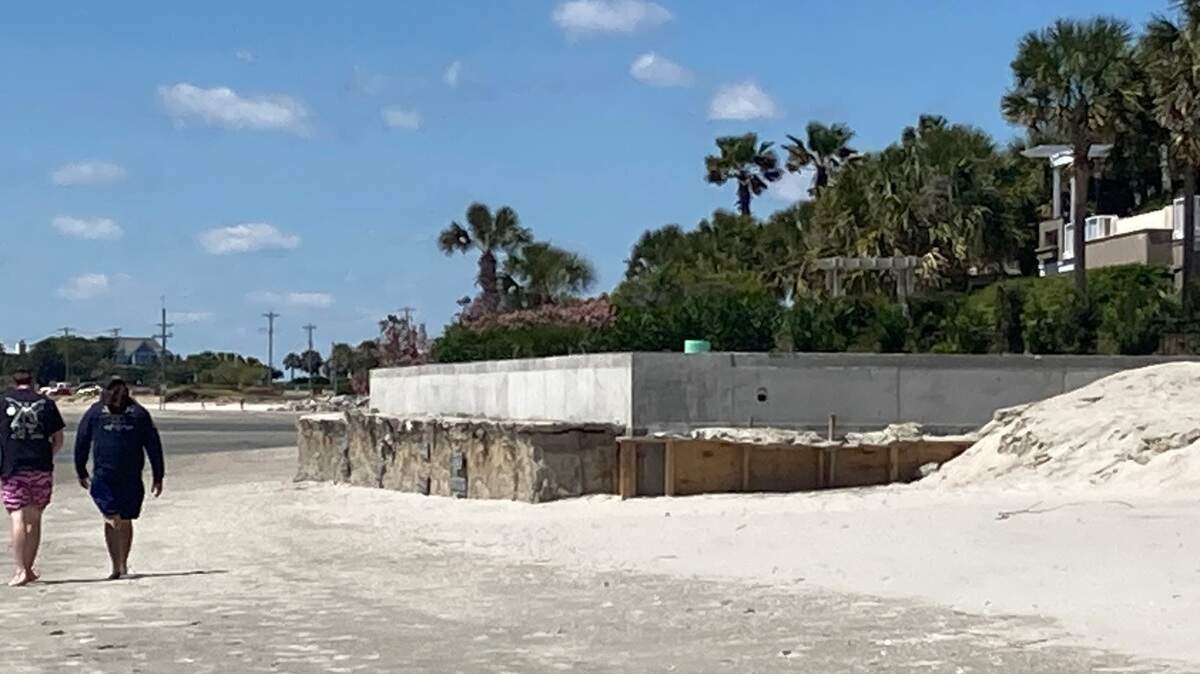
South Carolina’s 1988 Beachfront Management Act is a very thoughtful law that has retained bipartisan support and guided coastal management in the state for nearly four decades.
But now pressure is growing to undo some of its protections and allow private seawalls without a full understanding of the rationale behind the act. The legislative intent of this law is still relevant. Allow me to directly quote a few passages because I couldn’t say it better myself.
“Without adequate controls, development unwisely has been sited too close to the system. This type of development has jeopardized the stability of the beach/dune system, accelerated erosion, and endangered adjacent property. It is in both the public and private interests to protect the system from this unwise development.
“The use of armoring in the form of hard erosion control devices such as seawalls, bulkheads and rip-rap to protect erosion-threatened structures adjacent to the beach has not proven effective. These armoring devices have given a false sense of security to beachfront property owners. In reality, these hard structures, in many instances, have increased the vulnerability of beachfront property to damage from wind and waves while contributing to the deterioration and loss of the dry sand beach which is so important to the tourism industry.
“Erosion is a natural process which becomes a significant problem for man only when structures are erected in close proximity to the beach/dune system. It is in both the public and private interests to afford the beach/dune system space to accrete and erode in its natural cycle. This space can be provided only by discouraging new construction in close proximity to the beach/dune system.”
Today, shoreline change has caught up with many homes that were constructed too close to the beach dune system, and private property owners want to build seawalls in response, just as the Beachfront Management Act predicted. Luckily, it was designed to prevent us from making the wrong choices.
I have served the state of South Carolina on numerous appointed advisory panels including the Governor’s Floodwater Commission, The Blue Ribbon Committee on Shoreline Change and the recent South Carolina Beach Preservation Stakeholders Group. In all of these discussions, no one has ever suggested that we walk away from the state’s prohibition on the construction of oceanfront seawalls.
There is clear, scientific consensus that seawalls (or any hard structure placed parallel to shore to halt erosion) will cause that beach to narrow and eventually disappear. The negative effects of seawalls on beaches are so clear that they have been included in textbooks and have been the subject of numerous scientific articles.
The United States Army Corps of Engineers recognized these problems in a 1981 Technical Note entitled “Seawalls — Their Applications and Limitations.”
The corps found seawalls protect only the land immediately behind them, offering no protection to fronting beaches and that shoreline recession can continue on the adjacent shore and even be accelerated by seawalls. If nearby beaches were being supplied with sand by the erosion of the area protected by a new seawall, the beaches would be starved and experience increased erosion.
Seawalls also have negative effects on neighboring property owners, called “end effects” that result from waves diffracting around the edges of the wall during storms or high water events. This results in a clear increase in erosion at the margins of the seawall. End effects often result in lawsuits between neighbors.
Additionally, seawalls eliminate the natural sediment supply that would come to the beach through erosion of the dunes and upland behind the wall. Retreating beaches can maintain themselves by receiving sediment that is moving alongshore and by receiving sediment from the dunes as the beach erodes. Seawalls prevent dune sediment from moving down the coast to feed neighboring beaches.
All this is why the legislature has restricted seawalls.
Remember that the beach is not there solely for the enjoyment of oceanfront property owners. It is the economic engine that drives the entire coastal economy. If you own a rental home on the third row, your guests still want a beach to walk on. If you have a mom and pop business well off the beach, you still rely on the ability of visitors to walk up and down that public beach.
The beach is why so many people visit and spend money in South Carolina.
If we destroy the beach, we destroy all of that.