
South Carolina beach protections are harming private property rights | Opinion
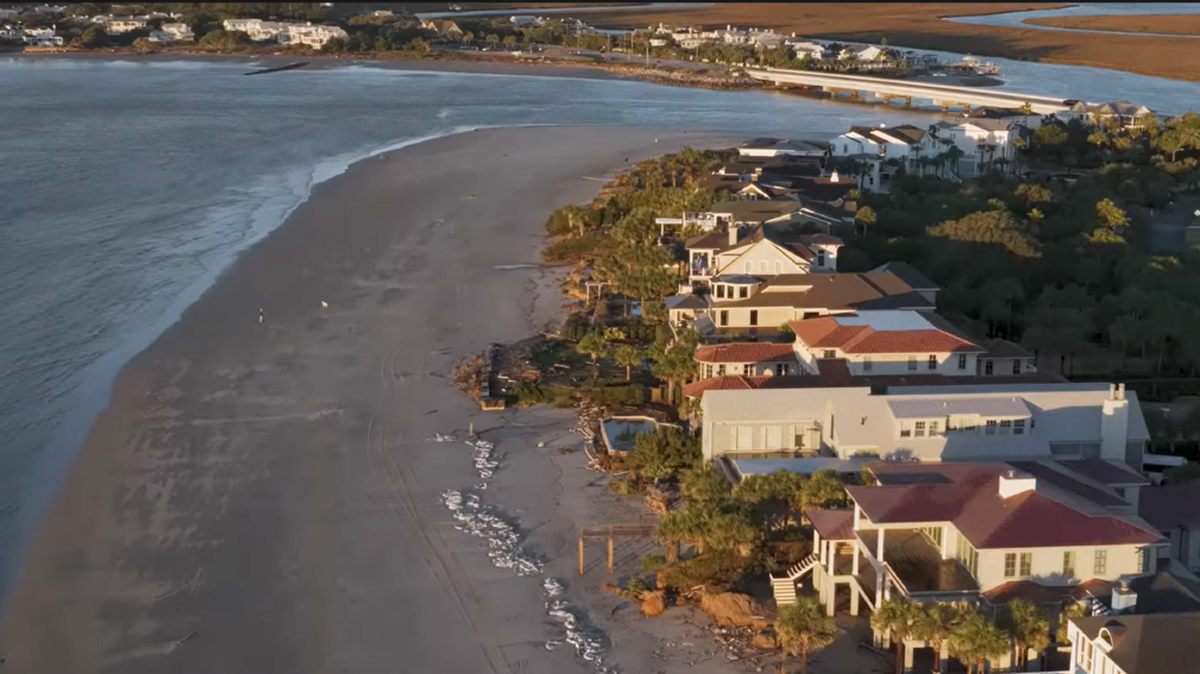
It may surprise you to know that some South Carolina bureaucrats openly oppose fundamental property rights enshrined in our Constitution. One of the most glaring examples of this is the state’s mismanagement of beachfront property laws, where property owners are routinely denied their rights without just compensation.
The landmark U.S. Supreme Court case Lucas v. South Carolina Coastal Council, originating on the Isle of Palms, illustrates this unconstitutional taking of private property. The state denied Mr. Lucas the ability to build on his beachfront property. The Supreme Court ruled in his favor, recognizing the state’s denial as an unconstitutional taking of his property and awarding him just compensation from the state. That was in 1992.
Despite this legal precedent, the state has continued its campaign of regulatory overreach. At the heart of this issue is South Carolina’s 1988 Beachfront Management Act, a convoluted legal framework that has evolved through decades of amendments, shifting priorities and inconsistent applications.
The act originally operated under a “retreat” policy, which was meant to gradually move development away from the coastline. While admirable in theory, this approach was never a practical solution. The idea of retreat assumed that development should yield to an inevitably encroaching ocean, but it failed to account for the economic, legal and engineering realities of coastal resilience.
Retreat was championed under the mistaken belief that prohibiting development would protect natural shorelines, despite evidence that responsible development and adaptive management can coexist with environmental preservation.
However, this policy was recently changed by the Legislature to a “preservation” approach. The problem? The setback lines and baselines that determine where construction is permitted are still based on the outdated, decades-old retreat model, creating an incoherent system that fails to reflect the state’s current approach.
Property owners are left navigating a patchwork quilt of haphazard and conflicting laws, regulations and bureaucratic interpretations. This lack of clarity not only makes it difficult for landowners to understand their rights, but also provides government agencies with excessive discretion to enforce regulations arbitrarily. The result is a system that punishes property owners for the state’s failure to establish clear, consistent and legally sound guidelines.
One of the most egregious examples of this overreach is the use of the “active beach” loophole. Under this interpretation, the agency can unilaterally extend its jurisdiction beyond the established setback lines based on shifting sand conditions.
In other words, if a storm blows sand into a backyard, bureaucrats can redefine that area as “beachfront property” (as an active beach), restricting owners’ ability to build or use their land.
In essence, the state takes control of the land and denies the owner the right to an economic use. This allows the government to seize private property without providing compensation, a blatant violation of constitutional property rights.
Homeowners are left in legal limbo, unable to build on or sell land that was legally theirs because a bureaucratic decision arbitrarily deems it part of the public beach.
The current beachfront management framework is unsustainable and unconstitutional. It is a patchwork of outdated regulations, arbitrary enforcement mechanisms and conflicting priorities that fail to provide property owners with clear, consistent protections. It must be rewritten to ensure clear and consistent standards that balance public access to beaches, private property rights and responsible environmental stewardship.
This year, I proposed Senate bill 526 to require the Department of Environmental Services to pay the attorneys’ fees for citizens who successfully challenge these unconstitutional regulations in court. It awaits action next year in the House of Representatives.
While some questioned the potential financial burden on the state, the reality is the financial burden should be on the state when it attempts to unlawfully strip citizens of their property rights. If state agencies were held accountable for the costs of their unconstitutional actions, they might think twice before treading on the rights of property owners.
South Carolina must rewrite its beachfront management laws to reflect clear, fair and constitutionally sound policies. The current framework is a relic of past policies, filled with contradictions and legal loopholes that allow bureaucrats to overstep their authority.
Other coastal states like Florida, Georgia and North Carolina have successfully implemented more structured and balanced approaches that provide clear guidelines for property owners while still ensuring public access and environmental protection. South Carolina should follow suit.
It’s time to fix this broken system before more property owners are forced to pay the price for the state’s failures.