
How Trump’s Epstein scandal, reckless tariffs will really hurt the GOP | Opinion
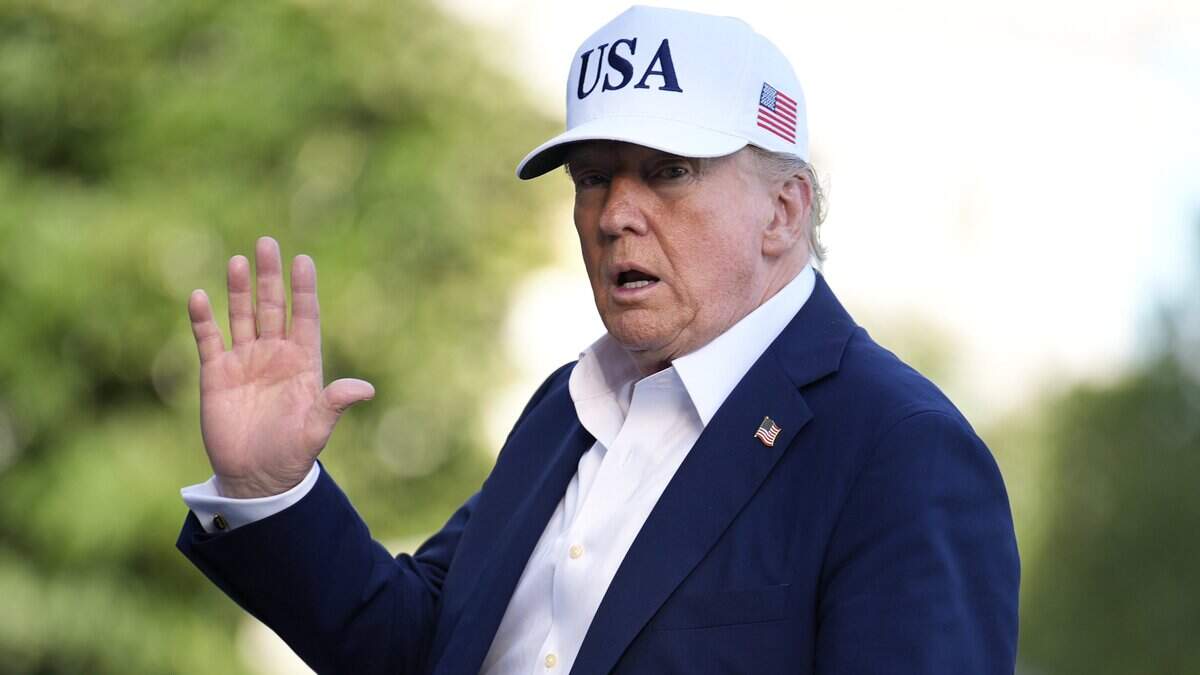
President Donald Trump rose to power shaping headlines and bending the will of others, but his response to widespread calls to see the Epstein files has been an unmitigated disaster. Shifting stories, conspiracy-laced excuses and sloppy deflections have kept the scandal alive for weeks.
This week, Trump suggested that if his name appears in the Epstein files, it may have been planted. He also insisted he “never had the privilege” of visiting disgraced financier Jeffrey Epstein’s private Caribbean island, and he offered yet another explanation for their falling out — saying Epstein “stole people that worked for me” at his Mar-a-Lago Club in Florida.
Even more bizarre, Trump said he has the legal authority to pardon Epstein ally Ghislaine Maxwell, just days after his former personal attorney, now the deputy attorney general, visited her in prison, where she was sentenced to 20 years for exploiting and abusing children.

Let’s be honest, if the Justice Department wanted to know more, it would talk with the women who endured these horrors as minors — not meet with someone convicted of a child sex trafficking conspiracy who has every incentive to say whatever it takes to shorten her sentence.
All of this played out on the global stage, as Trump was in Scotland touting his new trade deal with the European Union, a deal that includes a 15% tariff on European goods.
The EU agreed to this deal for many of the same reasons Paramount and Disney, the parent companies of CBS and ABC, respectively, recently settled lawsuits with Trump: Dragging things out would be far more costly and damaging than trying to move on.
Expect the same from India, whose imports suddenly face the threat of a 25% tariff, and Brazil, which was just hit with a 40% tariff on top of a 10% one.
Slapping a tariff on imported goods is an attack on capitalism and a mockery of free trade. Trump’s sweeping 50% tariff on copper imports, which follows 50% duties already imposed on steel and aluminum, is nothing more than economic nationalism masquerading as patriotism.
No amount of political spin can hide the truth that tariffs are a hidden tax. They don’t punish foreign governments; they punish American consumers.
When a tariff is imposed, the extra cost is passed down the supply chain. Prices go up, household budgets get squeezed, and small businesses struggle to absorb the blow.
That’s not a theory. It’s basic economics.
Just this week, Procter & Gamble, which makes Crest toothpaste, Tide detergent and Charmin toilet paper, said prices for a quarter of its U.S. products would rise in part because of tariffs.
When Trump brags about raising billions through tariffs, he is really celebrating taking more money out of the pockets of working Americans.
Don’t be fooled into believing that last quarter’s 3% economic growth is definitive proof that Trump’s policies are working. While this is certainly good news, one quarter is a snapshot, not a trend. Nine of Biden’s 16 quarters in office saw 3% or higher growth, and his presidency was plagued by inflation, supply chain chaos, and economic instability.
Washington’s decisions often take months to ripple through the system. That’s why we shouldn’t jeopardize the nation’s momentum with reckless tariffs and senseless trade wars.
Right now, the complexities of governing are crashing into Trump’s instinct for sloganeering and showmanship — evident by the Epstein fallout. Layer in his abandonment of conservative principles and the chaos sparked by his economic brinksmanship, and it’s no surprise that recent polls suggest he’s bleeding support with independents, Black voters and men under 30.
In competitive districts, Trump’s sinking poll numbers could drag Republicans down in next year’s midterm elections. That’s likely why the White House is pressuring red states like Texas and Missouri to redraw congressional maps before 2026.
If the GOP needs gerrymandering to survive, the party may have already lost.
Instead of rigging maps to cling to power, maybe it’s time to ditch the big-government populism and return to being the party of Reagan — to win with bold ideas, embrace free markets, adhere to the Constitution, champion individual liberties, and build a future rooted in opportunity for all.
Matt Wylie is a South Carolina-based Republican political strategist and analyst with over 25 years of experience working on federal, state and local campaigns.