
If SC’s new abortion bill is a ‘logical next step,’ its logic is perverse | Opinion
By Issac J. Bailey
In October 1994, Susan Smith murdered her two sons, 3-year-old Michael and 14-month-old Alexander, by strapping them into car seats and driving the car into John D. Long Lake.
She’s been in prison ever since.
South Carolina state Sens. Richard Cash, R-Anderson; Billy Garrett, R-Lexington; and Rex Rice, R-Pickens, seem to view women who have abortions the same way. They believe abortion is murder, and that murderers should be treated like the murderers they are — like Susan Smith.
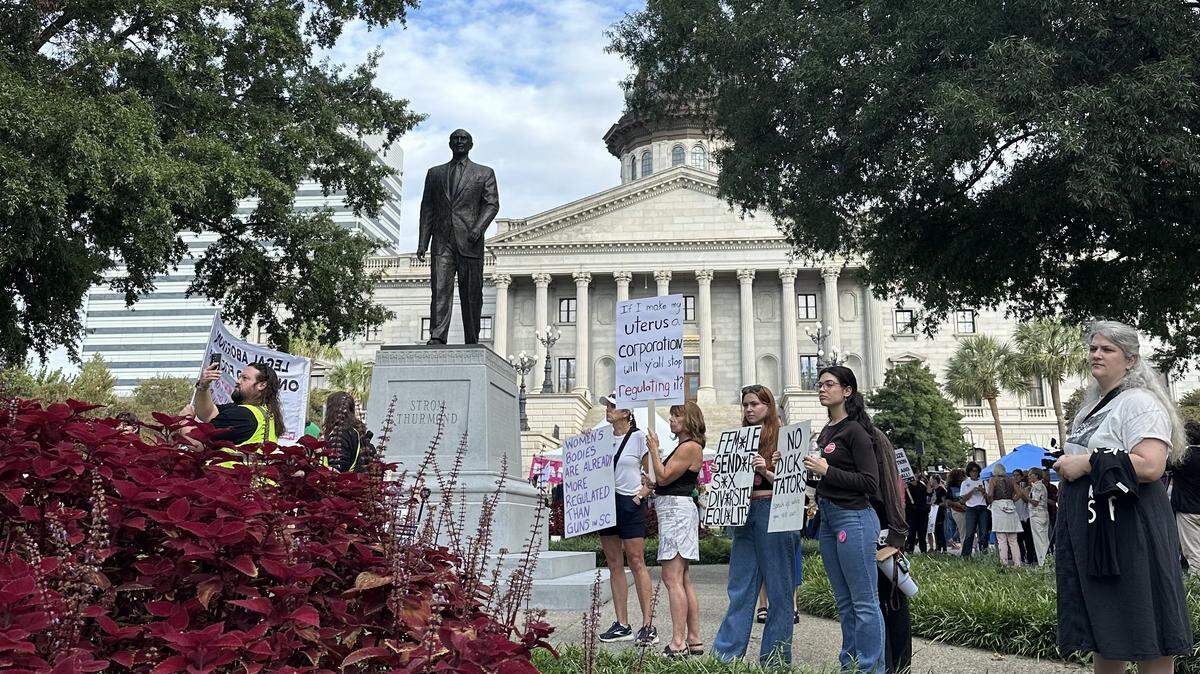
In a state that already has one of the most extreme abortion laws in the entire world — a six-week abortion ban that became law and survived a legal challenge just two years ago — the three senators are sponsoring even more barbaric anti-abortion legislation.
Their bill, which would criminalize the procedure in nearly all circumstances, is draconian but also makes sense, if only in a perverse way.
The bill addresses an aspect of the abortion debate that doesn’t get enough examination: How can you believe abortion is murder but not want it to be fully criminalized?
In that sense, Cash, Garrett, Rice and others have done South Carolina a great service, making it difficult for those against abortion to hide behind standard talking points.
Cash said the bill is the “logical next step” after the state’s six-week abortion ban because many of the state’s leaders don’t want to see any more abortions in South Carolina.
“I know it’s a very difficult issue, and I am sure that some people would rather not deal with it,” he said. “However, if you believe that life begins at conception and has an inalienable right to live, then I don’t see how we cannot take it up.”
Senate Bill 323 would delete the fetal heartbeat provision of the current law and ban abortions with very narrow exceptions to save the life of the mother or if the pregnancy could cause substantial and irreversible harm. There would be no exceptions for rape or incest, or for fetal anomaly or deformity. The manufacture of drugs or chemicals intended to cause abortions would be outlawed, and so would their possession or distribution.
The ACLU of South Carolina says the bill would make having or aiding an abortion a felony subject to up to 30 years in prison and also open the door to restrictions on birth control, giving government the ultimate say over pregnant women’s bodies.
Fertility treatments could become illegal, given that the cells created during the process, blastocysts, would be considered people. Even some forms of emergency contraception could be outlawed though Rice said the intention was not to take away contraceptive options. The bill would criminalize taking a girl out of state for an abortion and, discarding First Amendment protections, the act of telling pregnant women how to obtain an abortion.
Cash believes there is a life at the moment of conception. That’s the position of most people who call themselves pro-life, which is why Cash’s logic is sound. If you really believe abortion is the murder of a child, there’s no logical reason to oppose his proposal. And yet, some do.
South Carolina Citizens for Life, a highly influential anti-abortion organization, opposes the bill. That alone illustrates the bankruptcy of the “murder” rhetoric.
South Carolina Citizens for Life President Lisa Van Riper said “turning women who have abortions into criminals … is not the way.”
The reality is that there is a universe of difference between what Smith did to her two sons — an actual crime acknowledged by all — and the actions of thousands of women who have abortions in South Carolina in a given year.
Despite Smith’s attorney’s arguments that she may have been suffering from mental illness or distress, those arguing women who get abortions should not be thrown in prison did not make that argument for Smith after she murdered her children.
Because abortions are not murder, no matter how many times anti-abortion advocates equate the two. Abortions are an integral part of American health care, and decisions about them are best left to pregnant women, their loved ones and their health care providers.
In the two years since the U.S. Supreme Court overturned its landmark 1973 abortion case Roe v. Wade, the nation’s abortion rate has not changed much. There was a slight increase in abortions shortly after the court’s 2023 ruling, and maybe a slight decrease in recent months.
There have also been fewer abortions in South Carolina since its six-week abortion ban took effect. But data suggests the state just outsourced some abortions to states that don’t have such a ban — while endangering the lives of a growing number of women.
It’s a delicate issue, with nuanced complexities and contradictions unlikely ever to be resolved, or perhaps even fully understood, by people with deeply held beliefs on either side. The state has a legitimate interest in preserving and protecting life, but determining when “a clump of cells,” as some say, becomes a human worthy of legal protection will always be difficult.
We can have that debate without demeaning the lives of Michael Smith and Alexander Smith by pretending blastocysts are as human as those innocent boys were.
Issac J. Bailey is a McClatchy opinion writer in North Carolina and South Carolina.