
Concerned reader lists 10 actions needed to address ongoing crisis of police violence
Stop the violence
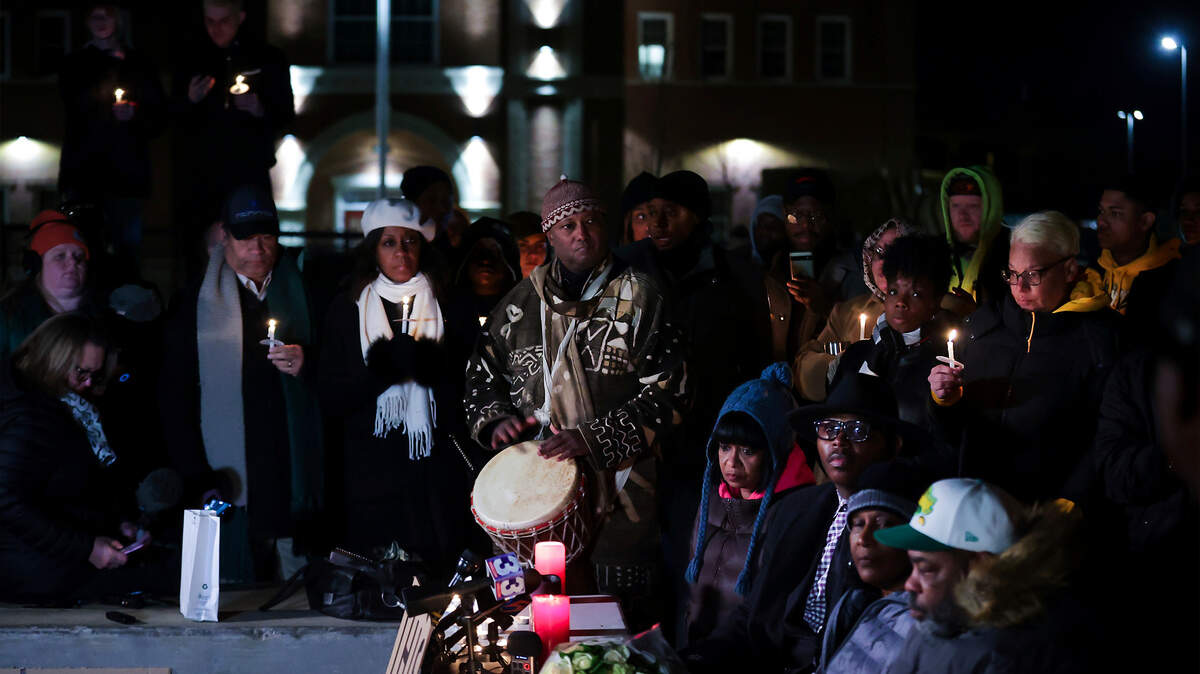
In the wake of yet another murder of an unarmed Black man by police officers, we must ask ourselves why a law enforcement stop involving a Black person can turn deadly. Add Tyre Nichols’ name to the list of unarmed persons of color killed by law enforcement officers after a stop.
Black people are often perceived by police officers as an immediate threat. Even Black police officers are not immune to bias against Black people.
Black people fear police officer encounters. We watched Walter Scott, being shot in the back and the agonizing, 9 minute 29 second asphyxiation of George Floyd.
A Black person’s justified reaction during a law enforcement encounter can be perceived as threatening, which can cause an escalation of events that end in death.
To address this crisis, we need to:
1. Diversify police departments.
2. Incentivize law enforcement officers living in the communities they serve.
3. Screen for racial biases.
4. Make bias training mandatory.
5. Require de-escalation training.
6. Politicians––draft police reform legislation.
7. Conduct audits.
8. Decriminalize petty crimes.
9. Invest in communities over militaristic-style policing.
10. Hold police officers and departments accountable.
Alesia Flores, Charleston
Dangerous bill
The S.C. House of Representatives has introduced a bill that would no longer require social workers, psychologists, family therapists and licensed professional counselors to be licensed in the state of South Carolina.
With the passage of House Bill 3515, the possibility will exist that untrained, unsupervised, and likely undereducated and unlicensed individuals could consider themselves to be therapists. This can only hurt individuals seeking help, especially those with significant mental health problems.
Removing licensure requirements from social workers, psychologists and licensed professional counselors, among others, opens the field up to individuals who are free to take advantage of an unregulated and unsupervised system and would likely lead to, at minimum, poor outcomes, and at worst, death or debilitation (including suicide).
Currently, to engage in independent practice, a clinical social worker must possess a graduate degree in social work, pass an advanced clinical license test and work under supervision for two years before they can practice independently.
This State requires licensure for all public health providers. Behavioral health providers should be no different.
Additionally, if South Carolina social workers have no means to achieve licensure, they will not be allowed to bill insurance since most companies require the first level of licensure at the least.
This is dangerous legislation.
Nancy K. Brown, Columbia
Strange lawmaking
Take a look at the long list of proposals in South Carolina laws that are being considered this year. Some are sensible, meant to attract and retain teachers and protect our youngsters.
Some are strange. Bill H-3439 abolishes the State Board of Education and the Education Oversight Committee. An Office of School Districts Administration in the Governor’s Office would select district superintendents. Local communities and school boards would likely find this an unpleasant usurpation of local autonomy.
Another bill would require that racial disparity in academic testing be posted on the front door of schools. This proposal seems to be aimed at embarrassing the school or embarrassing the students within the school. Which is it?
Another proposal seeks to use tax money to fund private education, something prohibited by the state constitution. If a church wants a school, they should fund it, and the same for anyone wanting an education with exclusive appeals for social beliefs, class exclusions, or other qualifiers. The state constitution forbids it for good reason.
Frankly, if lawmakers think citizens should obey the law, why do they spend so much time trying to figure out ways to get around it?
Ann Bowles, Columbia
Too much to lose
I am 89 and am writing this letter to reflect upon 10 years of work in a clinic where abortions were performed.
I worked in a New York women’s clinic for the three years before abortion was legalized nationwide. Parents of females, one as young as seven, teenagers and mature women would call in tears hoping for an appointment.
Patients were met by me, the receptionist, a counselor, an anesthesiologist, and the doctor. Some women left crying, and some left relieved, but they knew that the choice was theirs, and that they would be safe.
Too strict abortion laws will send South Carolina back to the dark day of illegal abortions for women, children and mothers.
How much more can be taken away from our supposedly democratic state?
Joyce Eickmeyer, Rock Hill