
Move Proud Boys event slated for Wednesday at USC far away from campus | Opinion
‘Appalled’ by event
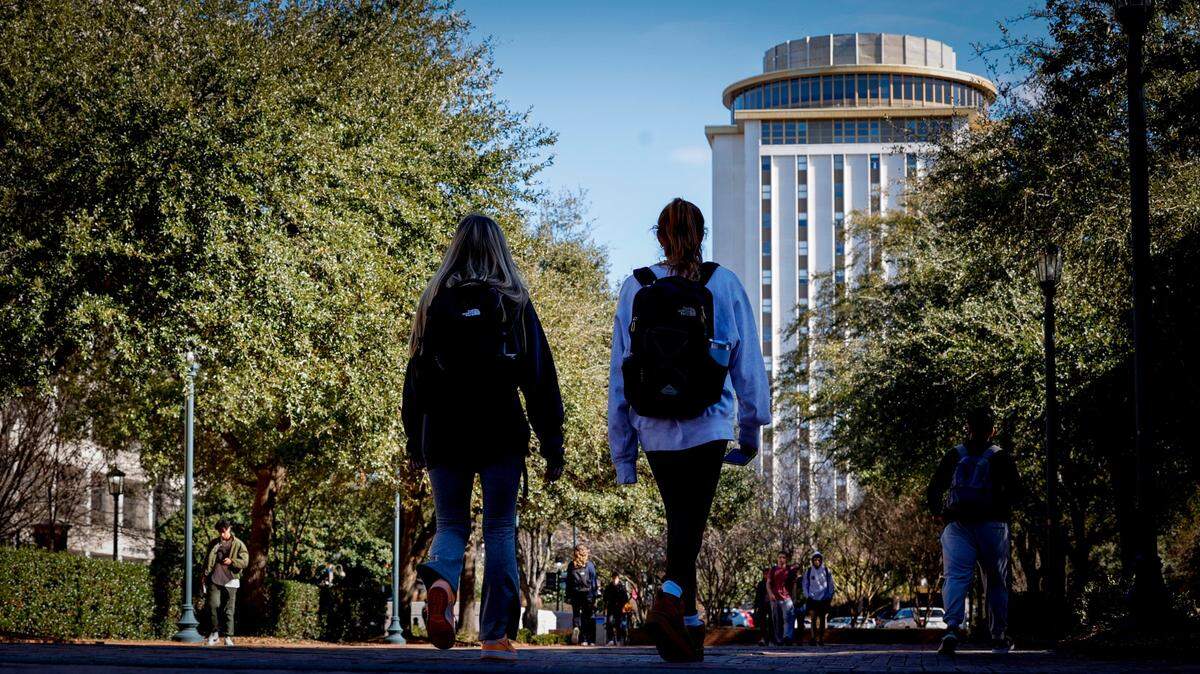
As an alumni and donor to our university, I’m appalled that USC is allowing the Proud Boys event on campus on Sept. 18.
While I understand the importance of “free speech” (as described by university administration), this is vastly different from hate speech. And the Proud Boys event will be exactly that.
Case in point: the title of the event compares Kamala Harris, the sitting vice president of the United States, to male ejaculate.
Would this be allowed if the candidate were male? Or white? Could you imagine such language being used to describe the former president, also a candidate? No.
Another concern: the Proud Boys often bring violence with them. On numerous occasions, they have instigated riots and gang-like attacks on those they deem different from them.
Do we need that on our campus?
This event should be moved far away from campus.
Or, if I had my way, relocated to another state. Or continent—like say, Antarctica. There the Proud Boys and their message of hate and bigotry will get all the attention they deserve.
Carla Damron, Columbia
Expand school lunch
Recent data from the USDA shows that 14.4 percent of South Carolinians experience food insecurity, an issue that should be confronted by expanding school lunch programs.
As a teacher, I have seen the negative effects of hunger on student engagement and achievement, and while free and reduced-price lunches benefit disadvantaged families, universal lunch programs have an even greater impact.
According to economist Michelle Marcus (Vanderbilt University), these programs reduce social stigma and remove additional economic barriers.
Unfortunately, many politicians refuse to acknowledge the impact such programs have on students’ success in school and beyond. Often this is due to a partisan rejection of data, creating sound bites rather than change.
Wailin Wong of The Indicator calls the situation “a food fight at the government policy level.” This is a witty observation, but shouldn’t we expect our leaders to be better behaved than bullies and class clowns making a mess of the school cafeteria?
I echo the recent words of Georgia Sen. Raphael Warnock: “I need my neighbor’s children to be okay so that my children will be okay.”
Implementing universal school lunch programs would be a major step in ensuring that all of our students have a chance to be okay.
K. Mewborne, Irmo
Wasting water
Six months ago I noticed water flowing from the ground at the intersection of Superior and S. Holly Streets in downtown Columbia.
After repeatedly calling the City of Columbia’s water department and enduring never-ending automated messages to login to their website (for faster service), I logged into their website.
I very specifically reported the water problem and received a confirmation email that my message had been received.
After six weeks with no remedy, I replied to their email, reporting water was continuing to flow freely from the ground a few feet behind the stop sign as originally reported.
No further communications has occurred and the problem still exists.
Good thing I used their website for faster service, right?
Water is expensive.
Of course, the city pays for water with our tax monies, so why should they care?
Perhaps we should change our motto from “Famously Hot” to “Famously Wasteful.”
John Mitchell, Irmo
Remove barriers
Note: Ted Goins, president & CEO of Lutheran Services Carolinas
South Carolina is one of the fastest growing states in the nation, yet affordable housing supply continues to fall behind demand.
The resulting housing shortage hits low-income individuals and families especially hard. Leaders in South Carolina must take an “all hands on deck” approach by empowering all sectors to ease the crisis.
Faith-based nonprofits can help fill the gap in affordable housing. Many churches own land that goes unused that can be better utilized to meet housing needs.
The “Yes in God’s Backyard” (YIGBY) bill recently introduced in Congress would remove barriers to nonprofits in making this transition. The legislation also provides support and incentives for states and localities to work with faith-based land assets. Several states have already passed legislation with similar goals.
YIGBY is being considered by a Senate committee on which Tim Scott is the ranking member. Sen. Scott has been a reliable champion of previous legislation to address the housing crisis. I encourage him to continue standing up for South Carolinians in underserved communities by lending his support to this bill.
Now is the time to leverage all available resources to address the gaps in affordable housing that limit economic growth and contribute to family instability.
Ted Goins, Columbia