
Lifting of eviction moratorium would have deadly consequences in SC
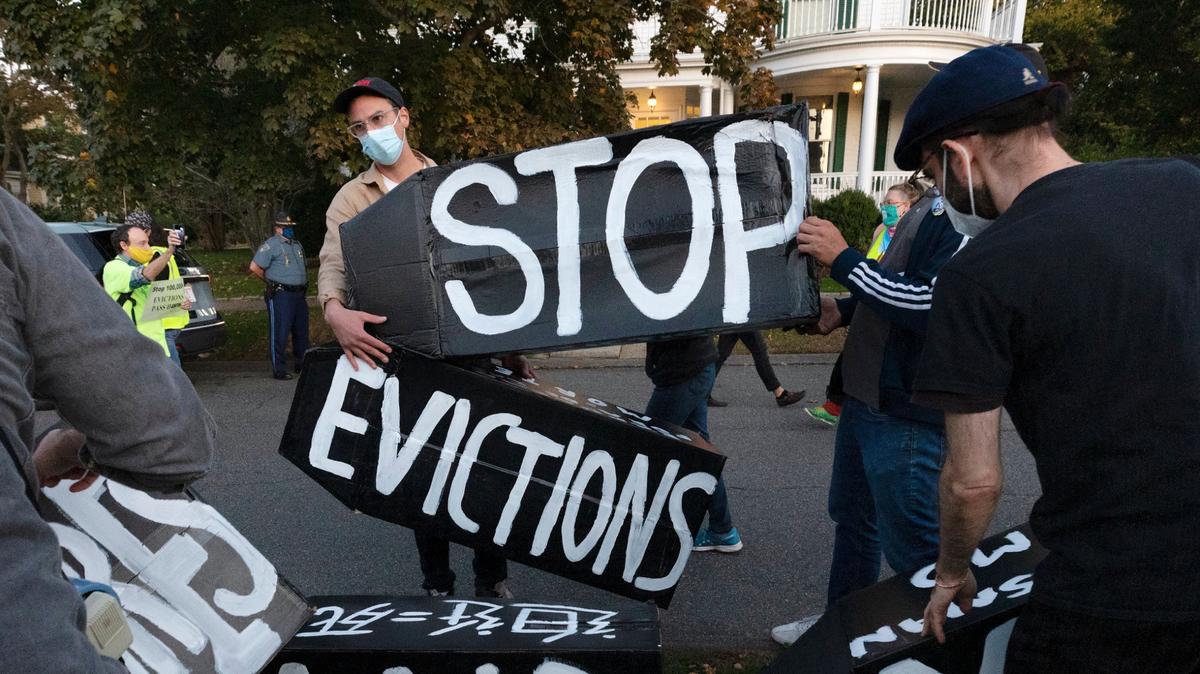
As most of our nation prepares to spend the next several months primarily indoors, winter’s arrival is expected to bring a sharp increase in COVID-19 infections — and with it more pain, suffering, sickness and death.
At South Carolina Legal Services, which provides civil legal aid to low-income residents, our caseload of private landlord/tenant evictions in the latter half of this year more than doubled compared to the first half of 2020. These cases don’t include evictions temporarily halted by the since-expired federal eviction moratorium under the CARES Act.
Private eviction cases account for nearly 40 percent of all housing cases we’ve handled in 2020, nearly double last year’s rate.
A patchwork of federal and state moratoriums has offered some fleeting relief. The S.C. Supreme Court halted the filing and processing of eviction lawsuits for two months this spring. The CARES Act moratorium covered federally subsidized tenants unable to pay rent due to the pandemic through late August.
Congress just extended a separate Centers for Disease Control and Prevention moratorium on evictions through the end of January 2021. But returning to business-as-usual in landlord-tenant cases come Feb. 1 could prove dire.
A new study in the Journal of Urban Health by researchers from Columbia, Wake Forest and Yale universities determined that eviction increases the risk of COVID-19 infection and spread by forcing families into “transiency, homeless and crowded residential environments that increase new contact with others and make compliance with pandemic health guidelines difficult or impossible.”
Long before the pandemic’s arrival, I’ve seen the same in my own work.
Tenants forced from their housing don’t just go to another leasing office and immediately find a new home. They instead crash on a friend’s couch, double up with family, cram onto an acquaintance’s apartment floor, end up in a shelter or wind up on the street until they can find somewhere, or someone to take them in.
These are precisely the close-contact situations that we’ve been instructed to avoid..
Another recent study associated the lifting of state eviction moratoriums with drastically increased COVID-19 mortality rates — 1.6 times higher after seven weeks, and 5.4 times higher after 16 weeks. That translates into an additional 433,700 cases, and nearly 11,000 excess deaths, between March 1 and Sept. 3.
These forecasts don’t bode well here in South Carolina, where we’ve earned a dubious national reputation as the state with the country’s highest eviction rate — nearly four times the national average, according to Princeton University’s Eviction Lab.
With more than six evictions per day in 2016, the latest year for which complete data is available, Columbia ranks eighth worst among large cities. North Charleston is atop that list with a 16 percent eviction rate.
The overwhelming majority of tenants (think upwards of 90 percent) in these cases don’t have a legal advocate by their side – unlike in criminal cases, there is no civil right to counsel.
For those of us in the trenches, our country’s eviction crisis was apparent long before COVID-19’s arrival. To its credit, Congress has tasked the nonprofit Legal Services Corporation, the nation’s largest funder of civil legal aid, to examine how this hodgepodge of state and local laws and court procedures affects eviction outcomes, support the development of data-driven interventions for the hardest-hit communities, and evaluate the impact of new policy initiatives.
A lawyer helps bridge the gap between justice for some and justice for all. Unlike the long-awaited vaccines that are expected to soon become available, righting that balance is a long-term goal with no easy fix in sight.
What we can do, in the short-term, is not willfully expose any more South Carolinians to greater risks of illness or death through a tsunami of postponed evictions as soon as the calendar turns to 2021.