
Scoppe: Worried that legislators don’t have enough say in who our judges are? SC House apparently is
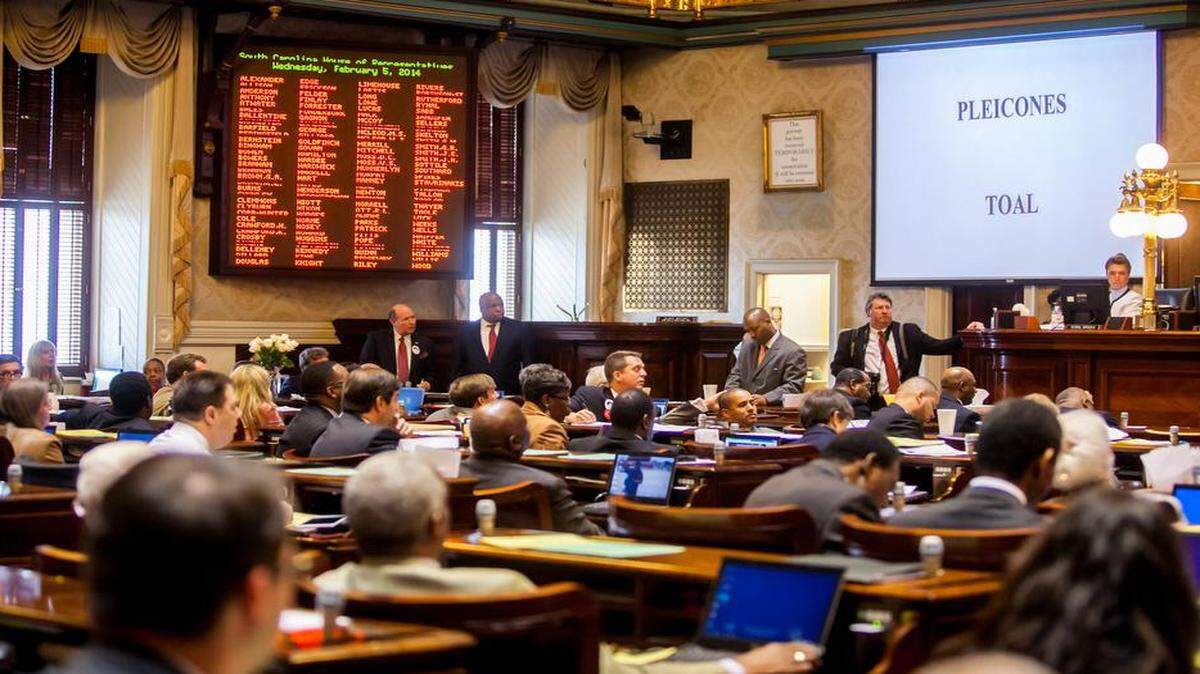
EVEN IF former House Speaker Bobby Harrell didn’t get any favors as his corruption case worked its way through state courts last year, there certainly was every appearance of special treatment for a man who had more say than anyone else over who is and isn’t a judge.
So if nothing else, the whole Harrell saga should have taught us that we need to change how judges are selected. And the people who should be most sensitive to the Harrell problem are House members, who had front-row seats to watch Mr. Harrell twist arms and call in favors to make sure the Legislature elected his preferred judicial candidates, and then show off his close relationship with judges even as he was the subject of a criminal investigation that very well could — and in fact did — land in those judges’ laps.
And in fact, a bill is advancing in the House that would change how judges are selected.
Unfortunately, it’s not a good change.
It’s a change that would inject legislative politics even more deeply into the selection process, not less; make the judiciary more political, not less. It’s a change that would strip what little merit we have from the selection process and take us nearly all the way back to the bad old days, when becoming a judge was based on who you know, not what you know, when politicians sewed up seats on the bench years in advance, when judges were so tied in politically that they were able to keep their seats even in the case of incontrovertible incompetence, when the best way to become a judge was to be a member of the House.
There’s no good way to select judges, who need to be above and immune to politics, able to decide every case based on the facts and the law, and not on friendships or partisanship or fear or loyalty or obligation. The best way anyone has come up with is to have an independent body with a broad cross section of honest people who can set aside their own political preferences and weed out those would-be judges who aren’t up to the job.
South Carolina does have a merit-selection commission, but legislative leaders appoint all 10 of its members, six of whom are legislators, and then the Legislature elects the judges. So it’s hardly independent. But even this is too much merit for some lawmakers. Last week, the House Judiciary Committee voted to change the merit-selection panel from a nominating commission to a screening commission. So rather than electing judges from the three nominees, the Legislature would choose from among everyone who managed to meet the rather minimal qualifications in our state constitution.
If that weren’t bad enough, the committee voted to strip out the provision of state law that bars sitting legislators from running for the judiciary. So if H.3979 became law, legislators could be asking colleagues to vote them onto the bench in the same conversations in which those colleagues are asking them to vote for their bills. Like we used to do things, back when nearly every judge was a former legislator.
Now, to be fair, there are legitimate concerns that the commission merely plays its own brand of politics rather than winnowing the field to the most qualified candidates. It has sometimes seemed clear that the panel nominated the candidate its legislator-members favored, and then passed over the most qualified candidates to fill out the ballot with two clearly weak candidates.
That might not be the inevitable result of packing the commission with legislators. But it’s no surprise when you combine that design flaw with the appallingly bad appointments that legislative leaders have made over the years: Mr. Harrell appointed his own brother; at one point, the two most divisive, disruptive, self-serving members of the Senate — Jake Knotts and Robert Ford — were both commissioners.
So change is clearly needed.
But if our merit-selection commission lacks merit, the solution isn’t to abandon the merit-selection process; it’s to change the way the commission is selected, to inject some merit into it. And if lawmakers can’t come up with a list of people we can trust to appoint the right kind of people to the commission, then they ought to fall back on that tried-and-true principle of the founding fathers: checks and balances.
That’s the idea that three co-equal branches of government — legislative, executive and judicial — will check each others’ power.
We never really bought into that idea in South Carolina, and nowhere is that more clear than in the selection of the judiciary: The Legislature selects the third branch of government, and the executive branch has absolutely no say.
The traditional solution is to let the governor appoint judges, who must be confirmed by legislators. (States add merit to this system by requiring the governor to choose from among candidates who are nominated by the independent merit commission.) One alternative would be to let the governor appoint the members of the merit-selection commission.
And if lawmakers can’t bring themselves to do that, or make some other change that can help cure our actual problem, then they need to do nothing. What they don’t need to do is make the situation worse — as the House seems poised to do.
Ms. Scoppe can be reached at cscoppe@thestate.com or at (803) 771-8571. Follow her on Twitter @CindiScoppe.