Your SC politics briefing

Welcome to your weekly South Carolina politics briefing, a newsletter curated by The State’s politics and government team.
New polling from Winthrop University suggests South Carolina legislation is out of sync with what many residents actually want when it comes to abortion.
As the fate of abortion access in South Carolina again hangs in the balance — a six-week ban recently was signed into law and then almost immediately blocked by a state judge, albeit temporarily — more than 40% of South Carolinians say they’re opposed to a six-week abortion ban, with a majority of respondents in support of allowing exceptions for rape, the life of the mother or fatal fetal anomaly.
Although abortion remains a deeply partisan issue, when it comes to limited exceptions, the divide between Republicans and Democrats shrinks. In cases where the pregnancy would threaten the life of the mother, 90% of Democrats and 75% of Republicans are in favor of abortion, according to the poll. Overall, 81% of respondents support this exception.
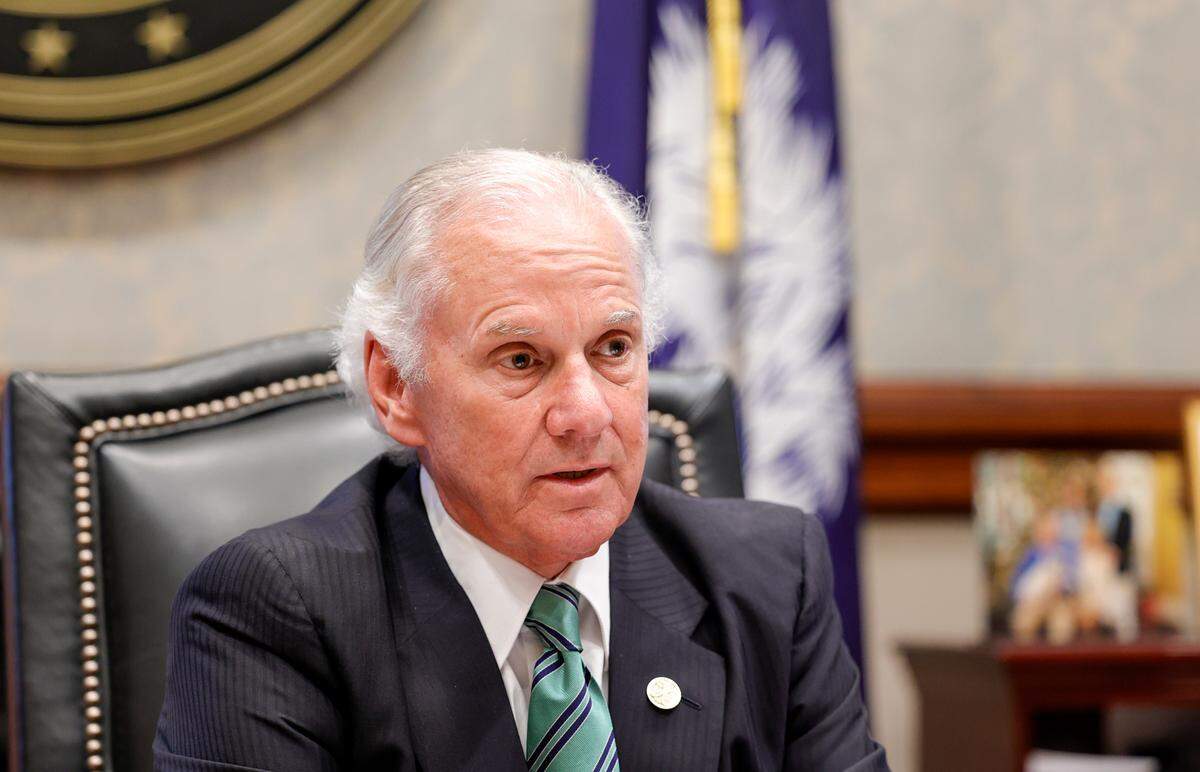
Gov. Henry McMaster, who has said he wanted a law that a majority of South Carolinians would find reasonable, dismissed the new Winthrop poll.
“I would say probably the best poll is the one they took upstairs where that bill passed by huge majority, over two to one, and everyone there reflected their constituents,” McMaster told reporters Tuesday. “So there’s a large majority of people I believe ... who think this bill is a reasonable approach.”
Read more: Here’s when SC Supreme Court will hear arguments on state’s 6-week abortion ban
McMaster calls for bond, illegal gun reform
McMaster really wants the General Assembly to pass increased penalties for illegal gun possession and to address bond reform. It’s a call he’s been making all session, and he wants it done before lawmakers finish their work for the year amid a special session.
On Tuesday he spoke to reporters about crimes committed by an individual who has a criminal record and allegedly shot a state trooper in the jaw.
“When there are not serious deterrence to crimes, that only encourages criminals to continue to commit crimes,” said Robert Woods, director of the Department of Public Safety. “When we don’t take career criminals as the governor pointed out and keep them in jail, they’re just going to continue to be a threat to to our people, to our society, to our citizens.”
McMaster wants a bill that also adds an additional five years to a prison sentence if someone commits a crime while out on bond for another charge. McMaster also wants a bill that calls for a person convicted of a violent crime with an illegal gun, to have increased penalty of five years in prison, with higher penalties for subsequent offenses with illegal guns.
“What we’re asking is for the General Assembly to ... pass these reforms before you go home or someone like these defendants who are out there today with a long criminal record. We know they’re going do it again. It’s just a matter of time. And the next time they may kill someone,” McMaster said.
(Photo by The State’s Tracy Glantz)
2024 Bites
▪ Washington Post: Trump defiant, some 2024 GOP rivals supportive as he faces DOJ charges
▪ The State: SC’s Haley blasts Trump for praising ‘enemy’ Kim Jong Un, other takeaways from town hall
▪ The State: How did Nikki Haley do in her first CNN town hall? ‘Girl, please get a clue,’ one host says
▪ Bloomberg: Harlan Crow hosts Nikki Haley dinner in Dallas with other billionaires
▪ The State: SC GOP hopeful Scott takes on ‘The View’ hosts over racism and ‘exceptions’ to the rule
▪ NY Times: For Chris Christie, winning would be great. Beating Trump would be a close second.
▪ NY Times: Pence seeks to go where no vice president has gone before
▪ Washington Post: North Dakota’s Doug Burgum wages a long-shot bid to shake up 2024 race
▪ The State: Stumbling Biden and battles with the mouse, DeSantis campaigns in SC Lowcountry, Midlands
(Photo via The State’s Joshua Boucher)
Buzz Bites
▪ Thousands of state employees at the Departments of Health and Environment Control, Social Services, Disabilities and Special Needs and Mental Health, might be on the move in the future off of Bull Street. That could open up some land for the city of Columbia.
▪ Gavin Smith, Lexington’s newest town council member, ran a campaign largely focused on addressing traffic concerns and the needs of the downtown business district. Some of his opponents - including one who held up a sign outside a polling place on election day - had other concerns. “Gavin does not reflect Lexington values,” the sign read. “He has a husband.”
▪ State Sen. Tom Davis wants to eliminate the college degree requirement for a majority of state jobs.
▪ The Lexington County GOP censured state Sen. Katrina Shealy over her vote against the six-week abortion ban.
▪ McMaster’s office gave a little more clarity on how many national guard troops are headed to help at the southern border. About 50 are at the border, with an additional 100 troops being considered for the mission.
▪ People who traffic fentanyl could face up to 40 years in prison under a bill on its way to the governor’s desk, the Post and Courier reports.
▪ The House voted Wednesday to approve a conference report on a boater safety bill that cleared both chambers earlier this year. The measure is now headed to the governor’s desk to be signed into law.
▪ Department of Probation, Parole and Pardon Services Director Jerry Adger is retiring per a release from the governor’s office. Melvin Warren, the agency’s director of Office of Professional Professional Responsibility, has been named as the agency’s acting director.
▪ S.C. Democratic Party Chairwoman Christale Spain is setting expectations for the 2024 election, and they don’t include a lofty goal of flipping the state blue in a presidential election year.
(Photo via The State’s Joshua Boucher)
Mark your calendar
June 12
Senate Education Oversight Committee meeting
June 14
Conference committee meeting on H. 3532 — a bill on sentencing enhancing for those who commit crimes on bond
July 1
New fiscal year begins
Before We Adjourn
Following a public airing of grievances, budget conference committee members Thursday worked through their impasse and came up with a budget agreement.
The $13.8 billion budget still has to be approved by both chambers and signed by the governor, but conferees were able to agree to spend $102 million at Clemson University to build the state’s first veterinary school, which became a major sticking point during negotiations.
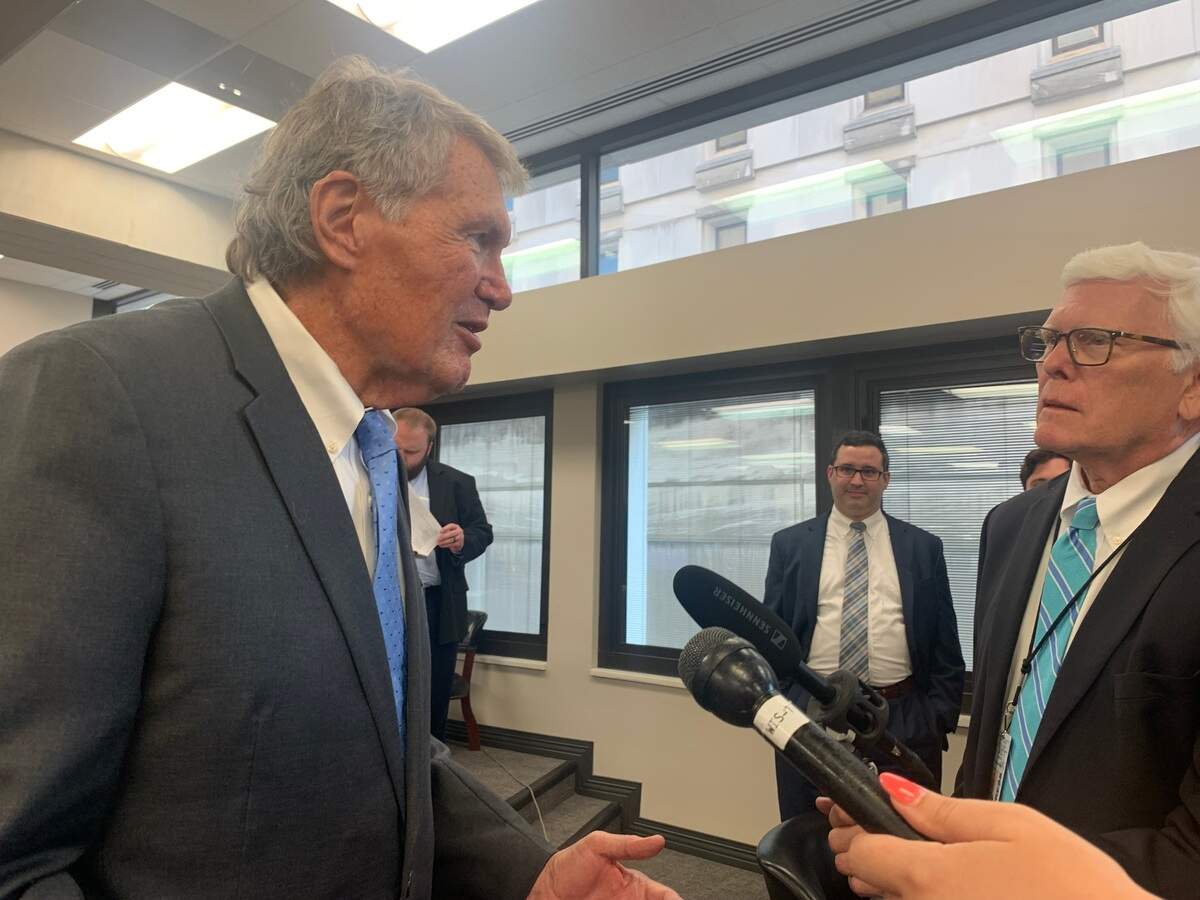
“It ensures that the core functions of state government continue to function,” Senate Financy Chairman Harvey Peeler said of the budget agreement.
The conference committee agreement came to fruition place a day after budget conferees publicly feuded, and traded one-liners, over how to dole out money for higher education.
A deal seemed far from reach.
“The sooner the Speaker of the House of Representatives realizes that he is not the Speaker of the Senate, the better,” Peeler said Wednesday of House Speaker Murrell Smith, who had been receiving updates on the negotiations.
At Wednesday’s meeting, House Minority Leader Todd Rutherford who sat on the conference committee lamented over how the state has 17 counties without an OB-GYN and persistent overcrowding issues at the Department of Juvenile Justice.
“How is this not at this point an impasse over a budget where we’re putting pets over people?” Rutherford said. “How is this not the House being concerned with higher ed, the Senate being concerned with Mr. Ed?”
Peeler was upset the House waited for new revenue figures to come in before releasing its second version of the budget. It allowed the House to put in $400 million worth of earmarks (The Senate has its own earmarks, but had less money than the House to work with).
“You all are putting pet projects over people,” Peeler said.
But a deal started to come together Thursday afternoon. After an Agency Head Salary Commission meeting, Peeler, Smith and House Ways and Means Chairman Bruce Bannister all met privately.
“We were willing to compromise,” Peeler said.
“It was good. He listened to me and I listened to him,” Peeler added when speaking to reporters about his discussion with the speaker.
Ultimately the budget agreement includes $200 million for the Office of Resilience and $40 million for the Savannah River National Lab for cybersecurity research, both requests from the governor. It also has $7 million in annual money for the University of South Carolina to have STEM initiative for high demand areas. The House wanted $15 million in negotiations.
“This reassures me and my fellow members that you understand why we may have our disagreements on policy or how we fund things and what we fund. At the end of the day. We serve the people the state of South Carolina and that is our number one priority,” Bannister said. “At the end of the day, brinkmanship is bad for everybody. We didn’t need to wait until June 27, which is sort of what were headed and instead it would make more sense to come in every day until we got a budget.”
Pulling the newsletter together this week was Javon L. Harris, reporter on The State’s politics and state government team. You can keep up with him on Twitter and send her tips on Twitter at @JavonLHarris_JD or by email jaharris@thestate.com.
To stay on top of South Carolina politics and election news, you can chat with us on Facebook, email us tips and follow our stories at scpolitics.com.
This story was originally published June 8, 2023 at 1:04 PM.