
College player from Gilbert inspiring on, off field
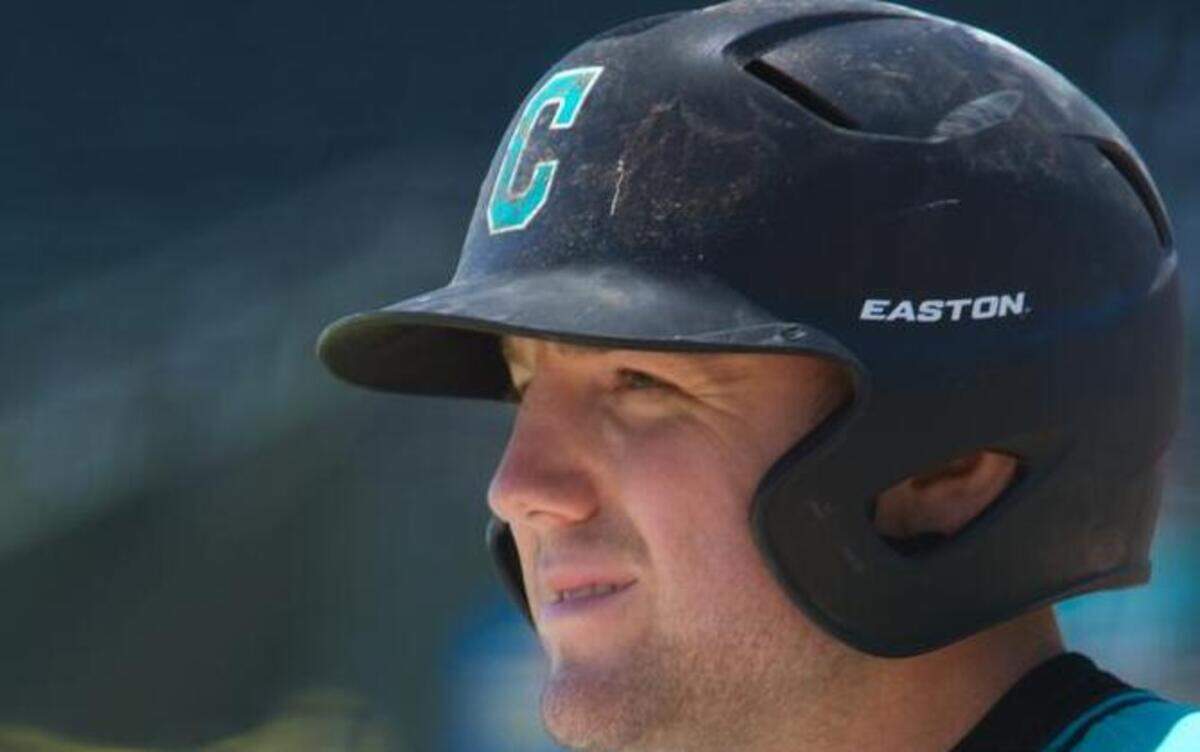
What Connor Owings has been able to do for the Coastal Carolina baseball team this spring, from playing four different positions depending on need to leading the Chanticleers in most every offensive category, has been one of the very few saving graces in a tumultuous season.
But the mere reality that Owings is doing this at all after what he experienced two summers ago, well, that’s what makes it truly remarkable.
Because before he even went through his first practice as a rookie with the Chants, everything changed for Owings and his family as he found himself unexpectedly in the hospital, diagnosed with a kidney disease that had gone undetected his whole life and suddenly waiting for a doctor to tell him if he’d ever be able to play baseball again.
“It didn’t really hit me because I was kind of in shock,” Owings said last week, reflecting back on receiving that news. “It was very shocking because you never really think something like that is going to happen to you. You always hear about it happening to other people. But it’s one of those things where I’ve embraced it.”
That trip to the hospital ultimately led to the diagnosis of Focal segmental glomerulosclerosis – or FSGS secondary, as his specific case was explained. Simply put, his left kidney had never developed and his right kidney had been so overworked that it was functioning at little more than 20 percent. He’s been told he’ll need a kidney transplant eventually, perhaps even sometime soon.
But if it fazes him, he doesn’t let on – neither in his words nor in his play on the field.
“Of course, he took it better than us,” his father John Owings admits. “We were more the ones who were sort of floored by it. Connor is very faith-based. He’s very strong. He was like, ‘Let’s figure out what we need to do and get through it.’ … When all that happened, things go through our mind.”
The kidney transplant could be six months away or it could be six years, John Owings said. There’s no way to know.
So in the meantime, the family has found a familiar outlet while enjoying every bit of this 2014 college baseball season as Owings continues to let neither his personal challenges nor the Chants’ collective struggles slow him down.
“It’s been very special,” John Owings said. “When you go from a situation where you don’t know if he’s ever going to play again to him playing like we’ve seen Connor play … He never doubted it, [but] it’s been special to see him come back.”
The diagnosis
Owings was walking off the practice field last week telling the story from the beginning with every detail as crisp as if it were yesterday, and yet he didn’t seem affected in any way by recounting the kind of news that no budding athlete would want to hear.
It was the summer of 2012, and just like his two elder brothers before him, Owings was ready to take the next step after a standout high school baseball career. He had arrived at Coastal Carolina for the summer semester to settle in as a freshman before the start of fall practice when he suddenly started feeling very sick.
He couldn’t figure out what was wrong so his parents suggested he return home to Gilbert, thinking maybe he was simply a bit homesick. When it came time to return to Conway, though, Owings still wasn’t eating much and his father wanted him to stop by the hospital first – to at least get some fluids put in his body if nothing else.
“They found out I was dehydrated. They gave me three or four bags of fluids and things weren’t changing, so they said they wanted to keep me overnight,” Owings said. “I went and got an ultrasound done on my kidneys and they found out my left kidney was very small and had never grown since I was born. … My right kidney had been doing the work of both kidneys.
“It’s one of those things I had just lived with my whole life and didn’t know anything about it, and it just caught up with me.”
Said John Owings: “They ended up doing a kidney biopsy a month later in August. The one kidney was non-functional, [and he functioning at] 22 percent from the other kidney. It had been overtaxed. [They said he was] in stage four of kidney failure.”
According to information provided by the National Kidney Foundation, there are more than 5,000 cases of FSGS diagnosed every year in the United States – and that’s just the ones that are detected. Former NBA players Alonzo Mourning and Sean Elliott are among the more famous cases.
As for Owings, he would spend about two weeks in the hospital that summer, and as the news sank in, the family was trying to come to grips with what it all meant while he couldn’t help but wonder if he would ever get to play baseball again.
“Initially when I first got sick and was laying in the hospital bed, it was something that came up, that they weren’t sure if I was going to be able to continue playing baseball,” he said. “That kind of broke my heart because I’ve loved this game ever since I was a little kid, and I’ve grown up playing this game my whole life.”
After all, that’s just what the Owings kids did – and how they bonded.
Oldest brother Kyle Owings played at College of Charleston and signed as an undrafted free agent with the Arizona Diamondbacks organization in that same summer of 2012. He would play one season in the minor leagues and one more season in the independent Frontier League last year before wrapping up his career.
Middle brother Chris Owings, meanwhile, is the starting shortstop for the Diamondbacks, enjoying a breakthrough rookie season in which he entered Tuesday hitting .291 through 41 games.
“I’ve been around baseball since I could walk,” Connor Owings said. “I’ve been at the field with my brothers since they were about 3 years old. Kyle and Chris, they’ve kind of mentored me. I’ve been just young enough to not play with them, but old enough that they could teach me to play the game the right way.”
And so the news of Connor’s kidney condition reverberated throughout the family. While Owings is on the national list for patients awaiting a transplant, the family has been preparing for all options, his father said.
His mother Sherri Owings has a matching blood type to Connor and is considered the best match as a possible donor.
“We’re trying to keep ourselves healthy and all that so when the time comes she’ll be the first one [they look at], then we’ll move to the rest of us, to me and the boys,” John Owings said. “Blood type is a big factor, but it’s not the overriding factor.”
Owings too has worked on transforming his diet and lowering his body fat to help with the condition and says he’s remained stable with his kidney function at around 20 percent. He’s been told by his doctors that when his kidney function drops to around 15 percent is when they’ll need to start seriously looking at scheduling a transplant.
When it does come, he expects it will sideline him from baseball for at least seven or eight months, though he admits he’s not certain. “But let’s hope that’s not til a couple years down the road,” he said.
Like his father said, Owings has seemingly handled the situation as well as anyone could – and he’s not wasting any time dwelling on what he can’t control.
He’s having too much fun right now proving himself as a Division I baseball player. He admits he felt the effects of the condition through most of last season after sitting out the rest of that summer of 2012 and being limited through the fall workouts before hitting .200 in 85 at-bats as a rookie.
Now, though, Owings says he feels like the player he expected to be all along.
And the whole ordeal has only amplified his appreciation for the sport.
“That first time I was allowed to hit in the cage [after the diagnosis], I realized how much I truly love this game,” he said. “It’s a game to a lot of people, but to a lot of us that play, it’s been our whole life.”
Chanticlleer baseball coach Gary Gilmore is .
“If he can continue to move forward health-wise in some things, he has the ability to …” Gilmore said, pausing to find the right words. “One thing we don’t have on this team and really didn’t on last year’s team, we haven’t had that Daniel Bowman, middle-of-the-order [guy], David Sappelt, Mike Costanzo presence in our order. I honestly think next year or by the time he’s a senior, he has the ability to be that kind of guy and that’s what this program desperately needs.”
Beyond that, Gilmore says, “I’m just very impressed with how he’s handled [everything].”
Owings’ health will always remain part of the story, and he understands that. Rather, he embraces that, as he puts it.
He said he’s found inspiration in reading Mourning’s book about his own dealings with FSGS while playing professional basketball at the highest level.
“I’ve read that a little bit so it’s been helpful to know there are guys [with FSGS] that have competed on a major scale as high as their sport goes,” he said. “That kind of gives me hope that I maybe I’ll get to do that as well.”
In the meanwhile, he has a more immediate goal — one he’s already well on his way to achieving.
While that diagnosis two summers ago is not the kind of news any athlete or person wants to hear, Owings says if it was going to happen to someone, it might as well have been him.
“I know with my faith and my family, I can handle it and I can show other people who might be in a [similar] situation that you can still live a normal life, still do things,” Owings said. “Hopefully I can be inspiring to some people that may have a similar disease.”
Contact RYAN YOUNG at 626-0318 or on Twitter @RyanYoungTSN.
This story was originally published May 21, 2015 at 4:29 PM.