Woody McCorvey: relationship builder, barrier breaker and an inspiration to many
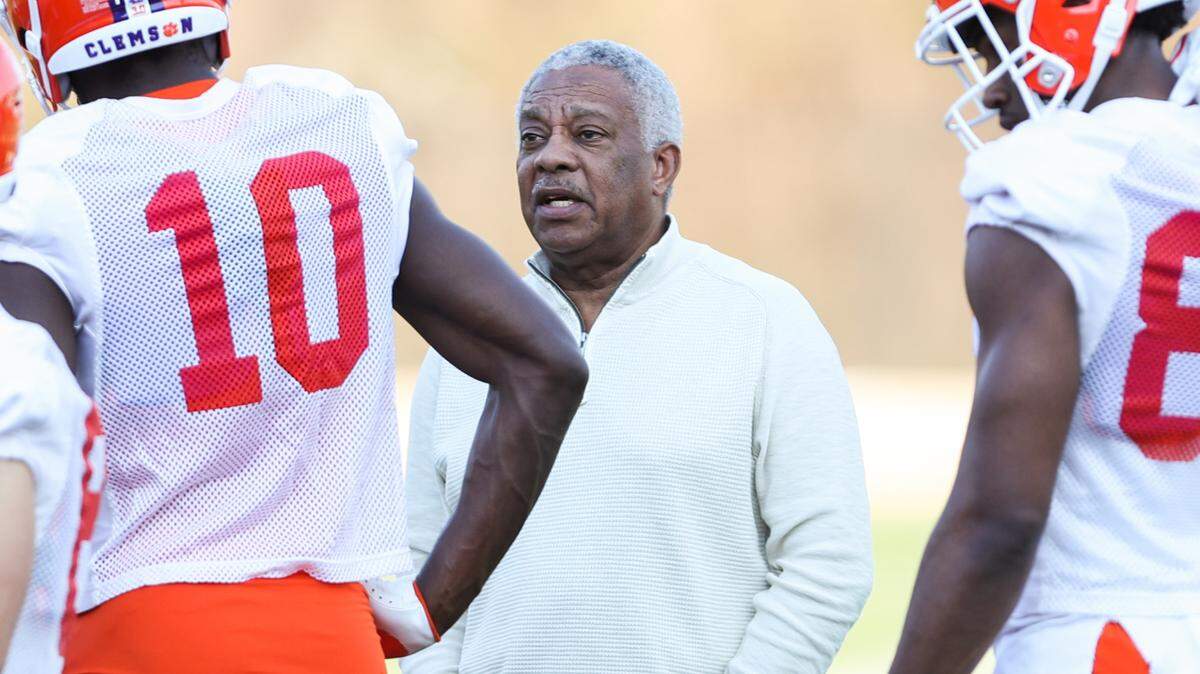
Woody McCorvey’s eyes were diligent in his search for the words he’d read countless times before.
Hanging on his office wall at Clemson just to the left of his desk was a framed article about the late Grambling State head football coach Eddie Robinson. McCorvey, the Tigers’ chief of football administration, had the article signed by Robinson in 1995 when the former was the wide receivers coach at Alabama.
Twenty-seven years later, he held the newspaper clipping encapsulated by a wooden frame in his hands, gazing over the column inches of text until he found THE quote from Robinson.
“I dream there will be a black president of the United States. I got to believe that it will happen,” McCorvey, 71, recited. “Probably when he said that people said, ‘Hey, this man, he’s just dreaming.’ But it happened.”
Robinson wasn’t alive to see his words manifest in the form of Barack Obama. The man who surpassed Bear Bryant for most wins in college football history (408) when he retired in 1997 died on April 3, 2007, a year before Obama took office as president.
The predated sentiment of speaking and believing in something when reality looks contrary is one that resonates with McCorvey, who’s going into his 21st season at Clemson and 45th overall as a coach or administrator in college football. Becoming J.M. Tate (Florida) Senior High School’s first Black football coach, Alabama’s first Black offensive coordinator and then being on the same coaching staff with the SEC’s first Black head coach at Mississippi State all in one lifetime was more than a young boy growing up during the Civil Rights era in Atmore, Alabama, could’ve fathomed.
Add on being the right-hand man for and father figure to one of the most high-profile coaches in college football? No chance.
Yet, “Old School” — as Tigers running backs coach C.J. Spiller affectionately calls McCorvey — has done all of those things and more with enough knowledge and experience to fill two lifetimes.
“People like this,” McCorvey said of Robinson, “and people that fought in the civil rights movement, Black and white, that’s what really inspires me to be able to leave a legacy for these guys who’s coming along now.”
Being the best (dressed)
The 1896 Plessy v. Ferguson outcome of “separate but equal” facilities for all races didn’t always hold up in the 60-plus years following the Supreme Court’s ruling.
McCorvey’s childhood memories of school resources and facilities were that they weren’t always the best. What they lacked in quality, the community made up for in care. McCorvey’s father and high school principal Woodrow Sr. joined with coaches and teachers to instill pride in students. Floors were mopped every day after PE class, locker rooms were spotless post-practice and players’ uniforms were sharper than a tack.
The negative perception and outlook of the outside world was one thing. How the young Black students of Atmore felt and the way they carried themselves didn’t have to reflect that.
“We took a lot of pride in saying, hey, we were gonna be the best dressed team on the field no matter what we were doing, basketball, football,” McCorvey explained, “and that’s what we did.”
Atmore’s school system produced plenty of success stories like McCorvey and Marva Collins, who grew up to be a force in Chicago’s public school system before starting her own school. In 1981, a movie was made about her life with the late Cicely Tyson playing Collins, who passed away in 2015.
McCorvey opted to go into coaching. Before becoming a principal, Woodrow Sr. was a coach, something that inspired his son. George Mosby, Woody McCorvey’s high school football coach, also influenced his decision.
“I just watched the impact that they had on young people’s lives, and I wanted to be a part of that,” McCorvey said.
Black coaches and sports figures in football weren’t as common then. The golden ticket in sports for people of color was baseball with Hank Aaron, Jackie Robinson and Willie Mays being the heroes of their time. Still, McCorvey wasn’t deterred by the lack of representation or opportunities.
He wanted to coach football.
And, after a college career as Alabama A&M University’s quarterback, that’s what he did.
A not-so-dead end
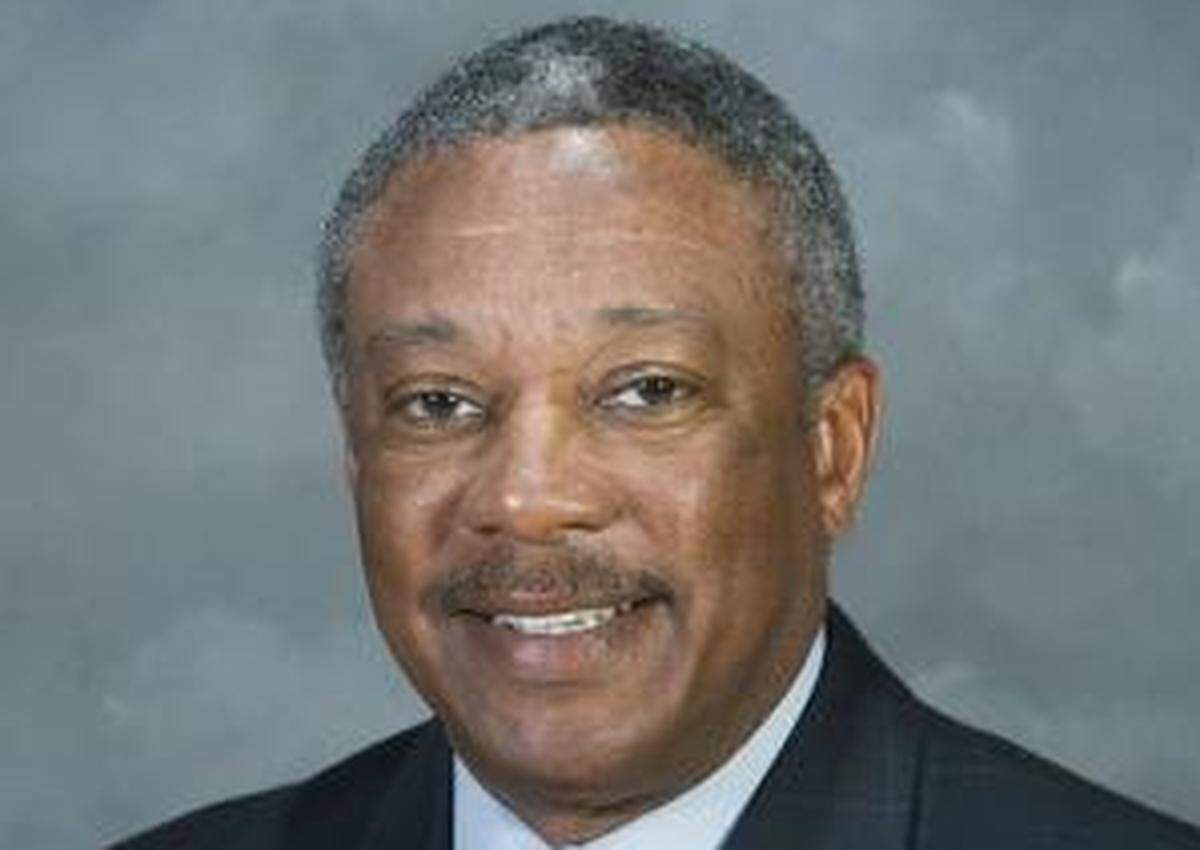
Sylvester Croom just knows McCorvey got tired of hearing his phone ring.
During the summer of 2003, Croom, then the offensive coordinator for the Green Bay Packers, must have called his friend a hundred times. The two spent countless hours talking on the phone about how they’d run a college football program. Every matter was accounted for, from the overarching philosophy and culture of the program to how practices would be run.
McCorvey was coaching at the University of Tennessee at the time, but neither he nor Croom dared to explicitly verbalize their desire to be a college football head coach. Even in the new millennium, they still viewed it as a pipe dream for a Black man to run a college football program, especially as two Alabama natives.
“We made some advances having both of us growing up during a time of segregation,” Croom said. “We both thought about what it’d be like if either one of us ever got a chance. But it was something that wasn’t talked about a whole lot out loud, to be honest with you, because sometimes some dreams you just keep internally. You just want to keep it to yourself.”
By the time the summer was over, Croom had built a full manual of how to run a college football program but kept it buried it in his desk. There’s no way I’ll ever need it, he thought.
Until he did.
After the 2003 college football season ended, Jackie Sherrill retired, leaving Mississippi State in need of a head football coach. Croom got an interview and brought the manual — which he slapped a Mississippi State logo on — with him. Almost 20 years later, he recalls being told by then-athletic director Larry Templeton and President J. Charles Lee that what impressed them the most was Croom’s level of detail and preparedness.
He’d been offered the job, but had only one condition to accepting: McCorvey had to come, too.
“He called me back. He said, ‘Let me talk to (wife) Ann,’ ” Croom recalled. “He talked to Ann and he said he was on board. That’s when we decided to go to Mississippi State.”
With the hire, Sylvester Croom became the first Black head football coach at Mississippi State and in the SEC with McCorvey, as an offensive coordinator, by his side. Ellis Johnson left The Citadel to become the Bulldogs’ defensive coordinator.
While the first few years were a struggle for the Bulldogs — they only won three games in each of the first three seasons — the team put together an 8-4 season in 2007, which included wins over Auburn and Alabama, which was Nick Saban’s first year back in college football. Mississippi State had beaten the Crimson Tide the year before, but pocketing both victories over the Alabama schools in the same season hadn’t happened since 2000, which is also the last time the program made a bowl game.
McCorvey remembers the joy that swept through the locker room each time the Bulldogs won because, by all accounts, it wasn’t supposed to happen. In many ways, the literal underdog story resonated with McCorvey. Much like the Bulldogs, he wasn’t supposed to be in his position either.
After he became the first Black coach at J.M. Tate High School in Gonzales, Florida, McCorvey broke into the college football ranks with stints at North Carolina Central University and Alabama A&M University, both of which are Historically Black Colleges & Universities.
The perception of coaching at an HBCU was wasn’t the same as it is now, though, as McCorvey found out.
“I went there and did what I was supposed to do to be the best coach that I could be,” he said. “A lot of people said, ‘That’s a dead end street when you go into (an) HBCU. Hey, you’ll never get out.’ I said, ‘I’m gonna prove you wrong.’ ”
In 1979, Alabama A&M made the Division II playoff semifinals. The next year, the team had the nation’s 11th-best scoring offense, then the No. 6 rushing offense the year after that.
The success McCorvey had at both HBCUs wasn’t the dead end some predicted, but a street that led to 1 Avenue of Champions in Clemson, South Carolina, in 1983.
During his first stint with Clemson, he served as the wide receivers and tight ends coach under then-head coach Danny Ford. Four days after Ford resigned and the coaching staff was let go in 1990, Alabama head coach Gene Stallings made McCorvey an offer he couldn’t refuse. After being the wide receivers coach for seven years at Alabama, McCorvey was promoted to the Crimson Tide’s first Black offensive coordinator in 1996 and the assistant head coach a year later.
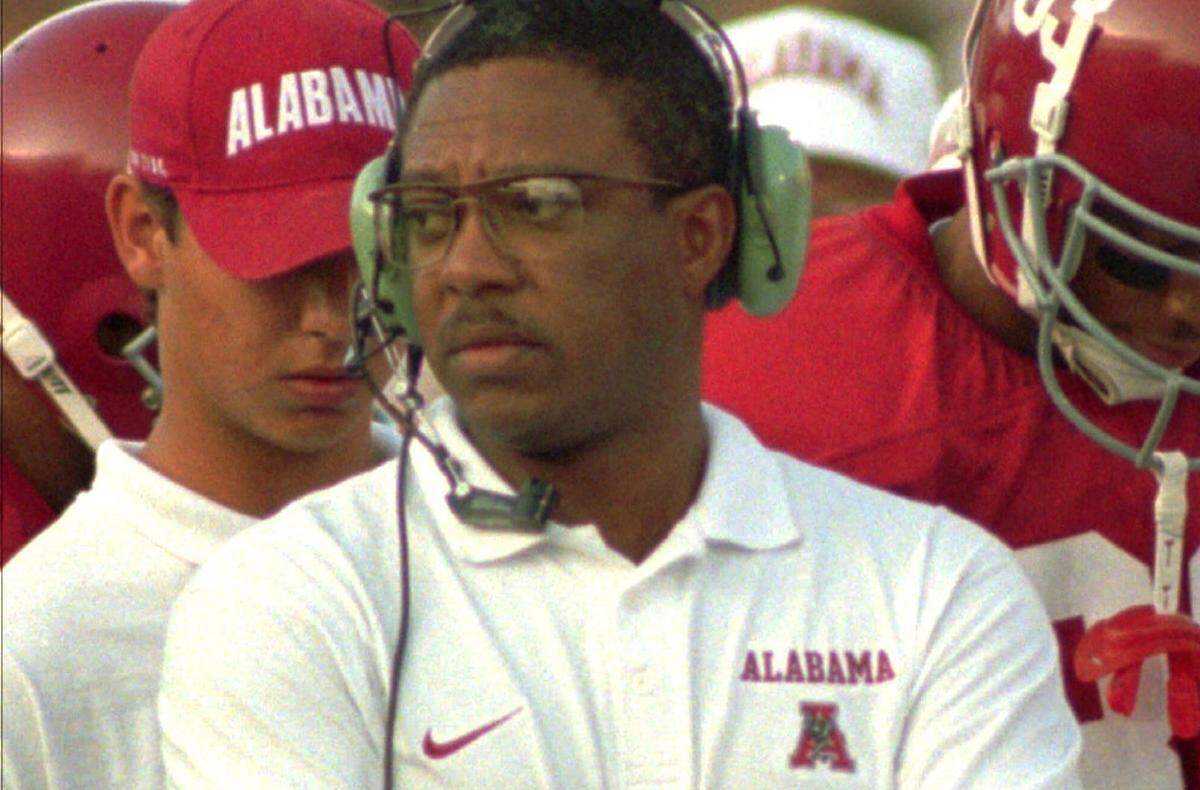
The surreal experience was highlighted by the fact that his parents and Mosby, his high school coach, were alive to see it happen.
“I can’t tell you how proud they were to live to see that happen because both of them grew up in Alabama, too, but that’s what they prepared me for,” McCorvey said of his parents. “It just gave me a sense of pride, too, to be able to do that and do a good job.”
As groundbreaking of a coaching move as it was, Stallings wasn’t looking to make history with the hire.
“His integrity was above reproach,” Stallings said. “When he would say something, you could bet on it and he was very knowledgeable about the game. He was 100% committed to doing his job. It’s one of the best hires I’ve ever made when I hired Woody McCorvey. … Just so happened that he was Black, but I never paid any attention to that one way or the other.”
Together, they won a national championship in 1992, a team that also included a walk-on wide receiver named Dabo Swinney. The Clemson head coach laughs about it now, but he says he didn’t like McCorvey at first because the latter didn’t let him play “not one snap” in one of the Crimson Tide’s spring games. They moved past that and developed a bond that still lasts today. After Swinney was named Clemson’s head coach in 2008, he brought McCorvey in for the 2009 season as the program’s chief of football administration.
In 2019, when Swinney was named the Bear Bryant Coach of the Year Award, he brought McCorvey on stage during the awards ceremony and honored him.
“He was my coach, he’s been a mentor,” Swinney said that night. “When I got the job at Clemson, the first person I called was Woody. He was the offensive coordinator at Mississippi State, and I said, ‘Woody, I need you to come be by my side. I don’t want you to coach a position. I want you to help me coach life. I want you to help me run the program.’ … You don’t know how impactful Woody McCorvey has been on my life. He’s been right by my side.”
Staying relevant
Croom and McCorvey were out on the recruiting trail in Miami one day and made a stop at a service station. No sooner than they were out of the car, a voice called out, “Hey, Coach McCorvey!”
The man approached McCorvey and the two struck up a conversation, while Croom was left astonished at what was a random scenario.
“This didn’t happen just one time on the trip,” Croom pointed out. “This happened about three or four different times on the trip. … I was so thoroughly impressed with the contacts and the people in the Miami community that he knew outside of the high school. You talk about recruiting as a relationship, and coaching is about building relationships, I’ve never seen anybody build as many relationships as Woody McCorvey.”
McCorvey’s network of contacts extends from family members of recruits to NFL head coaches. During Clemson’s on-campus Pro Day, he caught up with Pittsburgh Steelers head coach Mike Tomlin and helped facilitate an introduction with Tomlin and a couple current Tigers such as tight end Davis Allen and defensive end Myles Murphy.
“It’s funny, I don’t know that I can remember how we met because I just always admired him, as a young coach,” Tomlin said in a statement to The State. “He was a blueprint for me, and guys like me, being the first African-American offensive coordinator in the SEC — and the significance of that. Just a guy that was always a role model for me and my peers. Having the opportunity to get to know him over the years, he has just been really inspirational. Good wise counsel and a good friend.”
Where networking and relationships have been vital in McCorvey’s career, his priority has been to stay relevant. Swinney emphasizes having a word of the year within the program — but McCorvey’s word has and will always be “relevant.” He makes it a point to know everything he can about recruits and incoming players and develops relationships that extend outside of football.
McCorvey is a counselor — a confidante, even — for anyone who needs it.
When Clemson players like Christian Wilkins, Travis Etienne, Xavier Thomas and K.J. Henry needed advice on whether they should go pro or come back to school for another year, they talked to McCorvey. When now-West Virginia running back Lyn-J Dixon opted to transfer out of Clemson, McCorvey helped him, too.
No matter the situation, McCorvey does his best to provide as much information as possible so players can make an educated decision about their future.
“That’s the OG. That’s the man with the plan,” Henry said. “Being a great coach that he was, he’s seen a lot of different things, a lot of great players, and seen a lot of different stories. … We’ve just had a really great connection over the last five years, and his opinion definitely meant the world to me.”
Leaving a legacy
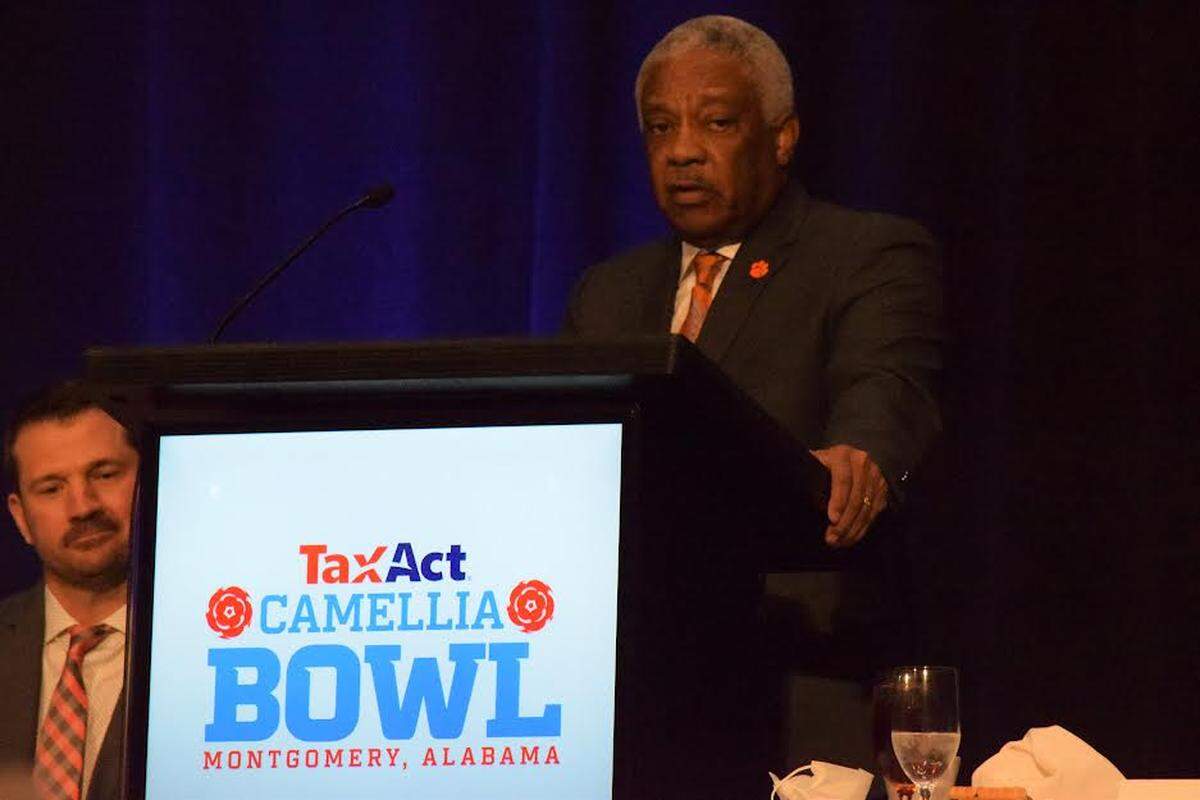
McCorvey’s mind was racing 10 times faster than the golf cart he was driving.
Civil rights icon Rev. Jesse Jackson had come to Clemson at the end of March, and McCorvey was driving him back to the parking lot after the two met for the first time. Where people like Tomlin consider McCorvey a trailblazer in his own right, McCorvey was sitting next to another giant whose shoulders bore the weight of fighting for equality.
He visualized Jackson standing near Martin Luther King Jr.’s 39-year-old lifeless body on the balcony of the Lorraine Motel in Memphis after King was shot. He considers how the mix of anguish, frustration and determination must have felt to Jackson during marches, protests and boycotts.
During times of struggle and adversity, McCorvey leaned on his wife, Ann, who worked in education for 38 years and was there beside him every step of the way. Who did Jackson have? McCorvey wondered.
“I just thought about probably a lot of things I wouldn’t have been able to experience if people like that hadn’t laid their life on the line for me to have an opportunity,” McCorvey said. “We didn’t talk about mental health like that back then, but you think about what all he saw, and the tragedy that he saw that day when (King) was killed. How did he get through it, you know, the perseverance that he had? … That’s what I’m appreciative of — for people like that to give all of us opportunity.”
Whether it’s Jackson, Robinson or Croom, McCorvey has seen progress being made in football and society. Sure, there are more strides to take — particularly in the hiring of minority head football coaches, McCorvey notes — but each one can be made a little easier because of those like McCorvey who paved the way.
In the face of what shouldn’t have happened, he’s a reminder of what can and did happen.
“As a person that was caring, that I had respect for mankind,” McCorvey said when asked how he wants to be remembered. “(That) what I did mattered and that it was important, that it was impactful, that I was able to leave a legacy that people knew that I cared.”
This story was originally published May 12, 2022 at 5:00 AM.