How much will Clemson end up spending on ACC lawsuit? What early records show

When Clemson sued its own conference in South Carolina court a year ago, the university knew its legal battle against the ACC would be a significant investment.
Now, those costs are coming into focus.
As of Tuesday, the day Clemson and the ACC announced they’d agreed to settlement terms and would be dropping their dueling lawsuits, four law firms had already billed the university 33 times for just under $2.04 million since March 2024, according to invoices obtained by The State through a public records request.
That comes out to an average rate of $615 an hour for over 3,300 hours of legal work that outside representation has billed Clemson for since last year.
And it doesn’t capture the true final cost of the school’s legal dispute either.
Since there’s still some legal housekeeping to be done in settling the cases, and final invoices are often submitted months after work is completed, Clemson’s final bill will comfortably surpass the $2,039,705.19 it’s been charged as of March 4.
The university’s final litigation costs will likely fall somewhere between $3 million and $5 million, according to reports from TigerIllustrated and TigerNet.
Clemson will not use any taxpayer money to pay for its legal fees, a university spokesman previously said. The school is funding its litigation with a combination of “self-generated” athletic department funds from media rights and ticket sales as well as “unrestricted” private funds from IPTAY, the school’s athletic fundraising arm.
Here’s what else the invoices revealed:
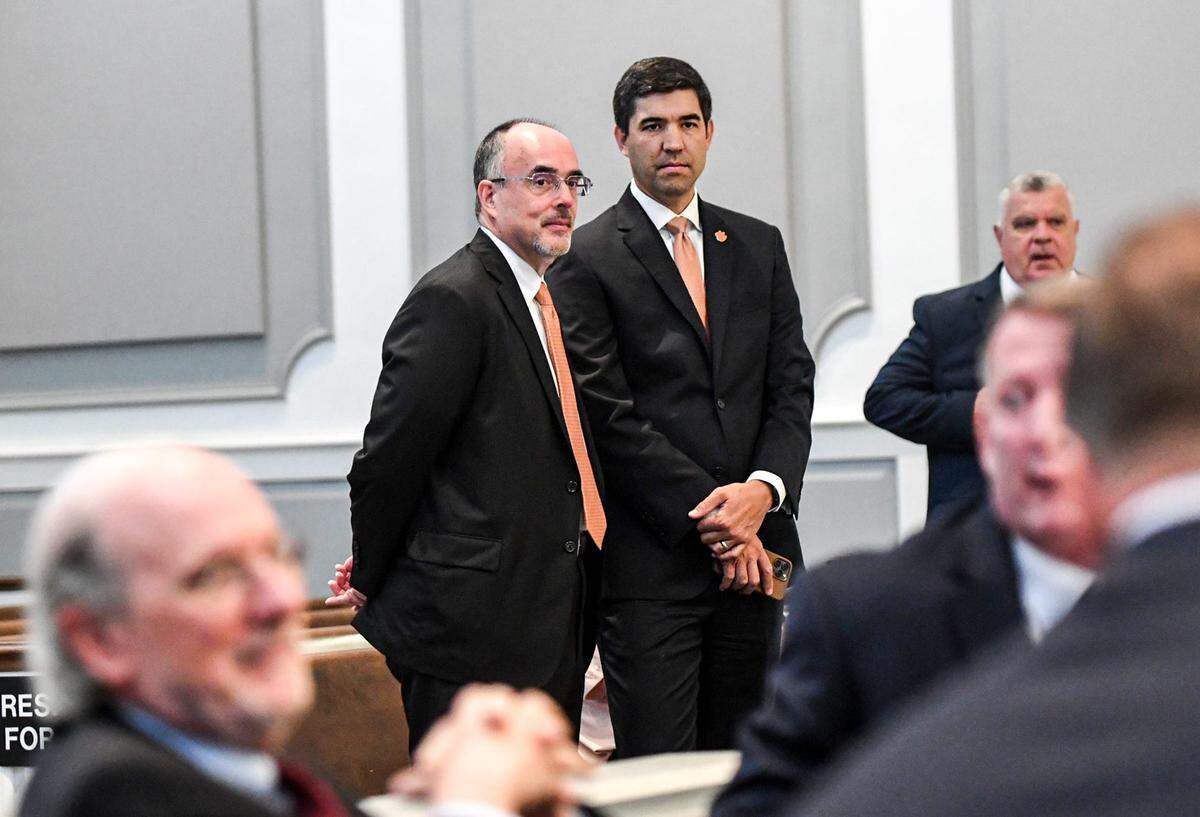
Clemson’s legal bills, split by law firm
Clemson was approved by the South Carolina Attorney General’s Office to work with four different outside law firms. Here are their total charges since March 2024:
- Nelson Mullins Riley & Scarborough: $1,539,033.57
- Parry Law: $243,603.16
- Ropes & Gray: $195,294.08
- Willson Jones Carter & Baxley: $61,774.38
Columbia-based Nelson Mullins handled the bulk of Clemson’s casework in Clemson vs. ACC, the original lawsuit the university filed against the conference in Pickens County, South Carolina (where Clemson’s campus is located).
Nelson Mullins’ lead trial attorney for the case was David Dukes, who’s also a member of the Clemson University Board of Trustees and worked at a rate of $750 an hour. His firm has billed the school for 2,442.4 hours of legal work to date.
Nelson Mullins also accounts for 75% of Clemson’s total legal fees to date.
Parry Law, based in Chapel Hill, North Carolina, took the lead in ACC vs. Clemson, the countersuit the conference filed against the school in Mecklenburg County, N.C. That’s where the ACC’s uptown Charlotte headquarters are located.
Lead attorney Alan Parry billed at $490 an hour. The majority of Parry Law’s bills came from April to July 2024 as ACC vs. Clemson played out in court and before the case was ultimately appealed to the North Carolina state supreme court.
Big-time hourly rates
Boston-based Ropes & Gray had billed Clemson for 117.25 hours of legal work as of this week. That was the fewest of any of the university’s four outside law firms.
But it was a pricey partnership.
Dennis Coleman, the senior counsel at Ropes & Gray and a major player on the pro sports scene, has 44 years of experience and bills clients at $1,700 per hour. Partner John Bueker has 26 years of experience and also bills at $1,700 an hour.
Coleman invoiced Clemson $3,825 for 2.25 hours of work in August 2024, records show. As of this week, he’d worked 16.75 hours on behalf of Clemson in the past year and billed for $28,475. Bueker worked 80.75 hours and invoiced for $137,275.
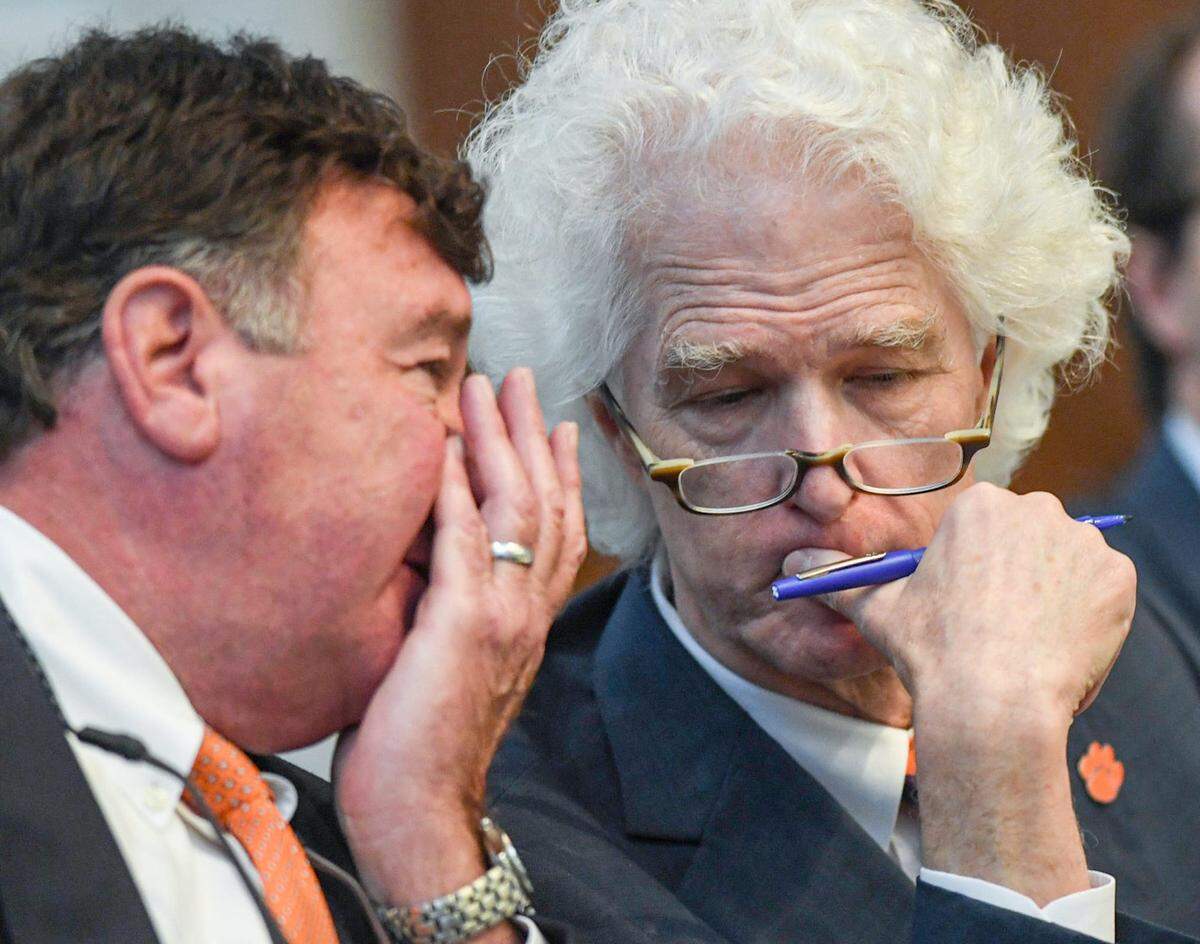
Paying outside of state rates
When it approved Clemson’s requests to employ outside counsel, the S.C. Attorney General’s Office set specific rates and total spending caps on the university.
Clemson, for example, was formally authorized to spend $475,000 on litigation from March 1 to June 30 of last year and an additional $975,000 through June 2025.
So why are the Tigers’ bills so much higher?
Clemson got around those limits by using its athletic department funds to pay the approved state hourly rate portion of each invoices and funding the difference on each bill with money from IPTAY, which is an independent non-profit organization.
For example: Dukes, Clemson’s lead attorney with Nelson Mullins, generally charges clients $750 an hour but agreed to represent Clemson at a discounted $350 an hour, records show. The state attorney’s general office approved that rate.
Between athletic department money and IPTAY money, though, Clemson still paid Dukes at his standard rate of $750 an hour by pulling from two different buckets.
In March 2024, the month Clemson initially sued the ACC, Dukes billed the university for 69.3 hours of legal work and $51,975. Clemson paid him $24,255 using athletic department funds (at the state-approved rate of $350 an hour) and the remaining $27,720 with private IPTAY funds (at a “differential rate” of $400).
The university followed that format with each of its law firms. All 33 invoices obtained by The State include a spreadsheet splitting how bills would be paid with a combination of athletic department money at state-approved rates (“Invoice 1”) and IPTAY money at the remaining “differential rate” (“Invoice 2”).
The end result? A 50-50 split of the final bill so far.
As of March 4, Clemson’s four outside law firms had invoiced the university for $1,013,954.44 in athletic department funds and $1,025,750.75 in IPTAY funds. Those totals come out to 49.7% and 50.2% of the total expenses to date, respectively.
This story was originally published March 7, 2025 at 12:20 PM.